
Evolution Of The Golden Age Chevy Chevelle SS
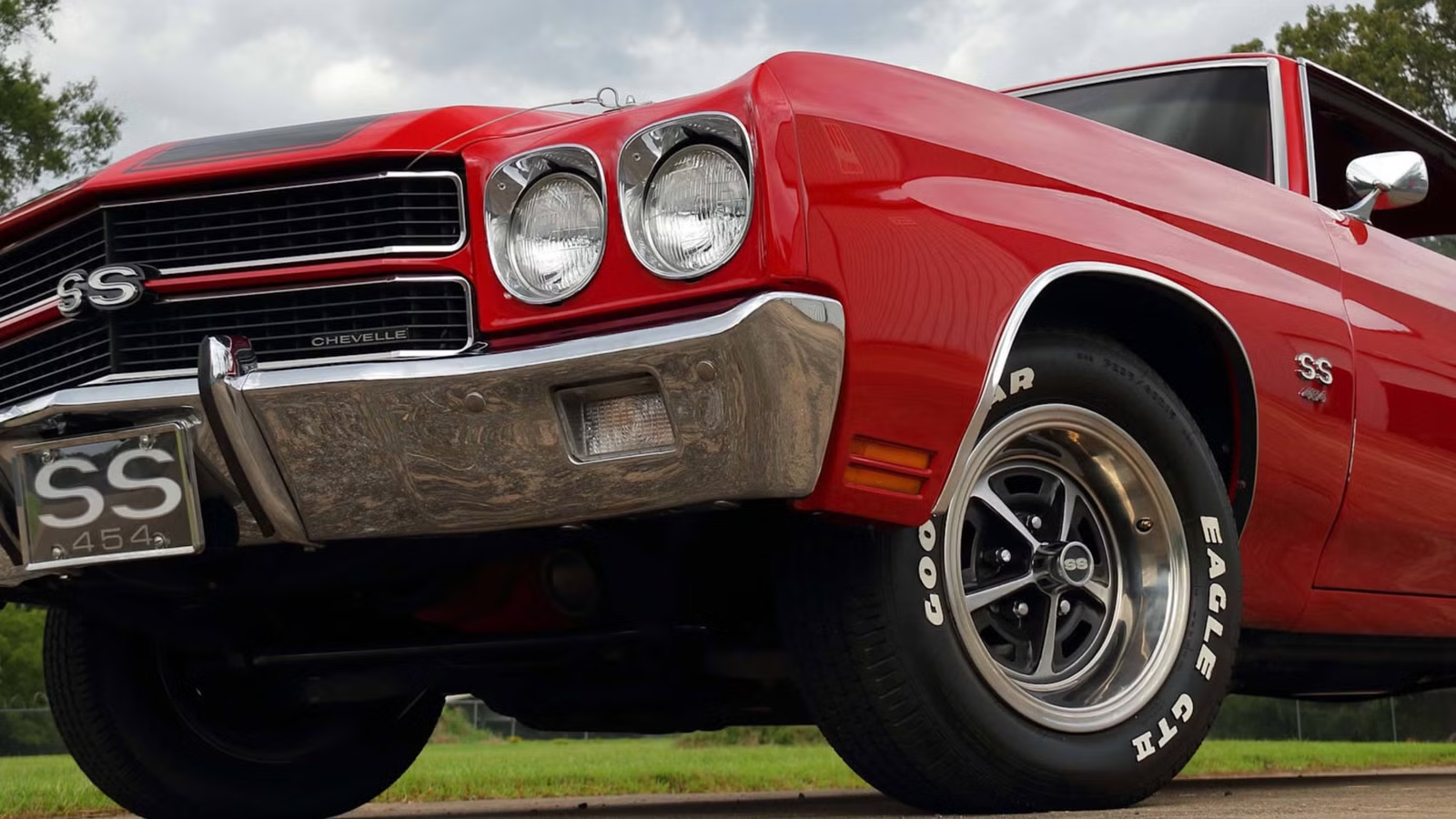
The 1964 Pontiac GTO may have kicked off the Golden Age of American Muscle, but the Chevrolet Chevelle SS quickly unseated it as King of the Streets, at least for GM rides. The Chevelle was the most popular muscle car of the classic era, with unrivaled sales and rabid loyalty among fans that extends to this day. Nowadays, it’s not uncommon for a car to go seven to ten years without any significant changes, but back in the day, each model year brought new body details, features, and engine options. Though the Chevelle had three distinct generations through the 1960s and early 1970s, every year was different from the last, even if just subtly. This is the evolution of the Chevelle SS from performance trim package to street brawler, and even Malaise Era big-block survivor.
10
1964 Malibu Chevelle SS
Production: 76,860 Units

Chevy was quick to understand the significance of the GTO’s success in 1964, in that young buyers wanted an affordable, cool-looking ride with some power under the hood. They jumped on the budding muscle car craze, also in 1964, by adding the Chevelle SS package to the Malibu intermediate two door. Mostly an appearance package, the Chevelle SS included bucket seats, deluxe interior, as well as special exterior trim and SS badges. What it didn’t have was anything that indicated it was a Chevelle, but that would come later. All engines were available, but the 283 and 327 small-block V8 options are what made the Chevelle SS an interesting ride, especially the 300-horsepower version of the latter. Though the GTO was certainly a hit, moving 32,450 units in its first year, the Malibu Chevelle SS blew it away with over 76,000 sales, and it was really kind of a tacked-on afterthought.
9
1965 Malibu Chevelle SS
Production: 72,500 Units

For 1965, the Malibu Chevelle got a new V-shaped nose, blackout grille with metal bar connecting the headlights, and redesigned tail lights. The Chevelle SS was still a trim package on the Malibu and wasn’t acknowledged by any sort of badging, but it did get significantly more powerful. The 327 V8 was now up to 350 horsepower and there was a completely gonzo special edition. Late in ’65, Chevy unleashed the Z16 RPO featuring the new 396 big-block V8, packing 375 horsepower and 420 lb-ft of torque. This, in reality, was the first real deal Chevelle SS that could actually strike fear in other muscle car owners at a red light. With a 0-60 time of 5.6 seconds, a quarter-mile ET of 14.1 seconds and a top speed of 139 MPH, the ’65 Chevelle SS Z16 could outrun everything except a Max Wedge Mopar. While there were only 201 Z16s made, the regular production cars were crushing it with 70,000+ in sales.

8
1966 Chevelle SS
Production: 72,272 Units

In 1966, the Chevelle graduated from a trim to its own nameplate, as well as getting a dramatic redesign. Hitting dealerships with a sexy Coke bottle body and sleek new fastback roofline, this was almost a completely different car from the year before. The other big news was that the 396 V8 was now available for regular production models and it came in three varieties. The base 396 produced 325 horsepower, the mid-range with an upgraded Holley four-barrel carb took it to 360, and the top-tier L78 raged with 375 hp. The SS package featured a flat hood with two simulated hood scoops, a blackout grille, rocker panel trim, and finally, some Chevelle badging to properly identify it as a serious street machine. Sales remained strong in the 70,000 unit range, with 66,000 hardtops and 5,400-ish convertibles.
7
1967 Chevelle SS
Production: 63,006 Units

Changes for the 1967 Chevelle SS were a bit more subtle than in previous years, but there were noticeable differences. It received an anodized aluminum grille featuring an “SS 396” emblem, as well as molding around the body sills and rear fenders that were ribbed and color accented. The rear end profile was updated with wraparound tail lights that incorporated backup lights. The 375-horsepower 396 was still the top-dog engine option and everything cool for the ’66 model remained intact like the faux intake louvers on the hood. This was the first year that front disc brakes were available, radically increasing the Chevelle’s stopping power. Sales were down a bit, dropping into the 60,000-unit range, but that was still a remarkable number of cars to move, and this was the last year of the first-gen, so it was to be expected.
6
1968 Chevelle SS
Production: 62,785 Units

In 1968, all GM A-body cars got an extensive redesign, and for the Chevy, it’s the car most people think of when imagining a Chevelle. With a drastic fastback roofline, long hood and short decklid, this new style has been described as a “teardrop” body, but a better way to put it is aggressively awesome. The Chevelle also lost three inches of wheelbase, going down 112 inches, giving the car a bolder stance. SS exclusives included the “Power Dome” hood with dual simulated louvers and lower body accent striping. Power didn’t increase, however, because Chevy was under GM’s 400 cubic-inch cap in intermediate rides, so the Chevelle was at a disadvantage to the 426 Hemi and 440 Magnum-equipped Mopar muscle cars. Sales didn’t jump with the second-gen Chevelle SS but, again, were still quite strong, in the 60,000-unit zone.
5
1969 Chevelle SS
Production: 86,307 Units

The differences between a ’68 Chevelle SS and a ’69 are so subtle it takes a real Bowtie nerd to spot them, but thankfully, we are that geeky when it comes to classic muscle cars. The first and most notable change was that the front grille on the ’69 was plastic and featured a central bar between the quad headlights. Next, the ’69 got rid of the ventilating front “smoker’s windows” in favor of a full front window. The tail lights got a little bigger and the side marker lights got a little smaller, while in the interior, the ignition switch was moved from the dashboard to the steering column. Everything else remained the same from the previous year, including engine options, though there was a 396 L89 variant with aluminum heads, but it was still only rated at 375 horsepower. 1969 was a standout year for the Chevelle SS, with over 86,000 units moved, adding nearly 20,000 sales from the previous year, and there is really no explanation for the jump other than buyers recognizing what an exceptional ride this was.
4
1970 Chevelle SS
Production: 62,372 Units

The 1970 Chevy Chevelle SS is the standout of the GM muscle cars and one of the greatest of the entire Golden Age, especially when equipped with the 450 hp, 500 lb-ft of torque 454 LS6 big-block. See, in 1970, GM finally came to its senses by revoking its pointless big engine ban and Chevy could finally put a motor in the Chevelle to let it compete with the Hemi and Six Pack Mopars. With a 13.4-second quarter-mile, the ’70 Chevelle SS could beat some Dodge and Plymouth cars and hang with others, but unfortunately it wasn’t quite the Mopar killer it could have been. Also in 1970, the Dodge Challenger Hemi R/T and Plymouth Hemi ‘Cuda hit the streets with 13.1-second ETs, but even so, the Chevelle SS 454 LS6 was a formidable foe and the nameplate was no longer getting schooled. The ’70 Chevelle got some new sheet metal and front fascia that made it the boldest-looking of the bunch, but despite everything being exceptional about this model year, sales were down significantly.
3
1971 Chevelle SS
Production: 80,000 Units

1971 was effectively the last great year for American muscle before the detuned Malaise Era set in, but Chevy actually got a jump start by toning down its rides. The mighty 454 LS6 was discontinued and the LS5 version dropped from 390 hp to 365. The 396, which was now actually 402, was down to just 300 horsepower and the small-block 350 became available on the SS package with 245 and 270 horsepower versions. The exterior, mostly the front end, got some tweaks, including swapping the quad-headlights for bigger dual lamps and the turn signals were moved out of the bumper to the sides. Also, there was a slight tail light redesign that matched the circular lights of the Corvette and Camaro. Even though the ’71 Chevelle SS wasn’t quite as wicked as it was just a year prior, buyers couldn’t get enough of them and sales exploded to around 80,000 units.
2
1972 Chevelle SS
Production: 24,946 Units

1972 was the official beginning of the Malaise Era and all the once-ferocious muscle cars were suddenly tame, including the Chevelle SS. Chevy switched from gross horsepower ratings to net horsepower in ’72, which took the 454 from 365 to 270, but it’s not quite as bad as it seems, because it still had approximately the same power. That, however, wasn’t street-friendly juice as the ’72 SS had an almost 15-second quarter-mile time, which was completely unacceptable. California buyers were even more disappointed because of stringent emissions standards that meant the 454 and 396 (402) big blocks couldn’t be sold in the state, only 350 small blocks. Physical differences with the ’72 versus the previous year were almost imperceptible with some slight tweaks on the grille and front turn signals. Sales of the SS nearly dropped off the map with less than 25,000 units, down by over 55,000 from ’71.
1
1973 Chevelle Malibu SS
Production: 28,647 Units

The third-gen Chevelle was let loose in 1973, and despite being a stark departure from the beloved muscle car, was still a very sharp-looking ride. This was the last year for the SS, as in 1974 the performance model was known as the Chevelle Laguna S3. What makes this year so interesting is that the 454 was still available, albeit in a much weaker 245-horsepower version, but they are dirt-cheap with a Hagerty good condition value of under $30,000. If an engine can be detuned, it can be retuned, and this is a car that Chevy fans can super-power with ease on a budget. Great-condition ’73 Chevelle SS 454 cars have sold for as little as $28,600 on Mecum, which leaves plenty left over to make it into a serious street machine. The only real problem is finding one, as sales were not huge for this year, and probably not a lot of people considered them keepers, so there’s not a ton of inventory out there.
Sources: GM, Hagerty, Mecum.

Related posts
Latest Post



No Comments