
Dodge’s Underrated Pickup Offered A 440 V8 Yet Sells Below The Li’l Red Express
The Dodge Li’l Red Express hogs most of the attention whenever enthusiasts talk about Dodge’s late-1970s pickup trucks. Bright red paint, vertical exhaust stacks, and a habit of showing up performance cars gave it a story nobody forgets. But Dodge had another factory-custom truck in the same lineup, one you could order with a big-block 440-cubic-inch V8, and it still tends to sell for less than its famous red sibling. Its appeal came from a very different idea of what a special pickup could be, one built on style and choice rather than speed.
Dodge Turned Its Pickup Trucks Into Factory-Custom Toys

By the mid-1970s, emissions rules, rising fuel costs, and sky-high insurance rates had put the squeeze on the old-school American performance car. Dodge still had customers who wanted a bit of personality, so it shoved more of that attitude into trucks. The Adult Toys campaign, launched for 1976, threw customized pickups, vans and four-wheel-drive models under one cheeky banner.
The lineup included the Ramcharger, Macho Power Wagon and Street Van, plus two trucks that became its best-known members. Dodge was selling more than transportation here. Buyers could grab custom styling straight off the dealer lot, alongside the usual cab, bed, drivetrain, and engine choices, without hunting down wheels, trim, and accessories themselves. One special truck would go all-in on performance. The other let buyers mix and match their own combination.
The Li’l Red Express Stole The Spotlight With V8 Performance


Introduced for 1978, the Li’l Red Express was the headline act. Its red finish, gold graphics, wood bed trim and twin vertical exhaust stacks made sure nobody mistook it for a regular work truck. Under the hood sat a modified 360-cubic-inch V8 rated at 225 net horsepower and 295 lb-ft of torque, backed by a three-speed automatic. And here is the interesting part. For 1978, trucks rated above 6,000 pounds GVWR escaped the catalytic-converter requirement facing lighter vehicles, allowing Dodge to run its police-spec 360 without one. The following year, federal rules raised the weight threshold to 8,500 pounds, bringing the Li’l Red Express under tighter emissions requirements.
The result could embarrass plenty of contemporary performance cars. Its 225 hp even edged out the 220 of that year’s hottest Corvette, the L82, and period testing crowned it the quickest American vehicle from 0 to 100 mph in 1978. Dodge built 2,188 examples for 1978 and another 5,118 for 1979, when tighter rules saddled the truck with a catalytic converter and a milder camshaft. Its stablemate, meanwhile, had a very different pitch.
The Dodge Warlock Offered A 440 V8 And Plenty Of Attitude

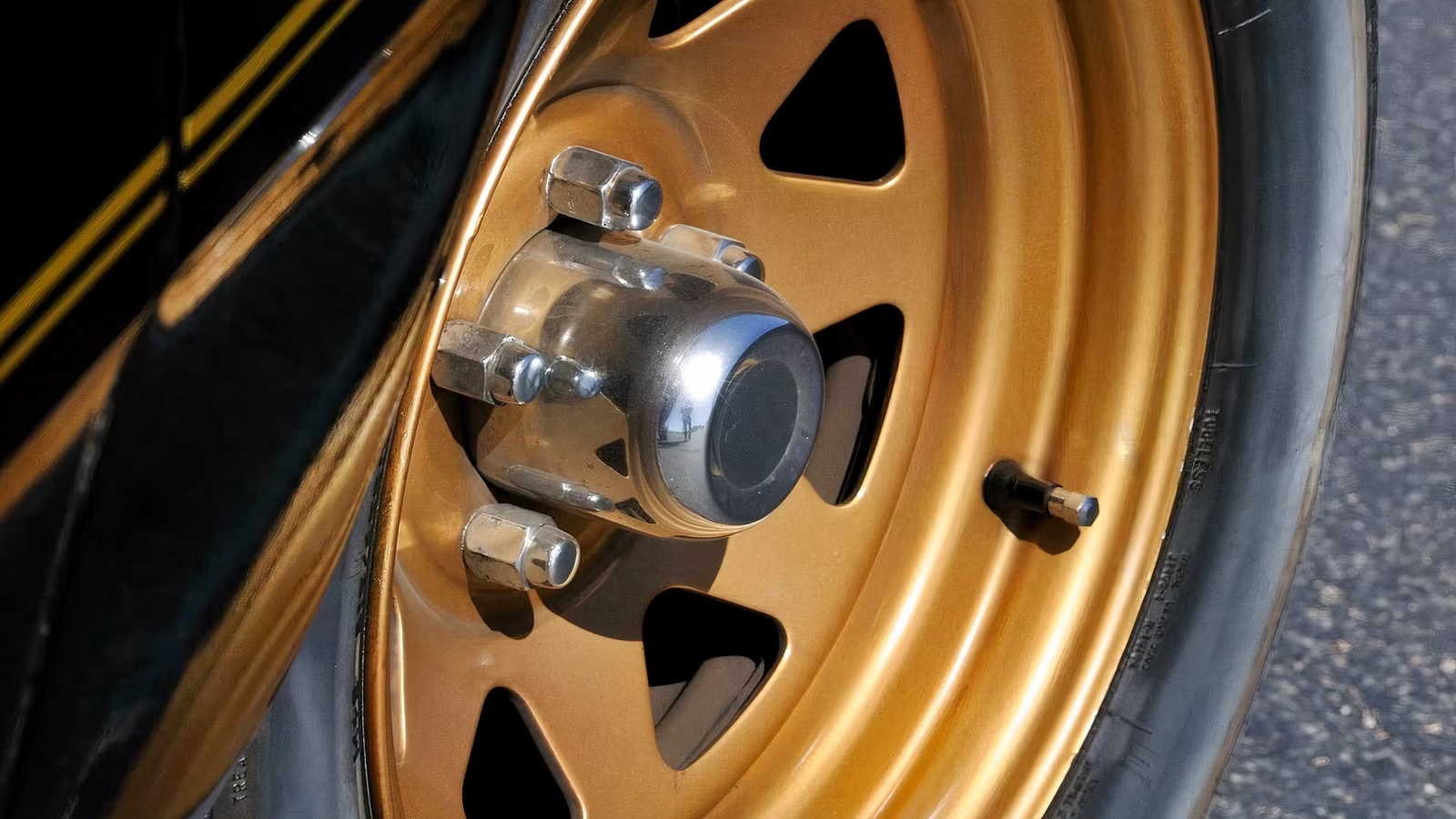
The Dodge Warlock started life as an auto show concept, and the public liked it enough that Dodge rolled it into showrooms in 1976 as a collection of options for D-100 two-wheel-drive and W-100 four-wheel-drive Utiline stepside pickups. This was Dodge’s original factory-custom pickup, and it came dressed to impress with gold pinstriping, bucket seats, gold-painted spoke wheels, chrome mini-running boards, and oak bed sideboards. It looked like something an owner might have built after years of weekend tinkering, except Dodge could deliver it new.
Early on, there wasn’t even a single Warlock package, just a bundle of options Dodge promoted under the Warlock name. Dodge made life easier for 1978, when buyers could order one with a single checkmark on the order form. Engine choices ran all the way from the 225 Slant-Six to the 440-cubic-inch V8.
That big-block option changes the conversation, because the gold trim didn’t dictate what sat under the hood. The 440 was an unusual pick. Reportedly, just 74 D-series pickups received the 440 in 1978, and the available figures don’t show how many of those were Warlocks. The Warlock stuck around through 1979, when it became the Warlock II alongside the D-series’ new hood, grille, and headlights. Even the sideboards got in on the act, picking up Warlock II lettering.
Why The Dodge Warlock Costs Less Than The Li’l Red Express Today

Classic-truck values swing with condition, originality, spec and demand, but the gap here opens up quickly. The typical Warlock sits at around $25,400. A good-condition Li’l Red Express starts in the low $31,000s and climbs fast from there, with the scarcer 1978 trucks carrying a premium, clean originals pushing well above that ceiling, and the best examples topping $60,000.
These are market ranges, not fixed values. A restored truck, a tired driver and a modified example can sell for wildly different amounts. The reasons aren’t hard to find. The Li’l Red Express has an instantly recognizable look, a performance claim buyers can easily brag about, and documented production of 7,306 trucks across two years. The Warlock’s appeal is more of a mixed bag. It could be a six-cylinder cruiser, a V8-powered show truck, or a four-wheel-drive pickup, which makes it harder to fit into one tidy collector formula. The 440 adds some spice, but it shouldn’t guarantee a higher price. Buyers need proof the big-block is original to the truck, and even a documented example still gets judged on the whole package.
The Warlock Deserves More Attention From Mopar Truck Fans

It’s easy to see why the Li’l Red Express gets first call. It looks outrageous, has a killer performance story and captures a moment when a pickup could take on the performance cars of its day. The Warlock asks for a little more curiosity, and it makes a cool alternative for anyone who wants a late-1970s Dodge with period character. The oak sideboards and gold trim are unmistakable, while the engine range means two trucks with the same name don’t have to drive anything alike.
Nobody should buy a Warlock expecting it to become the next Li’l Red Express in value or reputation. That misses the point. It was built to offer a different kind of customized pickup, and it still does that job very well. The better question is whether buyers have overlooked a truck that delivers plenty of the era’s Dodge attitude for less cash. The market suggests they might.
Sources: Classic.com, Hagerty

Related posts


Latest Post


No Comments