
BMW’s Gas And Electric 3 Series Look Almost Identical. Here’s What Actually Separates The G50 From The i3
3 Series
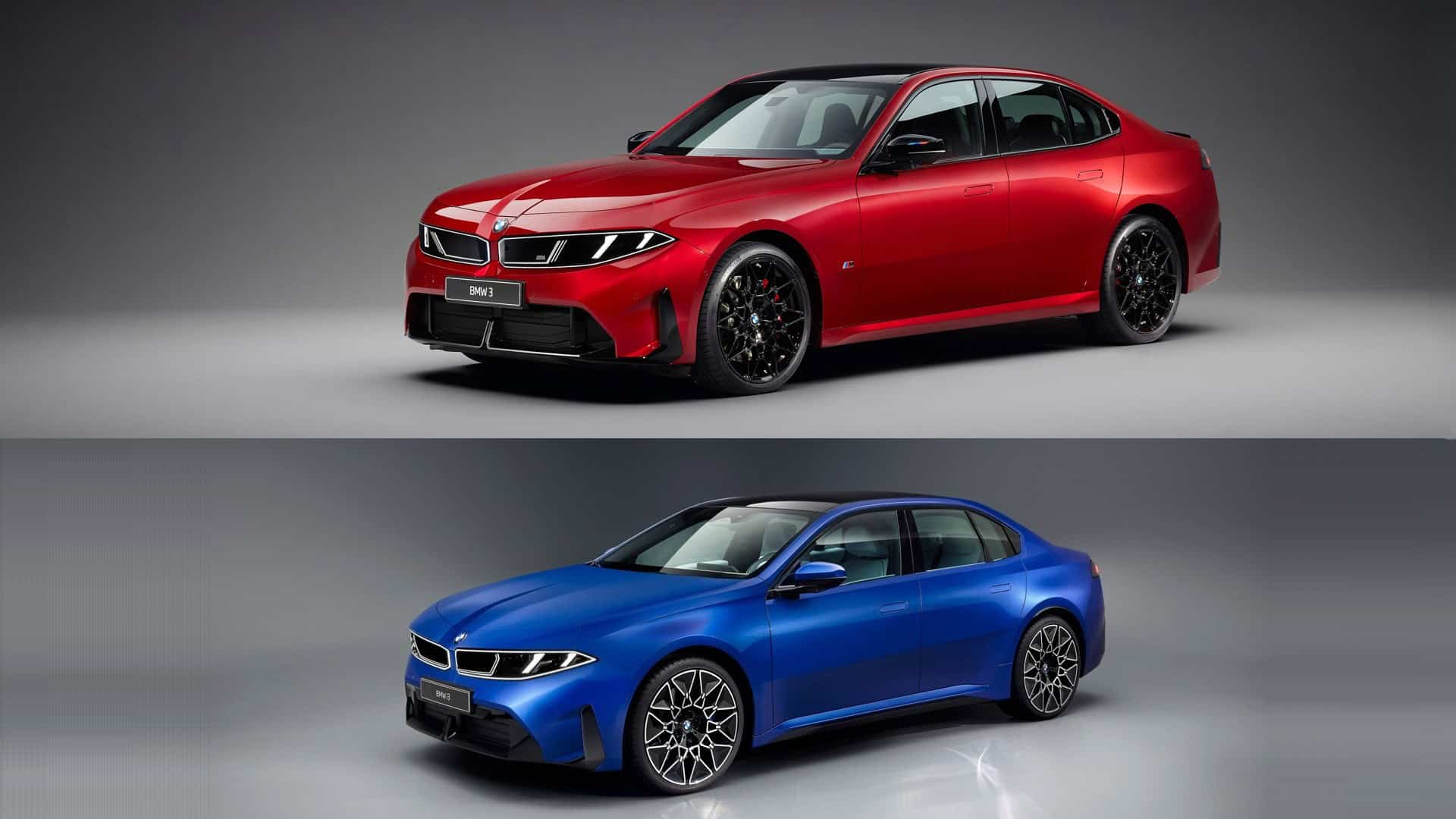
The electric i3 gets up to 21-inch wheels, a 17 mm longer wheelbase and 30 fewer liters of trunk space than the gas G50 3 Series.
Article Summary
- The M350 xDrive hits 60 mph in 4.1 seconds, quicker than the i3 50 xDrive’s 4.7, making it the fastest 3 Series until the i3 M60 arrives.
- The i3 40 xDrive weighs 2,090 kg (4,607 lbs) DIN, about 410 kg more than the gas 320.
- Both share a 17.9-inch center display, BMW Operating System X, Panoramic Vision and wireless Apple CarPlay and Android Auto.
At long last, the G50 BMW 3 Series arrives to replace the beloved but aging G20 3 Series. Along with the gas model to replace the 330i and M340i, we also, of course, have the anticipated Neue Klasse iteration: the BMW i3, BMW’s electric 3 Series. First things first: we want to see if there’s anything substantial separating the gas and electric 3 Series, other than how they get around. Short answer: very little. The real differences come down to wheels, trunk space, weight and power. Here’s a look at how the gas G50 BMW 3 Series compares to the electric i3.
BMW i3 vs. 3 Series: Exterior Design

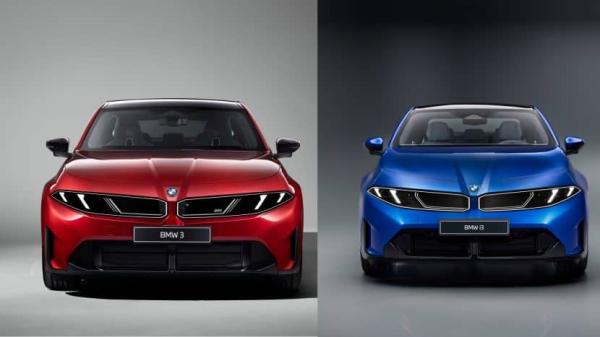
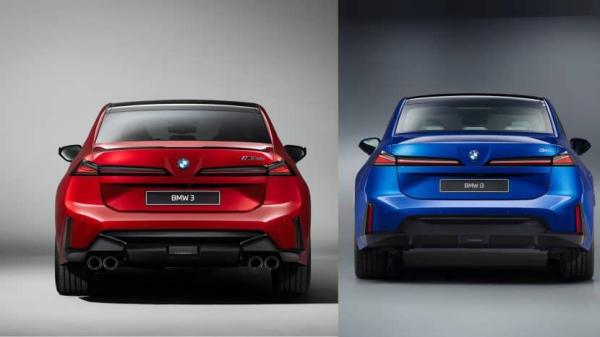
From the outside, only very minor details distinguish the electrified 3er from its gas-powered brethren. The M Performance model, the M350, exhibits wider changes than the lower-tier cars. You’ll note rear exhaust outlets—only present on the M Performance model—and some slightly different bodywork. The front apron is tweaked ever so slightly, and the tow hook is repositioned. Badging is a less-subtle giveaway. The M350 appears to have a slightly more aggressive light signature than the i3 and 320, too—light-up M emblem and M Yellow Lights included. Notably, the i3 wheel choices range from 19 inches to 21 inches, while the gas model is stuck with “smaller” wheels running from 18 to 20 inches.
However, under the nearly identical sheet metal, there are some differences when it comes to each car’s measurements. The gas 3 Series measures 5 mm (0.2 inches) longer overall, while the EV is 15 mm (0.6 inches) wider and 15 mm (0.6 inches) taller. The i3 also gains where it counts: its wheelbase is 17 mm (0.67 inches) longer and its front track is around 10 mm (0.4 inches) wider. At the rear, the i3’s track is just 3 mm (0.1 inches) narrower than the gas car’s, while the M350’s rear track is 15 mm (0.6 inches) narrower than the i3’s.
BMW i3 vs. 3 Series: Interior and Trunk Space
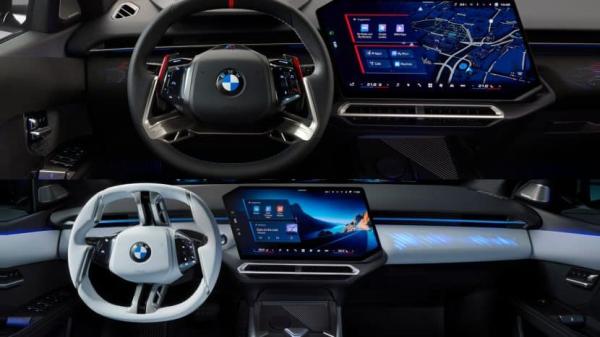

As is outside, so is inside. Again, the M350 best demonstrates the changes between the two models, which will grow even smaller when the i3 M60 xDrive eventually releases. Past the obvious—like M badging and colors on the dashboard—there’s little to talk about. The steering wheel changes the most, by virtue of paddle shifters on the back and a different shape that trades vertical spokes for horizontal. That’s the M Sport wheel; it’s available across the 3 Series range as part of the M Sport Package Pro. The i3 also trades a little bit of luggage space on account of its powertrain; you’ll get 420 liters instead of 450 liters. That’s 14.8 cubic feet down from 15.9 cubic feet, for Americans.
BMW i3 vs. 3 Series: Horsepower, 0-60 and Weight
There’s lots of performance to be had with the new 3 Series, mostly thanks to a very diverse lineup. At the bottom rung comes the 318 with a 156-horsepower (115 kW) engine, followed by the 320’s 2.0-liter four-cylinder (the B48) making a damn decent 211 horsepower (155 kW). The 320 takes 7.4 seconds to achieve the zero to 60 mph sprint. Things get dialed up considerably for the M350 xDrive. The B58 inline-six now makes 443 PS (326 kW) in Europe, or 437 horsepower in the U.S., along with 428 pound-feet of torque (580 Nm). BMW says it takes just 4.1 seconds to blast from a standstill to 60 mph. Details still to come on the 330, which doesn’t appear to be available at launch.
The EV side stays similarly spicy. Available at launch are the i3 40 xDrive and i3 50 xDrive, with an even hotter i3 M60 xDrive on the way. The base 40 xDrive makes do with 374 PS (275 kW) in Europe, or 369 horsepower in the U.S.,, sprinting from zero to 60 mph in 5.4 seconds. Not bad. The quicker 50 xDrive cleans up with 469 PS (345 kW) in Europe, or 463 horsepower in the U.S., achieving the same feat in 4.7 seconds. That makes the gas M Performance model the quickest of the bunch, at least for now. The i3’s advantageous dimensions—width, length, and wheelbase—should help offset the car’s weight difference. The i3 40 xDrive’s DIN weight sits at 2,090 kg (4,607 pounds). The 320, meanwhile, sits at 1,680 kg (3,703 pounds). The weight gain stays consistent across trims and in no way should be surprising.
BMW i3 vs. 3 Series: Technology
Aside from the obvious differences in powertrain, there’s not a lot separating the electric and petrol models from one another. Each receives a 17.9-inch center display with BMW Operating System X, Panoramic Vision, an optional 3D head-up display, voice commands, and an extensive library of apps and video games to utilize should the need arise. Wireless Apple CarPlay and Android Auto remain in place, standard. Our full write-up on the new 3 Series includes all the highlights, but essentially, gas and electric models differ very little when it comes to the technology drivers actually interact with.
It probably doesn’t shock anyone to find that the 3 Series lineup remains very similar across trim and, indeed, powertrains. After all, it’s simply another exercise in BMW’s winning formula: make gas and electric vehicles equally great via widespread equipment and feature sharing. Deciding on a propulsion method that works best for your lifestyle will likely override any of the (very small) aesthetic differences.

Related posts


Latest Post


No Comments