
Biggest test of 2026: BMW iX3 vs Volvo EX60 vs Mercedes GLC
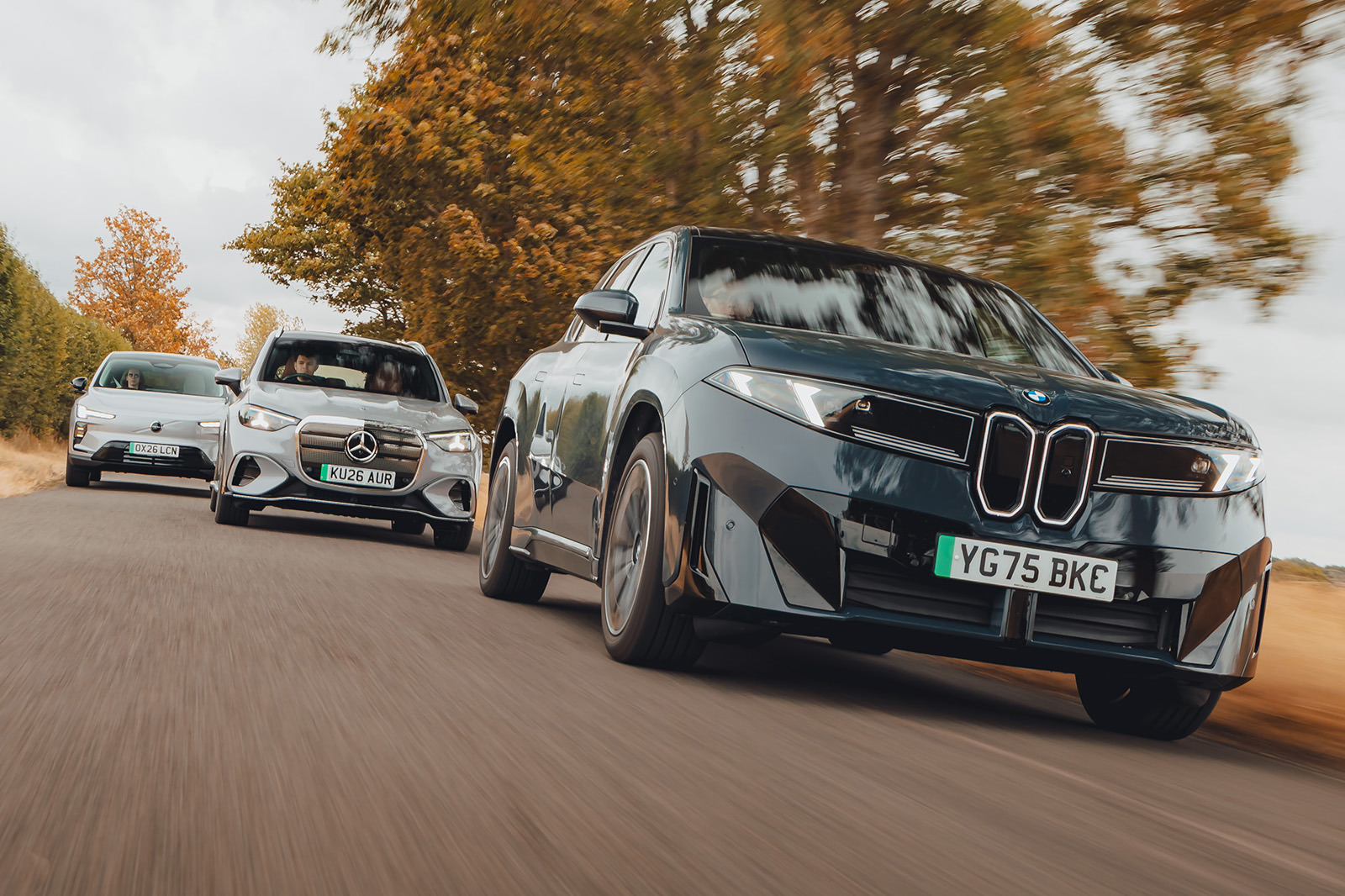
BMW, Mercedes and Volvo each begin a new era with long-range, tech-heavy family SUVs. Which rules?

It’s sometimes said that we have passed peak car. In other words, the best cars have already been made and it’s downhill from here. What ‘best’ means is of course very relative, and it depends on the type of cars we’re talking about.
The case is most easily made for the affordable enthusiast’s car – hot hatches and sports cars have nearly gone extinct. You might also look to what was once Autocar heartland: the big diesel estate. If you want a new BMW 5 Series Touring with a six-cylinder engine, you have to get the very expensive plug-in hybrid; there are no more diesels. You might also argue the new one is uglier and more annoying to use.
However, if you are doing well at work and are able to pick a nice upmarket family car in 2026, you’re much more likely to be looking at something electric and mildly SUV-shaped.

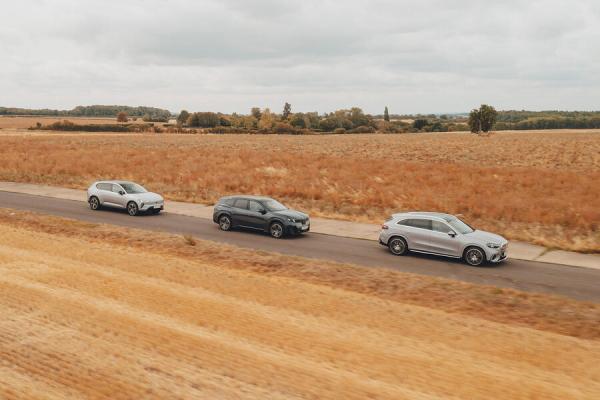
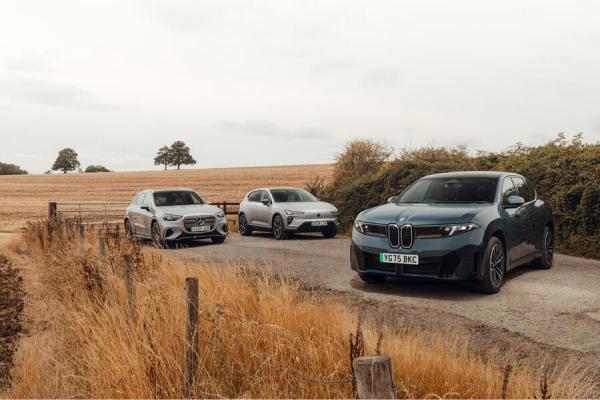
This year is turning out to be a bumper one for those. In quick succession, we’ve seen the launch of the BMW iX3, the Mercedes-Benz GLC Electric and, most recently, the Volvo EX60. They’re all brand-new, and they’re all intent on proving that while we may have passed peak ICE car, things are only getting better in the EV world – and fast.
All three are the result of massive investments from their makers in new platforms that really take advantage of the opportunities of electric power-that and the knowledge gained from 10 years of making mainstream EVs, of course.
The pitch is that you may not get a six-cylinder diesel any more, but you are getting an easy 350 miles of real-world range with charging the speed of a comfort break, plus more power and performance than you could reasonably need with no fuss and more usable interior space. More tech than you could shake a non-functional key fob at, too, but we’ll get to that later.
It’s remarkable how big a leap they take over the previous generation. The EX60 and GLC have no direct predecessors, but the iX3 does. The previous-gen iX3 was a pretty good car when it came out in 2021, and for a decent while after that. But for not much more money, the new one claims 200 miles more range on paper, more than double the charging speed, two seconds off the 0-62mph time and much more room inside.
Even other current rivals are left in the dust. The Audi Q6 E-tron and Porsche Macan Electric had their debuts in 2024 using a new Volkswagen Group platform, and while they’re both quite nice cars, in terms of range and efficiency they’re a good way behind even the GLC, which looks the weakest on paper of our trio.
Meanwhile, the Lexus RZ is not even in the conversation, and no wonder Cadillac is having second thoughts about relaunching in the UK. Who’s going to spend the same sort of money on an Optiq with just 264 miles of range?
Three brand-new cars on brand-new platforms that wipe the competition away sure feels like a generational moment, and having driven all of them individually, it’s already clear that you can’t go far wrong with any of them. But we still want to know which comes out on top.
Electric performance is so key for these cars, so that feels like a good place to start. For this test we’ve got high-spec versions of the long-range dual-motor models. The only snag is that we would have liked to have the P12 version of the EX60, because it has the 500-mile claimed range to match the iX3 50. That range-topper is not coming until later next year, though, so we have a 403-mile P10 instead, which happens to be a better match on price and performance with both the iX3 and the GLC 400.
Immediately, it looks like there’s a clear winner and a clear loser. The Mercedes is the only one to fall short of the 400-mile mark for its claimed range, it has the worst on-paper efficiency and it charges the slowest. The BMW storms ahead with close to 500 miles thanks to the biggest battery and better efficiency.
As it turns out, in our controlled economy test the Mercedes over-delivers. It improved on its WLTP efficiency claim both on the trip computer and on the charger, and it hit a higher charging peak than advertised. Meanwhile, the Volvo’s trip computer claimed to be doing the same, but according to the charger it needed more energy to complete the same loop than the others. Even so, 3.5mpkWh is still decent for a big-ish car with 503bhp, but it does give it the shortest range of this trio.
The BMW? Its trip computer was slightly optimistic, but it returned the best efficiency and has the biggest battery and the fastest charge speed. It’s not even close, really. In the summer conditions we had for this test, you would trust it to return a genuine 400 miles all day long, which feels like a bit of a milestone for EVs.
| BMW iX3 50 xDRIVE | MERCEDES-BENZ GLC 400 4MATIC ELECTRIC | VOLVO EX60 P10 AWD | |
|---|---|---|---|
| Battery capacity (usable) | 108.7kWh | 94.0kWh | 92.0kWh |
| WLTP range | 492 miles | 396 miles | 403 miles |
| WLTP economy | 4.0mpkWh | 3.7mpkWh | 3.8mpkWh |
| Test economy (trip) | 4.2mpkWh | 3.9mpkWh | 4.1mpkWh |
| Test economy (charger) | 3.9mpkWh | 3.8mpkWh | 3.5mpkWh |
| Test range (charger) | 428 miles | 354 miles | 321 miles |
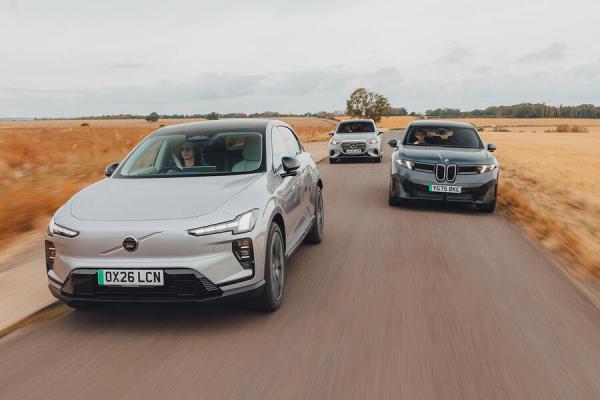
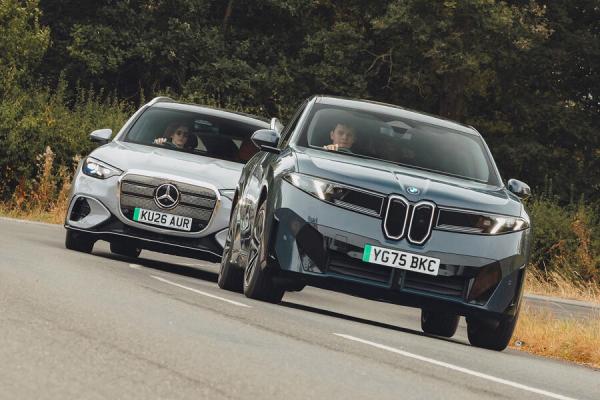
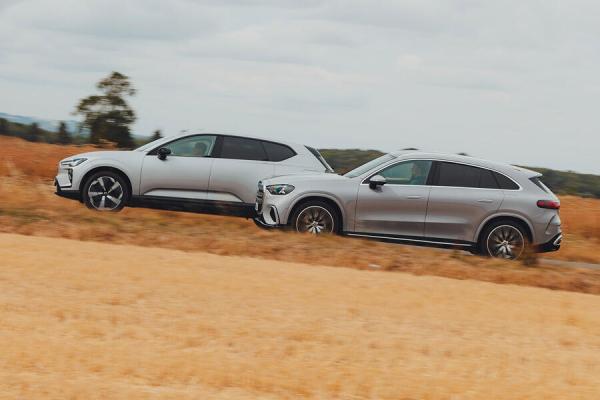
Irrespective of the numbers, these cars also need to appeal on some emotional level – you need to want them, otherwise you could buy two Leapmotor C10s for the same money. They need to have some showroom appeal. Despite all of our test cars arriving in varying shades of Polarised Whatever and Crystal Meh, I’ll fight anyone who claims they look the same.
Yes, they’re all two-box SUVs, but you’re not going to tell me they look any less distinctive than a 1990s Nissan Primera, Peugeot 405 and Ford Mondeo. BMW and Mercedes are really leaning on their ‘heritage’, the former with a modern reinterpretation of the 1970s shark-nose look and slim vertical kidney grille, the latter with a big ‘look at me’ light-up 1960s grille and three-pointed stars absolutely everywhere.
The Volvo is a lot more subtle and overtly an EV. That perhaps makes it a bit more forgettable, but the squared-off rear end is a throwback to 240 estates. Among the testers, we couldn’t agree which looks best, which is probably a good thing. In any case, you have eyes and we have pictures, so you’ll make your own mind up.
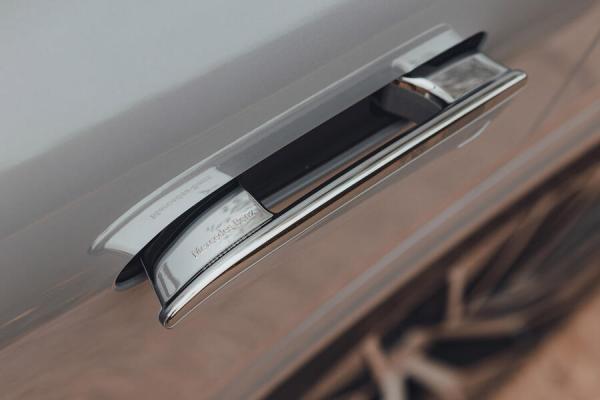
Time to get in an action that isn’t as easy as you would hope because all of these cars have really stupid door handles. The Volvo has these little winglets that don’t move, with no physical override, and it doesn’t come with a key. Our test car came with an iPhone with the Volvo app on it, a card and a black puck with no buttons. The app seemed to work well but still isn’t as versatile as a key.
The BMW has a key, but it has pop-out door handles that don’t always work first time and have a habit of hiding at the wrong moment. The Mercedes has something similar that seemed much better executed, until it flat-out refused to unlock a few days after the shoot.
The GLC also introduces one useful ‘innovation’. All three of these cars have frunks, but whereas the EX60 and iX3 make you go inside and find a lever to pull, you can simply press the Mercedes emblem on the bonnet of the GLC to make it pop open. An external frunk release – it would be genius if it wasn’t such an obvious idea. The GLC has by far the biggest frunk too, to the point where you might just choose to use that for your weekly shop instead of the main boot.
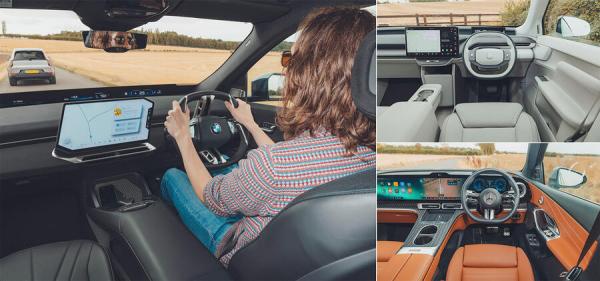
Once aboard, it’s remarkable how different the atmosphere is in each of these three. It is helped here by our three test cars having completely different interior colours – after all, the premium European manufacturers still give you a certain degree of personalisation, even if the famously long options lists are a thing of the past.
Much like with its exterior design, the GLC is the most traditional – which I admit is a weird thing to say when you’re looking at a 39.1in screen. There’s nothing too weird about the steering wheel or mirror controls, and you feel cocooned thanks to the rather high centre console and the warm choice of materials.
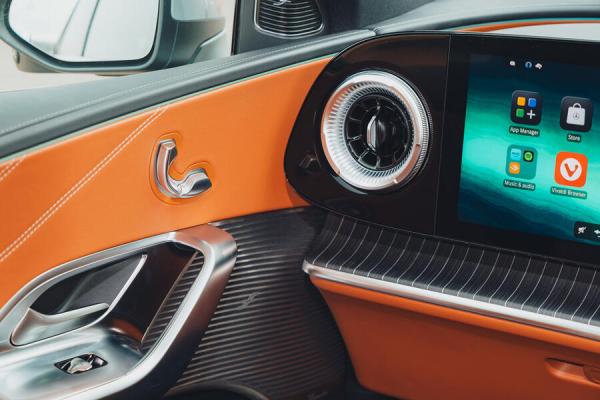
Perceived quality is spot on: the wobbly armrests found in some early EQ cars are long gone. Instead, you’re drawn to the nice wood, the floating air vents and the speaker grilles that recall a vintage amplifier.
And while it remains unclear what practical purpose such a bloody enormous screen actually serves, it’s undeniably impressive in a convincingly futuristic way. Presumably that is its main purpose. Getting comfortable is straightforward: there’s lots of adjustment in the seat, and you look through the wheel at some digital dials.
Volvo and BMW have gone for much more of a concept car vibe in the general architecture. The Volvo’s tall dash, open floor and small steering wheel could be a piece of modernist architecture, although the big, high-set rectangular centre screen makes it look the most like a generic modern car interior. There are plenty of little design details to be discovered, though.
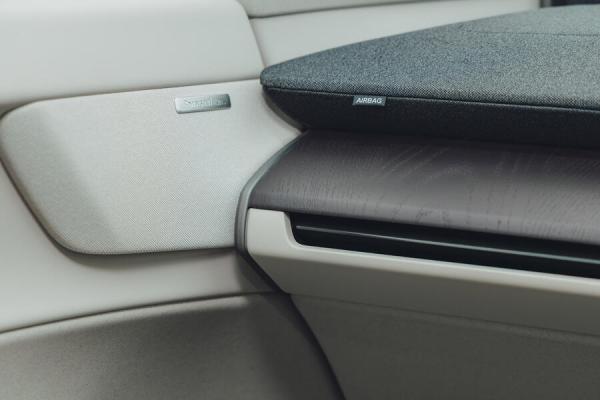
Here, too, the careful choice of materials is pleasing, and the few buttons there are feel tactile. There aren’t enough of them, though. Volvo still makes you use the screen and the steering wheel buttons to set the mirrors and steering column, which is just a bit irritating.
Volvo has jumped on the new bandwagon of a high-set driver display and a little steering wheel. The display is set at the end of the dashboard, so it actually works for most people, but one tester had to set the wheel a bit too low to be able to see everything. The widely adjustable seats are excellent, though – classic Volvo.
BMW has perfected a similar formula. In the iX3, the relationship between all of the controls is better matched, and the way the ‘panoramic iDrive’ projects the instruments onto the bottom of the windscreen is a really neat effect that also reduces eye strain compared with a screen.
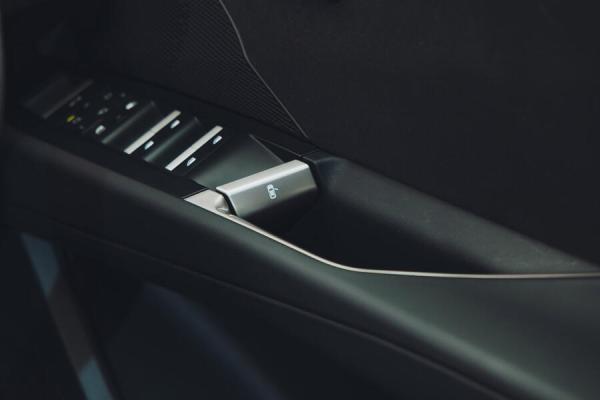
Once you get over the skew-whiff touchscreen and the weird steering wheel (it’s much nicer to hold than it looks), the iX3 has the plainest cabin. There’s just not much going on, and the materials aren’t as pleasing as in the GLC and EX60, with more plastic and fewer highlights.
There are very few buttons, which is common to all three cars. It’s one area where they feel like a step back from what came before. If a £22,000 Renault 5 gets a row of physical climate control buttons, it’s clearly not a cost issue but one of style over substance.
In fairness, all three have most of the important controls easily accessible, with lots of user-configurability in the case of the iX3 and GLC. They all have excellent built-in navigation, pleasing graphics and some of the best voice assistants around (Mercedes is miles ahead in this respect), but in each car I had moments when the screen didn’t respond instantly, or a certain setting wasn’t where I expected it to be – all of which would be less of an issue if the screen didn’t have so much to do.
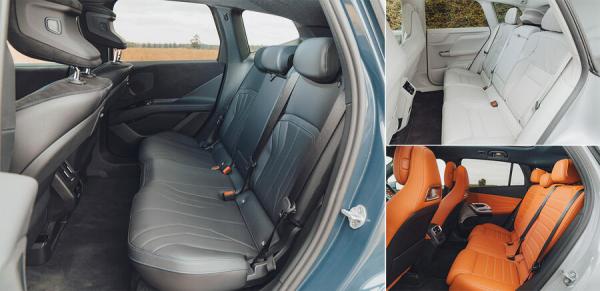
There was a time when a BMW or Mercedes would give you less interior space than the equivalent Vauxhall or VW, but here, a dedicated EV platform really pays dividends: when there’s no engine, much more of the wheelbase can go to people and luggage. All three have much more generous rear leg room than their ICE equivalents, and none suffers particularly from the EV-typical high floor in the back.
On boot space, it’s again bizarrely close, although the GLC has by far the biggest frunk and the EX60 has a pretty big well under the boot floor. The iX3 is roomy and practical, but in that respect it clearly comes third in this company. No wonder, it is the smallest car overall.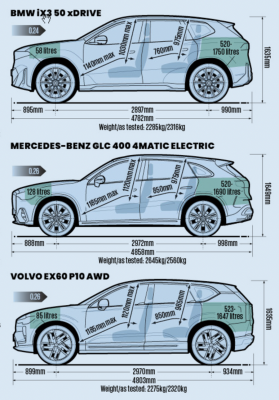
As with the styling, there are those who say that all electric cars drive the same, but that couldn’t be further from the truth, and it is where some obvious differences in character emerge. There are two camps here: the comfy soothing one and the sporty one-no prizes for guessing which cars belong where.
You might imagine there to be some sort of consensus on how to handle brake regeneration and pedal response by now, but not so. Mercedes believes in paddles: pull the left one a couple of times and you’ve got your slightly abrupt one-pedal mode; go all the way right and you have full freewheeling. The Volvo does much the same, but by pressing an icon on the screen.
The BMW offers a few regen strengths in the screen then lets you switch between that and full one-pedal using the gear selector. It has the smoothest one-pedal mode but no freewheeling. Which is best is probably a matter of preference, but all of them offer a choice and feel nicely progressive and manageable, like actual human engineers spent actual time tuning the responses – something that can’t be said of all EVs.
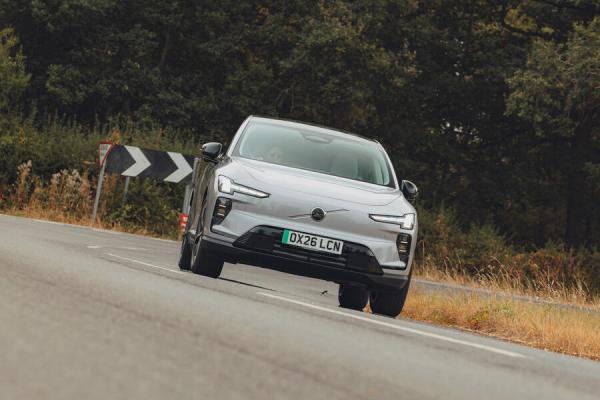
You want the accelerator pedal to be progressive, because all of these mid-range family cars offer huge performance. The supposedly sporty BMW has the least power on paper, and feels it, but really it’s the least fast rather than the slowest. This level of performance is unnecessary, but because these cars have grip, traction and decent traction control, it doesn’t feel excessive. Truth be told, it’s nice to have some punch when there’s a slow moving Aygo to be dispatched on a country road.
For enjoying said country road, there’s one clear winner here, and it’s the iX3. On passive suspension and without any kind of fancy steering, it keeps things simple, which helps give it a pleasingly natural feel in the corners. The body takes on a bit of roll and then just settles. On the power the chassis will gently start to rotate for a subtle and non-threatening rear-drive feel. There isn’t loads of steering feel, rather just enough to let you know what’s going on.
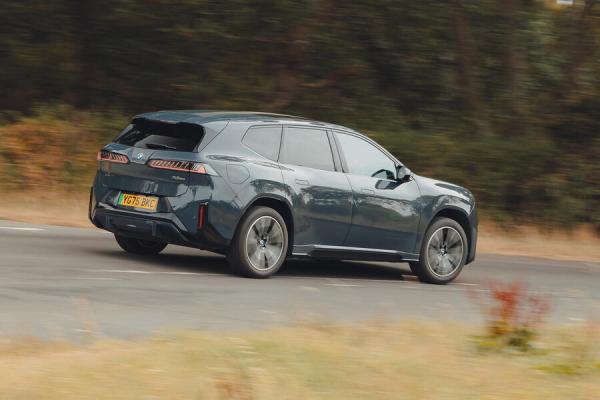
For all that, it’s also the least comfortable of our trio. The suspension doesn’t feel overly stiff, because the ride over a typically bumpy road is nicely level and controlled. Mostly, it feels as if there’s much less rubber in the suspension and much more of the road surface’s vibes and asperities make their way into the cabin. You hear them as much as feel them, as the iX3’s boot turns into a sort of tin drum.
The iX3’s refinement issues hadn’t bothered me when I drove that car in isolation, but they are made quite obvious when you swap into the oases of calm that are the EX60 and the GLC.
You’d expect the GLC to take the lead because our car had the Refinement Package, aka air suspension and rear-wheel steering, which give it an absurdly tight turning circle and really lovely isolation. The suspension feels like it has lots of travel and isn’t afraid to use it. However, it struggles when the road surface is uneven side to side, when you get noticeable head toss.
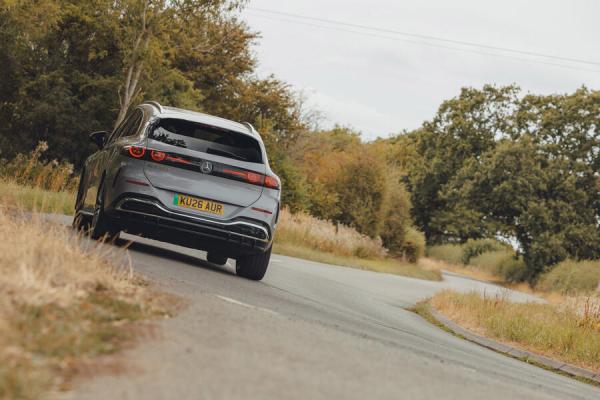
The EX60, which as a P10 always comes on steel springs with adaptive dampers, combines similar isolation to that of the GLC with a ride that’s just settled everywhere. If you’re after an all-out comfort option, this is it. It rides well, it’s exceptionally quiet and it has the best seats here.
The flip side is that it doesn’t handle badly but takes Volvo’s safety focus rather too seriously. There’s good grip and even the beginnings of sound balance, but the traction control feels like it’s from the 1990s in that it brutally shuts down the power for no apparent reason.
The steering is also quite synthetic, and the little steering wheel reminds you of an old Sega arcade machine. In that respect the GLC is a decent middle ground, because while it feels quite big and heavy, the steering is more communicative.
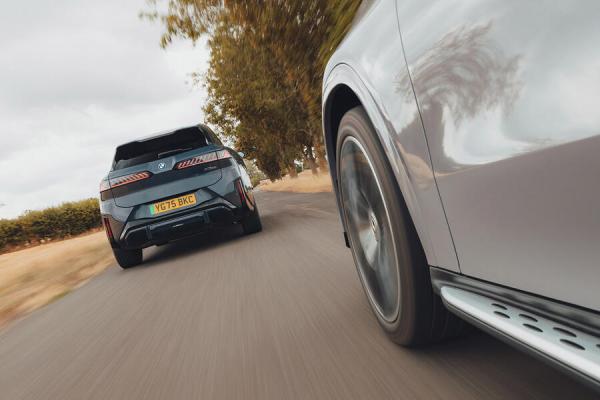
These three show European chassis development at its best: here we have top-notch ‘everyday-sporty’ and comfortable options and a decent middle ground. The Volvo and BMW also show it’s not impossible to tame the driver assistance tech that has been blighting modern cars.
These are the first two cars in which I don’t feel the need to ever switch off the lane keeping assistance: it just keeps to itself until the day when I might need it. Switching off the overspeed warning is a one-touch operation in both, and they have adaptive cruise control systems you can trust. If this is the new standard, the GLC falls short. It’s decent enough, but you get a bit of aggro here and there from all the systems.
In many ways this test feels like the natural order of things being restored. Three European manufacturers that are all at the forefront of car development with the powertrain du jour. All of them are great, with some differences of flavour. The Volvo and the Mercedes are practical, spacious and relaxing, the Volvo slightly more so thanks to its even smoother ride and more sophisticated ADAS. The Mercedes hits back with better range and economy.
In the end, the winner has to be the BMW: it offers so much more range, efficiency and charging speed than the others while being that bit more involving to drive and remaining decently comfortable. Is it peak car? There’s still some lost ground to regain in terms of interior tactility, but it sure does move the EV game on.
| Feature | BMW iX3 50 xDRIVE | VOLVO EX60 P10 AWD | MERCEDES-BENZ GLC 400 4MATIC ELECTRIC |
|---|---|---|---|
| Rating | 4.5 stars | 4 stars | 4 stars |
| Verdict |
Not the roomiest or the most comfortable, but it has the best powertrain by far, and is the keen driver’s choice. A classic BMW built for the electric age. |
Utterly relaxing to drive thanks to outstanding isolation and sophisticated ADAS. A little short on efficiency and range compared with the others. |
A really impressive, rounded electric SUV with good dynamics, space and efficiency. But it doesn’t feel quite as special or easy to live with as the other two. |
| Price | £60,655 | £59,860 | £60,350 |
| Price as tested | £69,755 | £67,845 | £76,100 |
| Engine | Asynchronous motor (f), separately excited synchronous motor (r) | Asynchronous motor (f), permanent magnet synchronous motor (r) | Permanent magnet synchronous motor with disconnect clutch (f), permanent magnet synchronous motor (r) |
| Power | 165bhp (f), 322bhp (r), 462bhp (total) | 268bhp (f), 402bhp (r), 503bhp (total) | 215bhp (f), 402bhp (r), 483bhp (total) |
| Torque | 476lb ft | 524lb ft | 590lb ft |
| Gearbox | 1-spd reduction gear, 4WD | 1-spd reduction gear, 4WD | 1-spd reduction gear (f), 2-spd automatic (r), 4WD |
| Kerb weight | 2285kg | 2275kg | 2645kg |
| 0-62mph | 4.9sec | 4.4sec | 4.3sec |
| Top speed | 130mph | 112mph | 130mph |
| Battery | 113.4/108.7kWh (total/usable), NMC | 95.0/92.0kWh (total/usable), NMC | 100.0/94.0kWh (est total/usable), NMC |
| Range | 492 miles | 403 miles | 396 miles |
| Economy | 4.0mpkWh | 3.8mpkWh | 3.7mpkWh |
| Max charging rate | 400kW | 370kW | 330kW |

Related posts





Latest Post


No Comments