
Alfa Romeo Tonale plug-in hybrid review 2026
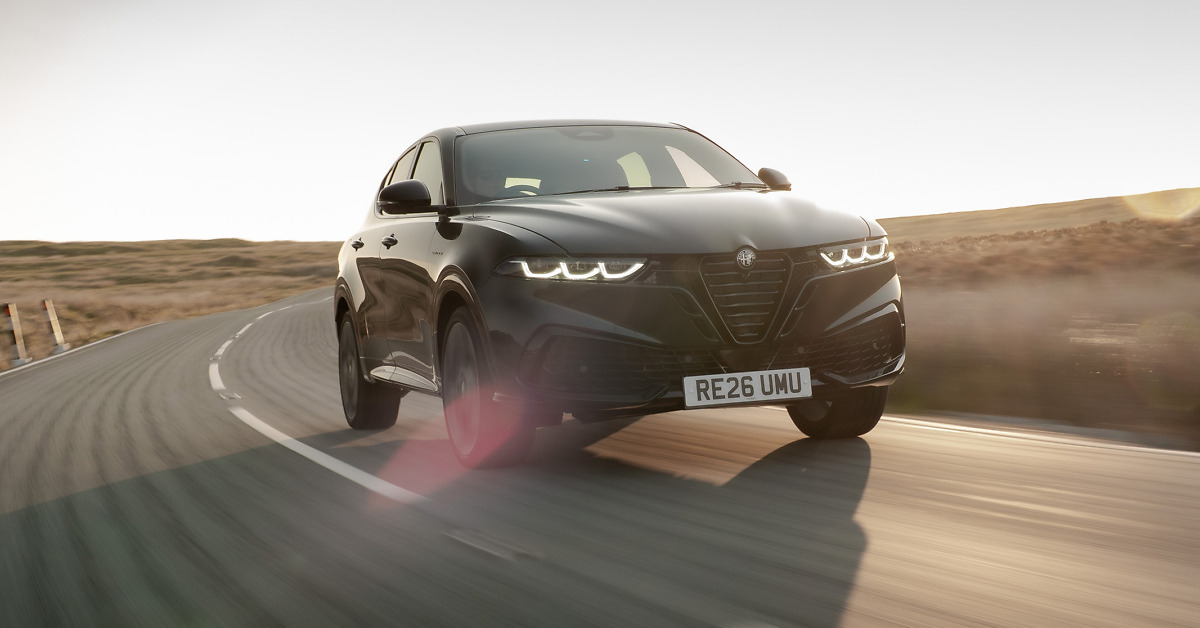
Make and model: Alfa Romeo Tonale Plug-in Hybrid Q4
Description: Medium-sized petrol plug-in hybrid SUV
Price range: £43,660 to £49,560, plus optional extras
Summary: The Alfa Romeo Tonale plug-in hybrid is a stylish and engaging choice in a crowded family SUV market, although its high price, small boot and disappointing interior materials count against it.

For a broader ownership picture, see our Alfa Romeo Tonale Expert Rating.
The family-sized Alfa Romeo Tonale was, and still is, an important model for this storied Italian company. At its launch in 2022, Alfa framed the car’s arrival as nothing short of a transformation for the brand, hoping to attract a broader range of buyers without losing the sporting character that Alfa fans have come to expect.
For 2026, Alfa Romeo has introduced a mid-life update, including a redesigned centre console, revised equipment and a few exterior styling changes. There’s a new triangular front grille and a centrally mounted number plate, bringing an end to the brand’s long tradition of offset front plates.

The Tonale is available with petrol mild-hybrid and plug-in hybrid powertrains, and it’s the latter we’re concentrating on here. We drove the updated 270hp plug-in hybrid Q4 around the winding valley roads and tight suburban streets of South Wales to see whether this handsome Italian SUV has enough substance to match its style.

Price and equipment
The Tonale plug-in hybrid starts at around £44K, rising to £47K for the Ti and almost £49K for the Sport Speciale. We drove the range-topping Veloce, priced just south of £50K before options.
That’s firmly into premium SUV territory, competing directly with the Audi Q3 and BMW X1. The Tonale plug-in hybrid also costs about £6K more than its basic petrol sibling, so buyers need to make good use of the electric driving capability to justify the additional expense.
Standard equipment is respectable, with digital instruments, a ten-inch touchscreen, reversing camera, parking sensors, dual-zone climate control and wireless phone charging. However, some features you’d expect in a car at this price, such as a 360-degree camera, remain optional.
The Ti looks like the sweet spot in the range, adding electrically adjustable leather seats with heating and ventilation, along with larger wheels and some useful interior upgrades. The Sport Speciale concentrates more on appearance, with 20-inch wheels and distinctive Alcantara upholstery.
The Veloce’s main attraction is its electronically controlled suspension, which makes a noticeable difference to the handling. Whether that’s worth paying extra for depends on how much you value driving enjoyment, especially as the firmer setting also compromises comfort.
None of the versions looks particularly cheap against premium rivals, and the Tonale’s equipment alone isn’t enough to justify its price.
Inside the car
The Tonale’s exterior flair is matched by some desirable sporty design elements inside, from the three-spoke leather steering wheel shared with the Giulia saloon to the configurable digital instrument dials, which resemble traditional gauges from Alfa’s sporting past.
The leather-clad front seats are comfortable, with cushioned back support and side bolstering that holds you in place through sharper corners. The centre console also doubles as a soft armrest when you’re sitting in traffic.
The cabin feels well put together, but some hard interior plastics give the impression that Alfa has spent more money designing the car’s attractive exterior than its interior. It’s not a deal-breaker, but several rivals offer a better quality finish at this price, and even significantly cheaper family SUVs like the Nissan Qashqai do a better job of hiding scratchy surfaces.
There’s also a problem with the Tonale’s underlying design. Alfa Romeo is part of the Stellantis group, sharing technology and components with mainstream brands such as Peugeot, Jeep and Vauxhall. There’s nothing inherently wrong with that – Audi does much the same with Volkswagen and Skoda – but the Tonale doesn’t disguise its more ordinary origins particularly well. Too many of the materials and controls feel like they belong in a much cheaper car, which undermines the premium atmosphere that Alfa is trying to create.
The infotainment screen is simple enough to navigate, although rivals offer sharper graphics, and the new rotary gear selector is easy to get to grips with. Headroom is perfectly adequate, but the Tonale can feel a little cramped in the rear due to its relatively low window line.
Rivals like the BMW X1 and Volvo XC40 are noticeably more upright and airy in the back, although the Tonale does provide generous legroom in both rows. With three adults in the rear seats, shoulder space could also become an issue.
Boot space differs considerably between the Tonale’s two hybrid powertrains. The mild hybrid offers a respectable 500 litres, but our plug-in hybrid had just 385 litres, as the battery raises the boot floor. That’s actually less luggage space than you’ll find in a Renault Clio hatchback.
A smaller boot isn’t something all plug-in hybrid buyers simply have to accept, either. Plug-in hybrid versions of the BMW X1 and Range Rover Evoque offer considerably more luggage space, so the Tonale is at a disadvantage for families who regularly need to carry plenty of luggage.


Driving range and charging
The Tonale plug-in hybrid uses a 1.3-litre turbocharged petrol engine, paired with a battery of approximately 16kWh and a rear-mounted electric motor. Together, they produce 270hp and provide four-wheel drive.
Alfa Romeo quotes an official electric driving range of up to 38.5 miles, although we managed around 40 miles of electric-only driving around town with a full battery.
In the default Natural driving mode, the Tonale pulls away using its electric motor before the petrol engine joins in as required. The transition is smooth, with little more than a muffled hum from the engine and no noticeable clunks or vibrations.
For a more economical drive, Advanced Efficiency mode prioritises the battery and dulls accelerator response to reduce energy consumption. Provided there’s enough charge, the car can run on electricity alone even at motorway speeds.
Charging from a 7.4kW home wallbox takes less than two and a half hours for a full battery. That’s straightforward enough for owners who can charge regularly at home, although the Tonale’s electric range is now fairly modest compared with some newer plug-in hybrids.
The official combined fuel economy figure is more than 200mpg, but that number depends heavily on regular charging and making the most of electric driving. With the battery depleted, we recorded around 36-40mpg, which is broadly competitive with other petrol-powered family SUVs of this size.
On the road
The Tonale is more enjoyable to drive than many family SUVs, particularly on winding roads where its responsive steering and relatively well-controlled body movements make it feel more agile than its size suggests. The 270hp plug-in hybrid powertrain also provides plenty of acceleration, with 0-62mph taking 6.6 seconds.
It’s not quite as polished as those numbers suggest, however. In the standard Natural driving mode, accelerating with a depleted battery can cause a brief hesitation while the hybrid system decides how best to deliver the power. Switching to Dynamic mode largely avoids this by keeping the petrol engine running and sharpening the accelerator response.
Our Veloce test car’s electronically controlled suspension makes a noticeable difference, tightening up the handling in Dynamic mode. Unfortunately, it also makes the ride rather uncomfortable over rougher British roads, with thuds and jolts over potholes and speed bumps. The softer setting is better for everyday driving, but the Tonale still doesn’t ride as comfortably as we’d expect from a premium family SUV.
The driving position takes a little getting used to, as the steering wheel and pedals are slightly offset. Visibility is generally good, although the chunky windscreen pillars can create blind spots at junctions. The driver assistance systems weren’t particularly intrusive, but the speed limit recognition repeatedly displayed incorrect information.
The Tonale has more driving appeal than some rivals, but the advantage isn’t as great as Alfa Romeo’s sporting reputation might lead you to expect. The handling is competent and reasonably engaging, rather than exceptional, while the ride quality and occasional powertrain hesitation count against it.


Ownership
The Alfa Romeo Tonale currently holds a C-grade New Car Expert Rating of 63% in our unique Expert Rating Index. Its Used Car Expert Rating is also C-grade, at 63%, with both ratings covering the wider Tonale range rather than just the plug-in hybrid.
Safety is one of its stronger areas, with a five-star Euro NCAP rating from 2022 and good results for occupant protection and driver assistance technology. Media reviews have been more mixed, averaging 54% for a D-grade rating.
Alfa Romeo’s five-year/75,000-mile new car warranty is better than the three-year cover offered by several premium rivals. The Tonale plug-in hybrid also gets separate eight-year/100,000-mile warranty cover for its battery.
Our Expert Rating Index shows a mixed picture for running costs, with insurance premiums around average and servicing and maintenance expenses expected to be broadly comparable with other premium SUVs. As with any plug-in hybrid, fuel costs will depend heavily on how regularly the battery is charged.
Verdict
The Alfa Romeo Tonale plug-in hybrid is an attractive SUV with strong performance and more driving appeal than many rivals. Its distinctive styling and Alfa Romeo badge will undoubtedly attract buyers who want something different from the usual German or Japanese alternatives.
Unfortunately, the Tonale struggles to justify its price. It’s neither as sophisticated nor as well finished as similarly priced premium SUVs, while its small boot, cramped rear cabin and sometimes uncomfortable ride make it less practical and relaxing than several mainstream alternatives.
That’s the fundamental problem. The Tonale shares too much of the look and feel of its more ordinary Stellantis relatives, without delivering enough extra quality or refinement to justify its premium positioning. It can be enjoyable to drive, but not sufficiently so to overcome the shortcomings elsewhere.
There’s nothing inherently wrong with choosing a car because you like the way it looks or because you have an affection for the badge. But judged objectively, the Tonale doesn’t offer enough to justify paying more than you would for a Kia Sportage or Hyundai Tucson, and it falls short of what an Audi Q3 or BMW X1 can offer for similar money.
If your heart is set on an Alfa Romeo, the Tonale has enough character to keep you interested. For everyone else, there are better family SUVs available.
We like:
- Agile handling and strong performance
- Distinctive exterior styling
- Comfortable, supportive seats
- Useful real-world electric range
- Generous standard equipment across the range
We don’t like:
- Hesitant throttle response with a depleted battery
- Some cheap-feeling interior plastics
- Occasional driver assistance tech errors
- Less boot space than the mild-hybrid Tonale
- Key rivals offer more passenger and storage space
Similar cars
Audi Q3 | BMW X1 | BMW X2 | DS 3 Crossback | Jaguar E-Pace | Lexus UX | Mercedes-Benz GLA | Range Rover Evoque | Volvo XC40
Key specifications
Model tested: Alfa Romeo Tonale Veloce plug-in hybrid
Price as tested: £49,560
Powertrain: 1.3-litre petrol engine and rear electric motor
Gearbox: six-speed automatic
Power: 270hp
Torque: 520Nm
Top speed: 121mph
0-62 mph: 6.6 seconds
Fuel economy: 217mpg (combined)
CO2 emissions: 29g/km
Euro NCAP safety rating: Five stars (July 2022)
TCE Expert Rating: C (63%), as of October 2026

Related posts




Latest Post


No Comments