
Dodge’s New Purple Haze Proves Plum Crazy Never Really Died
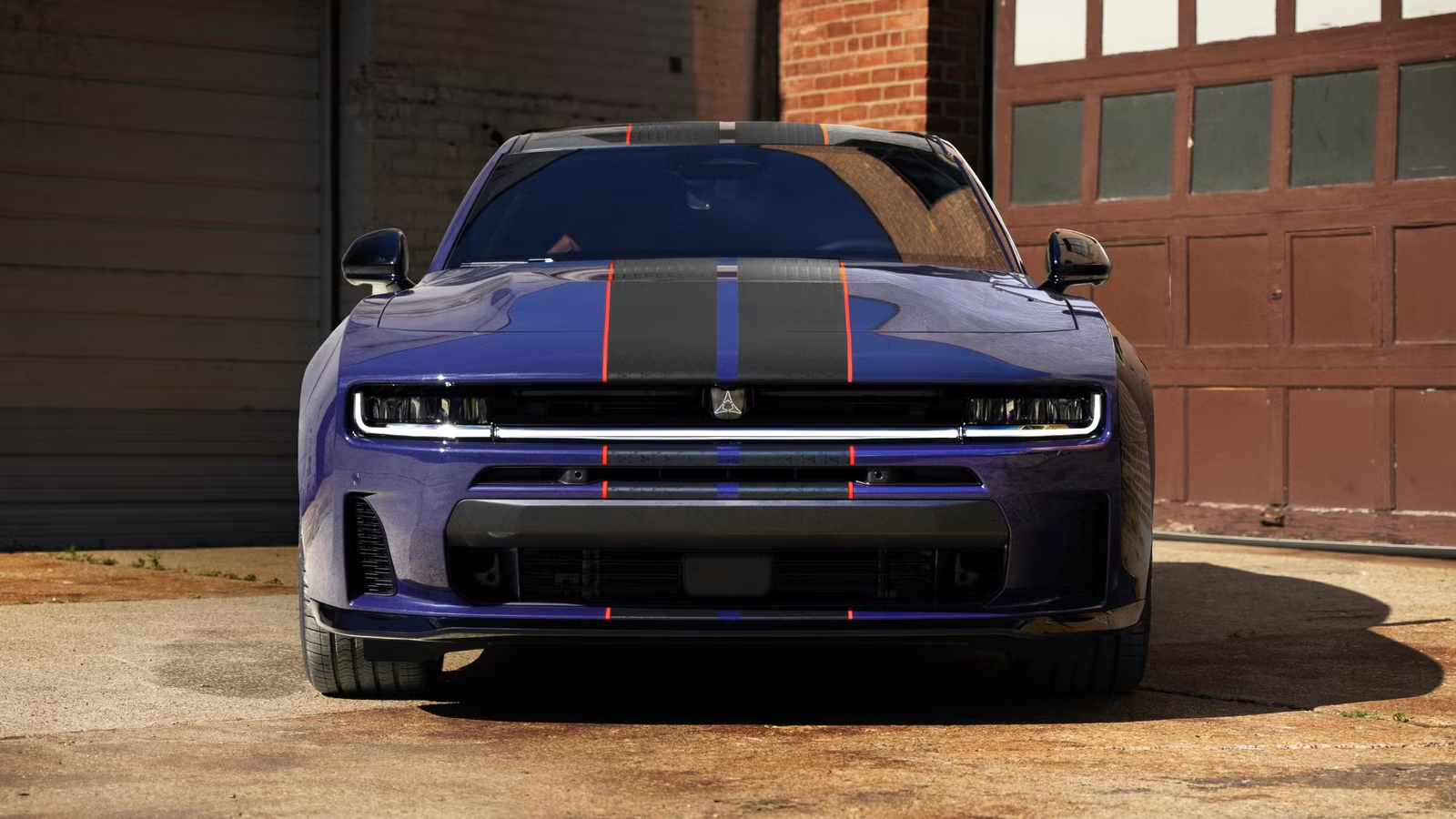
Dodge just announced Purple Haze as a limited-run exterior color for the Charger’s 60th anniversary, and the name alone should tell you everything about where this is headed. This isn’t a marketing team reaching for something edgy — it’s Mopar returning to ground it has owned since the muscle car era, when factory purple wasn’t a novelty but a statement of intent. The real story behind Purple Haze isn’t the 2027 Charger. It’s the half-century of collector obsession that made purple synonymous with Mopar in the first place — and why gearheads still hunt down those original factory hues with the same urgency they did fifty years ago.


Plum Crazy and the High-Impact Era That Started It All

In 1970, Dodge rolled out one of the most audacious factory color programs in American automotive history. The High-Impact palette — designed explicitly to grab attention on the street and at the drag strip — included a shade called Plum Crazy, factory color code FC7. It was unambiguously purple. Not burgundy, not maroon, not some hedged violet. Purple. On a Charger R/T. From the factory.
That same year, Plymouth ran a closely related hue called In-Violet (also coded FC7 across the corporate paint system) on the ‘Cuda and Road Runner. The two brands shared Chrysler’s B-body and E-body platforms, so the color showed up across the lineup — 440 Six-Pack cars, 426 Hemi cars, the full range of what Mopar was building at its absolute peak. The High-Impact program also included Sublime, Go Mango, and Tor-Red, but Plum Crazy became the one collectors fixate on most. There’s something about purple on a muscle car that reads as genuinely defiant in a way the other colors don’t quite match.
Why Factory Color Rarity Drives Auction Premiums

Plum Crazy wasn’t a volume seller in period. Most buyers in 1970 were still ordering their Chargers in conventional colors — black, white, the safer end of the palette. That means surviving Plum Crazy cars, especially those with documented broadcast sheets confirming the original FC7 paint, exist in genuinely small numbers. Rarity plus desirability is the auction formula that never fails.
High-condition Plum Crazy Charger R/Ts and ‘Cuda convertibles have repeatedly cleared six figures at major auction events, with the most desirable Hemi-powered examples commanding significant premiums over comparable cars in conventional colors. A numbers-matching 1970 ‘Cuda in Plum Crazy will routinely outperform an identical car in a standard hue — the color itself is part of the provenance. Collectors understand that the factory made a deliberate choice when they signed off on FC7, and that choice is baked into the car’s identity in a way no repaint can replicate. The broadcast sheet matters; the color code matters; the story matters.
Purple Haze Ties the 60th Anniversary to Something Real

Dodge’s decision to mark the Charger’s 60th anniversary with a purple limited-run color isn’t arbitrary nostalgia — it’s a direct callback to the brand’s most collectible era. Purple Haze as a name nods to the psychedelic energy of the early 1970s, the same cultural moment that made Plum Crazy feel right rather than reckless. The Charger nameplate debuted in 1966, and by its fourth-generation peak in 1970, it was wearing colors that no domestic competitor would touch.
For Mopar enthusiasts, the Purple Haze announcement lands as confirmation of something they already believed: that the color choices from that era weren’t accidents. They were brand identity. Dodge is leaning into that history deliberately, using a limited-run hue to connect the current Charger generation to the muscle-car lineage that built the nameplate’s reputation. Whether the new car earns its place in that lineage is a separate conversation — but the color choice is exactly right. Let’s just hope the production numbers stay tight enough to keep Purple Haze as rare as the FC7 cars that inspired it.

Related posts

Latest Post


No Comments