
The Hybrid Car With The Best Fuel Economy In 2026
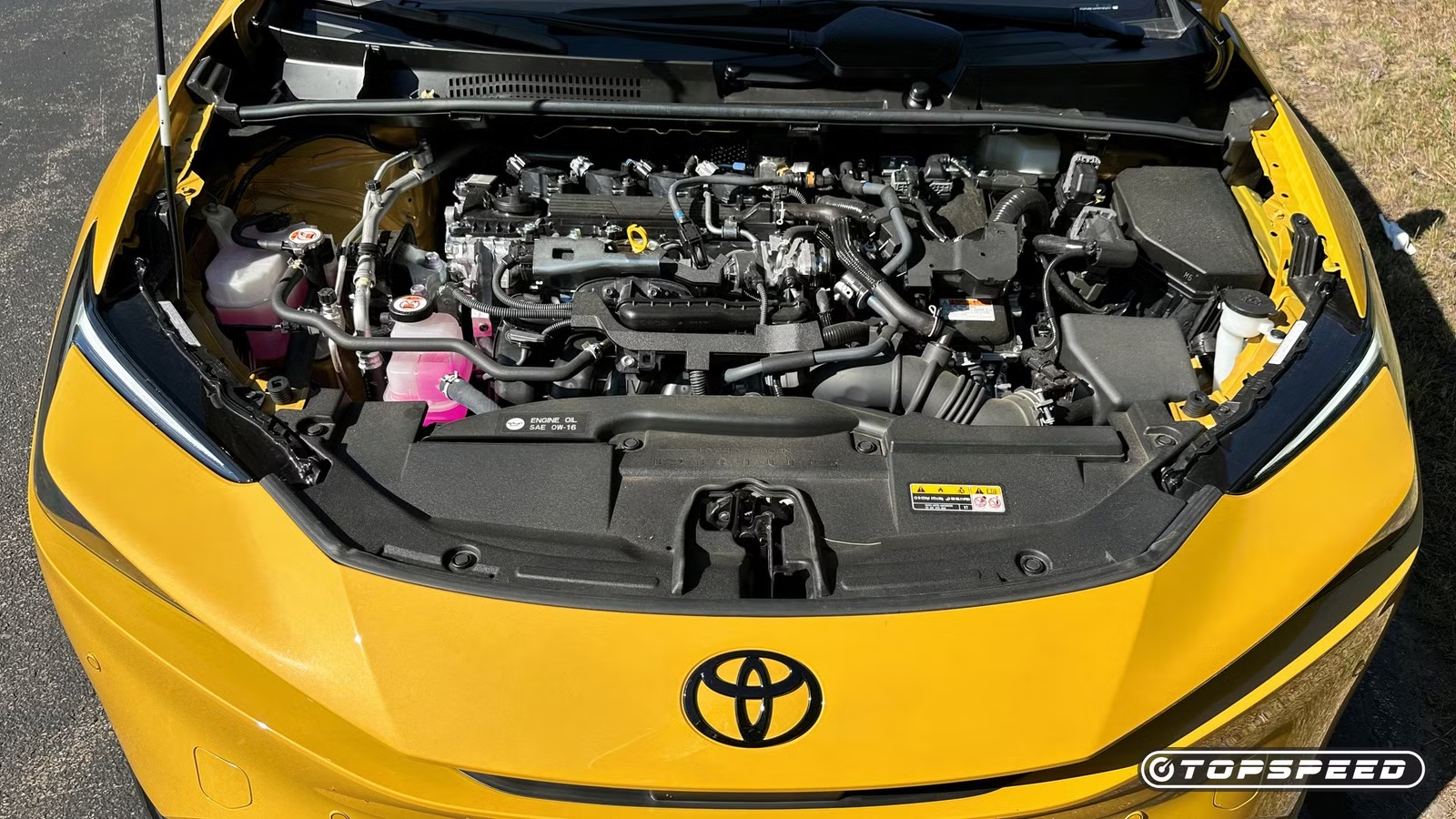
With rapidly accelerating gasoline prices at the pump, fuel economy is back at the center of the conversation, as car owners try to wring every drop out of their fuel tanks. It would be a good time to talk about going full-on EV mode, but to many drivers, the added layer of inconvenience of remembering to plug in a vehicle doesn’t really add up to the money savings at the pump. Many would rather just drive as they have been doing for the past … ever, and stop and fuel up as they are accustomed to.

That makes non-plugin full hybrids the most sensible choice to save fuel as you drive like normal and fill up like normal. And there are quite a few choices available today. Since the advent of the hybrid powertrain, manufacturers have evolved from the experimentation stage to fine-tuning the balance between power and efficiency. Some brands offer the choice to consumers, allowing them to sacrifice a little efficiency for more power, but most continue to prioritize fuel economy, pushing the hybrid powertrain to go the farthest possible on a gallon of gas.
The Hybrid Revolution And Evolution
Over the past quarter-century, hybrids have evolved from fringe experiments at improving fuel economy into highly refined, mass-market staples for reducing our dependency on fossil fuels. And with every automaker producing some kind of hybrid powertrain, the technology has evolved from acknowledged compromise to optimal performance. And without exception, every hybrid offers improved efficiency, with some keying in on improving performance and the majority boosting combined fuel economy.


What started at the turn of the century as an alternative has now become the foundation, with very few engines today not using some kind of electric enhancement (from mild systems to a full pairing with added batteries). Hybridization has become the core strategy for reliably reducing fuel consumption without fully abandoning the internal combustion engine, and many of today’s hybrids are realizing combined fuel economy around the 50-mpg range—a figure that in 1999 was thought to be theoretical.
Hybrid Reliability In 2026, According To The Experts

Vehicle reliability in 2026 isn’t evolving the way we may have hoped, with JD Power’s 2026 Vehicle Dependability Study (VDS) reporting a dip in general reliability, marking the third consecutive year dependability has degraded. JD Power scores vehicle dependability on a scale of problems per 100 vehicles, or PP100; the lower the PP100, the better. The average PP100 increased in 2026 to 204 PP100 from 202 PP100 in 2025. This is primarily due to added electronics and software bugs that contribute heavily to new-vehicle issues. Still, hybrids have dipped behind ICE cars in 2026 with a score of 213 PP100, compared to 198 PP100 for ICE vehicles.

While that doesn’t sound good for anyone interested in going hybrid, it’s worth noting that the hybrid PP100 jumped up by 14 points from 2025, while the ICE PP100 dropped by two points. So just last year, hybrids were the least problematic vehicle type (199 PP100 for hybrids, compared to 200 PP100 for ICE cars). Unfortunately for anyone interested in plug-in hybrids, or PHEVs, their PP100 continues to drop year over year, and now sits at a staggering 281 PP100; full electric cars sit at 237 PP100.
Three Types of Hybrids And How They Excel

Hybrid systems are not all built the same, and they don’t all achieve the same end. The common trait is an electric motor usually located between the engine and transmission, though it can also be belt-driven off the engine. Mild hybrids use a small electric motor to stop/start the engine and assist during acceleration. They’re usually used to improve power (like a turbo or supercharger), and marginally improve economy by stopping the engine at idle, and allow very little to no electric-only driving.

At the other end of the hybrid spectrum, plug-ins (PHEVs) offer extended driving on electric power and superb combined fuel economy with their ability to complete most city-speed trips without dipping into gasoline. However, they do require external charging of the battery, as their efficiency is no better than a straight ICE on gasoline power alone.

In the middle, but edging closer to the PHEV end, full hybrids—or self-charging hybrids, for differentiation—offer extended low-speed runs on electric power alone, boost the ICE under acceleration, and recover energy under braking to recharge the battery without intervention from the driver (self-charge). They provide the best hybrid balance of efficiency, simplicity, and usability.
Full Hybrids Excel At Mixing Convenience And Efficiency

Full hybrids (HEVs) are optimized for how people actually drive. Unlike PHEVs, they don’t rely on having to be plugged in at down times to make the most of their electric range, and they don’t carry the extra weight of the bigger PHEV batteries. Instead, they focus on minimizing energy loss, and use that to perform well in both city and highway driving. There are compromises, of course, usually in the balance of power and efficiency, but not always.
|
2026 Honda Civic |
Sport Hybrid |
Sport |
|---|---|---|
|
Starting Price |
$29,395 |
$26,695 |
|
Powertrain |
2.0-liter inline-4 + 2 motors |
2.0-liter inline-4 |
|
Transmission |
Direct drive |
Continuously variable |
|
Power |
200 hp |
150 hp |
|
Torque |
134 lb-ft |
133 lb-ft |
|
Range |
519 miles |
446 miles |
|
Efficiency City |
50 mpg |
32 mpg |
|
Efficiency Highway |
47 mpg |
41 mpg |
|
Efficiency Combined |
49 mpg |
36 mpg |
|
0-60 MPH |
6.6 seconds |
6.6 seconds |
The 2026 Honda Civic Sport Hybrid outdoes its ICE-only twin with improved horsepower and combined efficiency. It’s one of the few hybrids that doesn’t use a smaller engine (which by itself improves efficiency) for its hybrid version, so it makes a better apples-to-apples comparison. The end result is clear: the hybrid version is not only more efficient, but it’s also a more complete offering. The compromise here is cost, but some buyers are willing to pay more for added power anyway.
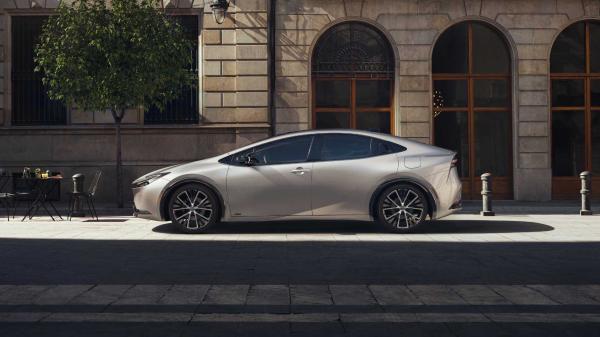
The Hybrid Car With The Best Mileage For Long-Distance Travel
With contemporary tech, comfort, and capability, this pivotal model continues to impact the hybrid revolution it helped kick off.
The 2026 Toyota Prius Continues As The Combined Efficiency Benchmark
EPA-Rated At 57 MPG Combined

At the end of the comparison, the Toyota Prius continues to be the hybrid efficiency benchmark. In a market where 50 mpg is now considered the threshold, the 2026 Prius eclipses that by nearly 15-percent, and it beats its nearest rivals (which you’ll read about later) by over five-percent. In all fairness, that only adds up to about $50 in fuel savings per year, but it does reduce the competition to the level of the previous-generation Prius, proving that over 25 years of existence, the Prius still leads.

It’s worth noting that the Prius’ efficiency figures depend on the trim level you pick. According to the EPA, the base LE offers up to 57 mpg in combined conditions. The all-wheel drive model drops it down to 54 mpg combined. Meanwhile, higher terms, XLE and Limited, are rated at 52 mpg combined, possibly thanks to their heavier and larger wheels and tires. These figures mean you’ll spend around $1,050 to $1,150 in fuel every year, considering you drive 15,000 miles annually and current fuel prices.

Because of its continuous leadership in efficiency, Prius is widely acknowledged as the founder of the hybrid powertrain, and that’s kind of true. Prius and the lovable Honda Insight were born at about the same time and grew up together, though the original Insight was a different beast, paving the way for the modern mild-hybrid. The original Insight was more efficient on paper during the early years of the 21st century, but Prius never wavered from its core mission of prioritizing efficiency, and today leads the market, while Insight retired in 2022.
Competitors Come And Go, Some Challenge, But Prius Always Prevails
|
2026 Toyota Prius |
2022 Hyundai Ioniq Hybrid |
2006 Honda Insight |
|
|
Powertrain |
2.0-liter inline-4 + 2 motors |
1.6-liter inline-4 + 1 motor |
1.0-liter inline-3 + 1 motor |
|
Transmission |
Continuously variable |
6-speed dual clutch |
5-speed manual |
|
Power |
194 hp |
139 hp |
67 hp |
|
Torque |
139 lb-ft |
195 lb-ft |
66 lb-ft |
|
Driveline |
Front-wheel drive |
Front-wheel drive |
Front-wheel drive |
|
Range |
644 miles |
702 miles |
551 miles |
|
Efficiency City |
57 mpg |
58 mpg |
48 mpg |
|
Efficiency Highway |
56 mpg |
60 mpg |
58 mpg |
|
Efficiency Combined |
57 mpg |
54 mpg |
52 mpg |
Since the turn of the century, Prius has basically faced challenges from Honda (during the first generation of Prius and the Honda Insight) and later from Hyundai (with Ioniq, before it went on to found Hyundai’s EV stable). Both presented challenges in Prius’s quest for efficiency superiority (with Ioniq returning probably the best efficiency ever seen), and served to push Prius to be better, as the efficiency benchmark accelerated forward. The thing is that Prius has consistently improved, whereas others have pivoted.
Why Efficiency Leadership Matters

At the end of the journey, a couple MPG may not seem like a lot, but you have to remember that efficiency gains are cumulative, showing up over the car’s life. They also have an immediate impact due to today’s fluctuation (i.e., increases) in pump prices. For high-mileage drivers (especially those with lengthy daily commutes), that high efficiency will translate into fewer stops for fuel and lower fuel bills.

And then there’s convenience. Because HEVs like the 2026 Toyota Prius don’t require any special routines, like plugging in overnight, they consistently deliver that high efficiency. The Prius PHEV, in contrast, may be able to deliver ultra-efficient around-town driving, but if the battery isn’t good to go in the morning, efficiency and range are reduced by about 15%.
10 Impressive Used Hybrids That You Can Find For Less Than $10,000
If you’re balling on a budget, here are 10 hybrids that stay within budget while offering some additional goodies.
Three Key Efficiencies That Give The Toyota Prius The Advantage

From its birth around the turn of the century, the Toyota Prius has always been the geeky member of the Toyota family—outwardly awkward, pushing untried systems, satisfied with its participation ribbons instead of trying to capture the trophy—but that was all just part of its development. It’s matured marvelously into a handsome, fashion-conscious 26-year-old, with an exercise program that is followed by many of its peers, and has become the champion of its class.
The Toyota Prius Marks The 5th Generation Of Toyota’s Hybrid System

The 2026 Toyota Prius uses the fifth-generation Toyota Hybrid System (THS 5), which debuted with the fifth-generation Prius (no, that’s not a coincidence) in 2023 and has since rolled out to the latest Toyota Camry and RAV4, and the first Corolla Hybrids. In a state of constant improvement, the system uses a 2.0-liter Atkinson cycle four-cylinder engine using a higher-output electric drive motor, a more compact CVT, and an improved lithium-ion battery. It’s stronger, smoother, and more efficient, resetting the benchmark for hybrid systems in the marketplace.
Power Management And Hybrid System Calibration

Because hardware alone doesn’t win in the efficiency game, the 2026 Toyota Prius’s hybrid system is meticulously tuned with smarter power control software to optimize when and how energy is deployed and recovered. Although it’s not intended to drive on electric power alone, the latest Prius can go up to 50 mph without calling on the ICE (previous generations were in the 40–45 mph range), though that depends on load and terrain, and can coast without the ICE at highway speeds, under ideal conditions.

The system software prioritizes efficiency, letting power and driving feel fall in line naturally, while the battery constantly charges and discharges in small increments to maintain balance. The transition between electric and gas power is nearly seamless, maintaining its grip on efficiency and not drawing attention to itself.
The 5th-Gen Toyota Prius Adds Weight, Decreases Drag, But Improves Efficiency

|
Toyota Prius |
5th-Gen |
4th-Gen |
1st-Gen |
|---|---|---|---|
|
Powertrain |
2.0-liter inline-4 + 2 motors |
1.8-liter inline-4 + 2 motors |
1.5-liter inline-4 + 2 motors |
|
Transmission |
Continuously variable |
Continuously variable |
Continuously variable |
|
Power |
194 hp |
121 hp |
97 hp |
|
Torque |
139 lb-ft |
105 lb-ft |
82 lb-ft |
|
Driveline |
Front-wheel drive |
Front-wheel drive |
Front-wheel drive |
|
Range |
644 miles |
633 miles |
488 miles |
|
Efficiency City |
57 mpg |
58 mpg |
42 mpg |
|
Efficiency Highway |
56 mpg |
53 mpg |
41 mpg |
|
Curb Weight |
3,097 pounds |
3,010 pounds |
2,765 pounds |
|
Aerodynamic Efficiency |
0.27 Cd |
0.24 Cd |
0.29 Cd |
Before hardware and system management come into play, the shape of the car must be right, and aesthetics be damned. The awkward-looking Toyota Prius has always held aerodynamic efficiency in high regard, and that hasn’t changed … our perception of Prius has changed, making today’s style seem more mainstream. Focused on minimizing airflow disruption, the Prius’s aerodynamics are particularly important at highway speeds (where efficiency traditionally drops off) in moving the mass of the car. The fifth-gen FWD Prius is about 90 pounds heavier than the previous one.
The Honda Hybrid That Makes The Most Sense In 2026
Honda’s most balanced HEV sells well in the U.S. for good reason.
The 2026 Toyota Prius Is The Highest Rated Hybrid Car In Combined Fuel Economy

Over the years, the hybrid market has gone from proving viability to refining excellence, and no car on the market does it as well in 2026 as the Toyota Prius. Over the past quarter-century, hybrid technology has matured to the point where most mainstream hybrids deliver strong, reliable efficiency, narrowing the gap between competent and exceptional. And the Toyota Prius hasstayed at or near the top of the efficiency charts every step of the way.

Full hybrids like the 2026 Toyota Prius remain the most balanced gasoline-saving solution, delivering consistent efficiency without requiring changes in driver behavior. Regarded as the pioneer in the market, Prius has led the charge since the turn of the century and today sets a lofty goal of 57 mpg, combined. It does that without a single standout feature, relying on a combination of hardware, software, and aerodynamics that work together to prioritize efficiency, which significantly tops its nearest hybrid rivals.
|
2026 |
Hyundai Elantra Blue |
Toyota Camry |
|---|---|---|
|
Powertrain |
1.6-liter inline-4 + 1 motor |
2.5-liter inline-4 + 2 motors |
|
Transmission |
6-speed dual clutch |
Continuously variable |
|
Power |
139 hp |
225 hp |
|
Torque |
195 lb-ft |
163 lb-ft |
|
Driveline |
Front-wheel drive |
Front-wheel drive |
|
Range |
594 miles |
663 miles |
|
Efficiency City |
51 mpg |
53 mpg |
|
Efficiency Highway |
58 mpg |
50 mpg |
|
Efficiency Combined |
54 mpg |
51 mpg |
The 2026 Hyundai Elantra Blue Almost Matches Prius In Efficiency, And Tops It On Price

The 2026 Hyundai Elantra Hybrid comes closer to the Prius in its entry-point Blue version, which, like the 2026 Toyota Prius, prioritizes efficiency. The difference between the two is in the tuning of the body and system, where the Elantra tries to blend into the compact sedan segment with its looks, more affordable pricing, and a more familiar driving experience. For most buyers, those three traits are enough to give it the nod over Prius. The combined efficiency gap may seem small at first blush, but it does tilt toward Prius over the long term.
The 2026 Toyota Camry Proves You Don’t Have To Give Up Comfort For Efficiency

The 2026 Toyota Camry benefits directly from the knowledge and development acquired through the Prius over the years. It uses a larger engine with the THS 5, which accounts for a significant drop in efficiency. On the plus side, Camry shows that you don’t have to give up on size to acquire efficiency, nor do you have to give up on power and overall driving enjoyment. For families that need (or want) that extra cabin room or comfort on long drives, the 2026 Camry delivers as it always has, except that now they don’t have to give up a bit of efficiency.
A Good Compact Car With A Not-So-Outrageous Starting Price

Efficiency aside, the Toyota Prius has made huge strides in shedding its old image of being a dorky commuter car. The latest Prius looks good and is actually an excellent car that has a lot to offer. It features a modern interior with plenty of tech, including the optional 12.3-inch touchscreen, with wireless Apple CarPlay and Android Auto, and driver-assistance tech like adaptive cruise control and lane-keeping assist. It’s also said to handle quite well, with relatively quick acceleration.

The 2026 Prius starts at $28,550 and tops out at $36,965 before options. For under $30k, you get the base LE model, which is a reasonable pick if you want to save both money and gas. It offers lineup-leading fuel economy with a decent feature set, including blind-spot monitoring, rear-cross traffic alert, and more. However, the XLE makes the most sense if you don’t mind a slight efficiency dip. It offers larger wheels, a wireless phone charger, heating for the seats and steering wheel, rain-sending wipers, and more.
Sources: the EPA, Edmunds, iSeeCars

Related posts




Latest Post


No Comments