
10 Cars Built By An Underrated Brand Which Owners Trust Forever
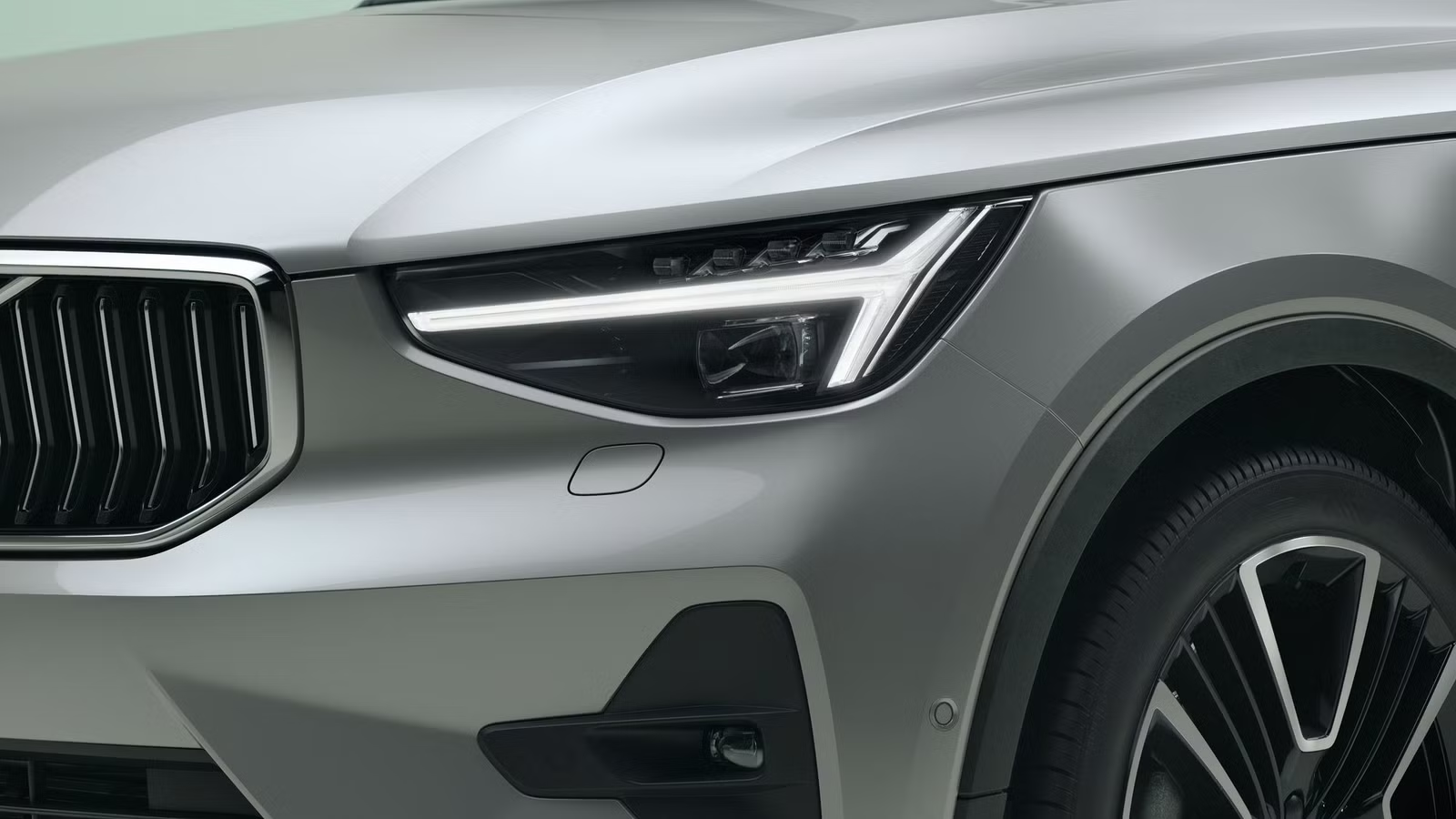
Protecting customers and putting their needs first is always a good place to start if you’re a carmaker. It’s what defined this brand’s reputation as the ultimate trusted companion for over 50 years. Data from CarEdge revealed this marque’s models depreciated faster than its major competitors and as a result remains underrated to this day, often falling into the shadows of recognized competitors.

Their philosophy of putting customers first by engineering dependable workhorses with a safety-first design has created a strong following among loyal owners, giving this brand an average rating of 3.9 out of five stars on RepairPal for owner satisfaction. We felt the company’s ambitions toward customers proved so commendable they couldn’t be ignored, so we’ve selected 10 of the most dependable Volvos that owners have trusted with their livelihoods.
10
Volvo XC40
2017–Present
Launched in 2017 with both gasoline and diesel engines, the XC40 marked Volvo’s entry into the compact premium segment and became an important model for the company, taking home the European Car of the Year award for the first time. When it was facelifted in 2022, a diverse range of powertrains were made available, including mild-hybrid and pure electric options, replacing the diesel units due to stricter emission regulations.

Its rigid Boron Steel Safety Cage and progressively collapsible crumple zones prevented the cabin from deformation in a collision, protecting the occupants inside. These contributed to the car’s impeccable five-star safety rating, and it was awarded a Top Safety Pick from the Insurance Institute for Highway Safety. Proactive software updates also continually resolved minor electronic bugs to ensure the car’s reliability. As a result of these, the XC40 repeatedly scores highly in surveys for reliability and owner satisfaction.
10 Ridiculously Reliable Volvos On The Used Market
We looked high and low for only the most dependable Swedes on the secondhand market.
9
Volvo XC60
2008–2017

When Volvo launched the first-generation XC60 into the mid-sized luxury SUV market in 2008, with a range of gasoline and diesel engines ranging from 2.0 liters to 3.2 liters, and a choice of FWD or AWD, it became a huge sales success with over 1 million sold by the time the second generation arrived, becoming the best-selling mid-sized SUV in Europe. Today, after two generations, it’s become Volvo’s best-selling car of all time with over 2.7 million units sold globally, making it one of the most important vehicles for the brand.
Debuting its new City Safe technology, which automatically applied the brakes at lower speeds to prevent rear-end collisions, the XC60’s world’s first collision avoidance system came as standard on all XC60 models years before the system became an industry standard for new cars. Its focus on mechanical resilience as opposed to complex electronics and use of wear-resisting components such as advanced piston coatings, hardened valve seats and a robust timing chain also helped the XC60 build a reputation for dependability. The usual other recognized ‘Volvo’ features, like the driver-praised versatile cabin, also ensured this family hauler was the one to have if you needed a dependable SUV. This was reflected in ownership satisfaction surveys where owners awarded it four to five stars.
8
Volvo V70
2007–2016

When the third-generation V70 made its public debut in March 2007 at the Geneva Motor Show, it featured a range of gasoline and diesel engines ranging from 1.6 to 3.2 liters. It may have looked like any other humdrum station wagon to the eye, but this mid-to-large-sized premium wagon modernized Volvo as a brand and introduced class-leading safety features.
Its patented crash-resistant body structure and pioneering suite of occupant safety technologies like Blind Spot Information System and the world’s first integrated two-stage child booster cushion helped secure it a maximum five-star Euro NCAP safety rating. With its set of robust five-cylinder engines, heavy-duty, over-engineered P3 platform, which was 15% stiffer than the previous generation’s P2 platform, and unrivaled practicality, this Gen Z workhorse made for a trusted, dependable companion for police forces across Europe, most notably in Sweden and the United Kingdom.
7
Volvo XC90
2002–2014

Entering the new, booming market of mid-sized luxury SUVs, Volvo’s ambitions for their first SUV, the XC90 in 2002, were centered around the safety of the car’s occupants, resolving the known safety drawbacks of SUVs at the time. When it was launched, the full-size, three-row luxury SUV became the company’s flagship, powered by a range of gasoline and diesel engines ranging from 2.4 to 4.4 liters. During its lifetime, the XC90 received two major overhauls in 2007 and 2013 to keep up with the times, and became a turning point for the brand, taking the company into never-before-seen profit margins thanks to it being their best-selling model, kick-starting a whole new era of ‘XC’-badged SUVs, and single-handedly becoming Sweden’s most valuable export.
It was awarded the coveted “SUV of the Year” for 2003, and its groundbreaking safety introduced five world-firsts to the SUV market, like its Roll Stability Control, which used a gyro sensor to predict the risk of a roll-over, and the Roll-Over Protection System was designed to protect you inside if the inevitable happened. Side curtain airbags for all three rows of seats and integrated child booster seats also put this family-focused SUV in the limelight for safety-conscious buyers. Relying on simple mechanics, utilizing the tried-and-tested P2 platform borrowed from the S80, and using durable engines like the 2.5L 5-cylinder and D5 diesel featuring robust internals gave it the ability to run like clockwork wherever life took it.

The Volvo Wagon That Could Outrun A BMW M3 In The 1990s
This unassuming wagon nicknamed “The Flying Brick” could outrun BMW’s legendary performance car in the mid-1990s.
6
Volvo 940
1990–1998

Taking over from the 740 in 1990, the 940 became the brand’s core executive vehicle, positioned in the mid-sized executive car market, debuting with both sedan and wagon body styles with a range of engines from 2.0 to 2.4 liters. Being a comprehensive re-design of the 740, it received only subtle styling updates but was an important milestone in Volvo’s history. It marked the final evolution of their box-shaped, rear-wheel drive design. It was also the first to feature the three-point inertia-reel seatbelt and an adjustable head restraint for the middle passenger at the rear as standard, with a built-in booster seat for children up to the age of four to sit at the correct height to work in tandem with the seatbelt.
But the 940 was made famous for its unkillable B320 cast-iron “Red Block” engine, which left a lasting legacy thanks to its non-interference valve train. Basically, the engine wouldn’t suffer catastrophic engine failure if the timing belt broke, enforcing the company’s hunger for over-engineering to ensure durability and longevity for its customers.
5
Volvo 240
1974–1993

The winner, though, is Volvo’s 240. It’s built up the most trusted reputation in consensus among enthusiasts. Launched in 1974, it was powered by a range of gasoline and diesel engines ranging from 1.8L to 2.8L and competed in the compact executive, mid-sized family car market. Produced for nearly 20 years, with over 2.6 million sold, it marked a monumental landmark for Volvo, securing the company’s financial stability.
It combined all the best features of the various models listed above – three-point seatbelts, integrated booster cushions, side impact protection, crumple zones and the all-important reinforced passenger cage. A heavily rust-proofed steel body, over-engineered mechanics, and famed Red Block engines meant cars could sail past 300,000 miles with limited, basic maintenance. Owners and forums have stated that the core mechanics rarely give up, and it remains a cult favorite. In 2012, Selden Cooper entered Volvo’s hall of fame when his red ‘87 240 sedan famously entered the one-million mile club, joining Irv Gordon.
4
Volvo 140
1966–1974

In 1966, Volvo established a new design and engineering direction with the unveiling of the 140, replacing the aging Amazon and PV544. Available with a choice of 1.8L and 2.0L gasoline engines, it was their core mid-sized family car, positioned as the brand’s volume seller and marketed in the premium family executive sedan segment. Its distinct three-box ‘boxy’ shape laid the foundation for safety architectures, which would be followed by subsequent models.
Built-in crumple zones, a unique three-way, dual circuit braking system and four-wheel disk brakes helped the 140 to gain one-million sales, a first-ever for the company. Its lack of complicated electronics, simple mechanics, and rugged B20 engine also made the car durable and reliable enough to handle the harsh Scandinavian climates, and it joined other Volvos in becoming a longevity star thanks to reaching extraordinary mileage without suffering major problems. These mileage achievements were recognized through the “Volvo High Mileage Club”, dedicated to the highest mileage Volvo models in existence.
3
Volvo P1800
1960–1973

When Volvo’s P1800 was revealed at the Brussels Motor Show in 1960, it transformed the company’s image from a maker of sturdy, dependable boxes to one of exciting, desirable sports cars, but that didn’t stop Volvo from embedding their USP of longevity, durability, and reliability into the P1800’s DNA. Competing in the GT sports car segment and powered by 1.8L and 2.0L versions of Volvo’s legendary B-series inline-four engine, the P1800/P1800S was built from 1961 to 1973. Production for the first 6,000 sports coupes began in the UK at Jensen Motors’ facility in West Bromwich, but quality control issues sparked Volvo to shift manufacturing back home to Sweden.
It’s also our surprise longevity model thanks to one purchased in June 1966 by Irv Gordon, a teacher in Long Island, New York, who racked up a record-breaking 3.26 million miles (3,260,257 miles to be exact), setting a Guinness World Record for the highest mileage vehicle in history. This helped to boost Volvo’s image as a dependable brand which buyers could trust and rely on.

This Barn Find Raises More Questions Than Answers
A forgotten ’70s estate hidden in a shed for nearly 50 years turns out to be far cleaner and lower mileage than anyone expected.
2
Volvo Amazon
1956–1970

Engineers at Volvo were in pursuit of pioneering driver safety before it became an industry standard, and the Amazon laid the foundations for the brand’s safety-first attitude with the debut of the three-point seatbelt in 1959 along with the PV544. When it emerged in 1956, the compact family car competed in the mainstream mid-sized segment and was powered by a range of 1.6L, 1.8L, and 2.0L inline-four, overhead-valve engines. Its sleek pontoon styling made it instantly recognizable as a Volvo, and by the time production ended in 1970, over 600,000 units had found homes globally.
Like the PV444/PV544, the Amazon’s robust unibody construction helped protect its occupants inside. Its mechanical durability cemented the firm’s reputation for trust with owners, thanks to under-stressed mechanics and engines which were virtually indestructible. The heavy gauge Swedish steel and anti-corrosive undercoat which helped keep the bodywork rot-free was also something to boast about. As a result, it quickly became one of the most successful and most trusted Volvos in history.
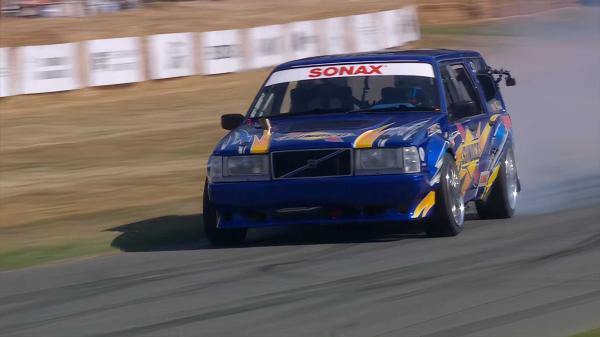
This Sleeper Volvo Just Shredded Goodwood With A Rotary Heart
A humble family Volvo just tackled Goodwood with 800 horsepower, carbon Kevlar panels, and a three-rotor rotary engine under the hood.
1
Volvo PV444 / PV544
1944–1965

Designed initially for post-war Sweden, this was the model that kick-started the brand as we know it — and we owe it a lot. Revealed in 1944, the PV444 was intended to be a family sports car for buyers who wanted affordable, highly durable motoring that combined fuel economy with rally-bred performance. Powered by an inline four-cylinder, overhead-valve 1.4L engine (and later a larger 1.6L engine), its efficiency made it ideal for Sweden’s vast snow-laden landscape and limited resources due to wartime rationing, becoming the country’s best-selling car in 1953.
It reached stardom as it became the first car in the world to feature a reinforced safety cage with a shatter safe, laminated windscreen, and later showcased one of the most critical passive safety features, the three-point seatbelt (in the updated PV544), which is continuously saving lives to this day. Its mechanical simplicity meant the “little Volvo” was easy to run and maintain.
Sources: Bring a Trailer, Car Edge, Euro NCAP, Repair Pal, Volvo, Volvo Club, World of Volvo, Volvo High Mileage Club

Related posts


Latest Post


No Comments