
Plymouth Built A 426 Hemi Sedan So Extreme Buyers Had To Sign A Waiver
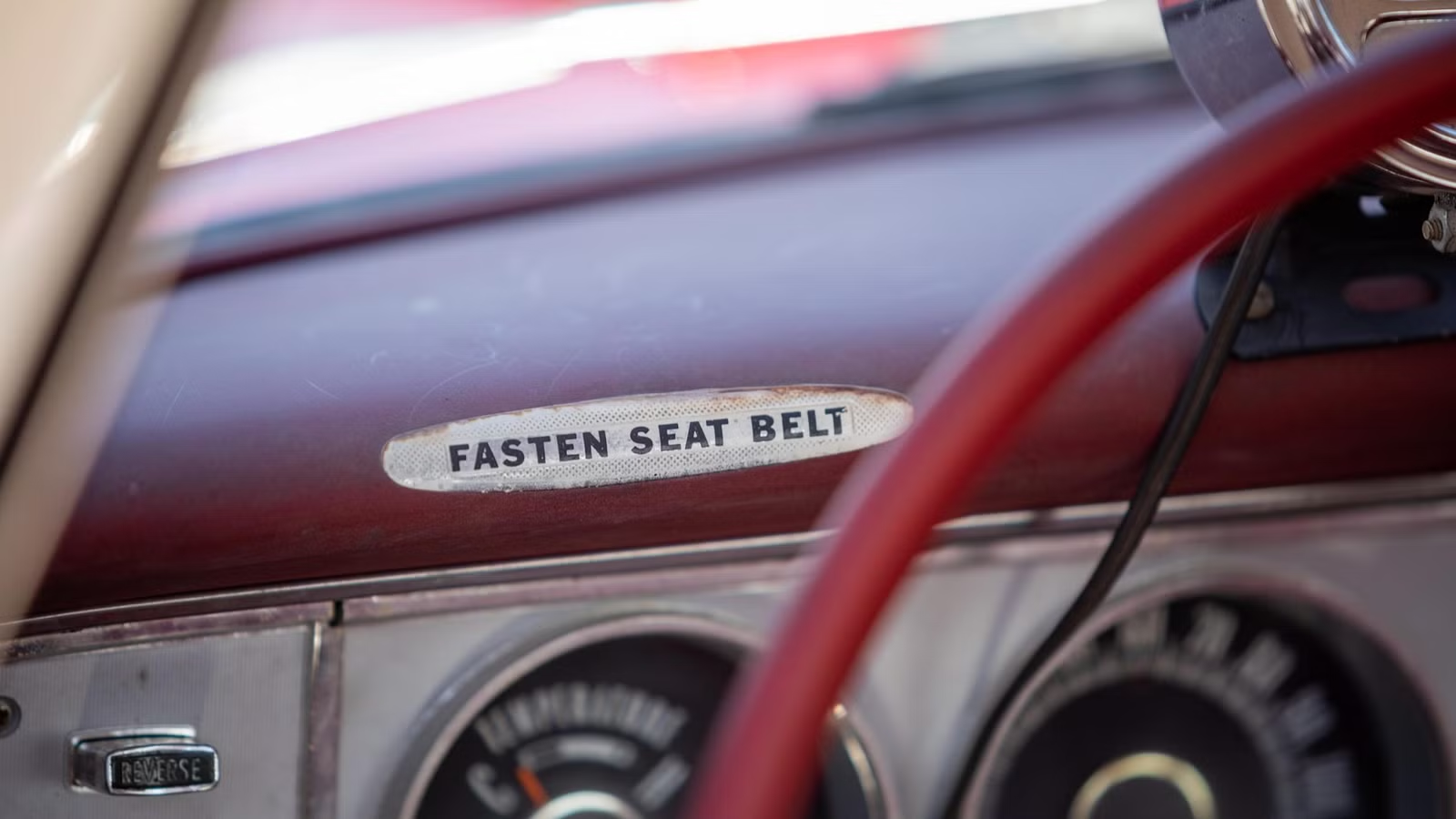
Imagine buying a car, and the fine print is the most honest part of the entire transaction. Automakers usually brag about everything they include in a special edition, but in 1964, Chrysler tried the opposite approach. Start with a plain Plymouth sedan, remove practically everything that won’t help it win a drag race, and install a monstrous new engine. These 55 cars were destined for the drag strip; you couldn’t get off the lot without signing a waiver.
By 1963, Detroit’s “Stock” Factory Drag Racers Were Barely Production Cars

By the 1960s, all of the Detroit Three were interpreting the word “stock” loosely. They built very limited runs of special editions to enter in the NHRA’s Super Stock competition group. The cars were grouped by weight and factory-rated horsepower, so automakers could get ahead by increasing one number or shrinking the other. Factories installed NASCAR engines, discarded heaters and radios, and substituted lightweight body parts wherever the rulebook allowed. Tom Grove’s 413 Max Wedge “Melrose Missile” Plymouth ran 11.93 seconds at 118.57 mph in 1962.
In January, Frank Sanders’ Chevrolet Z11 Impala was the first factory stock-class car to break 120 mph in the quarter mile. Pontiac knew it couldn’t leave a single pound on the table. The automaker drilled roughly 120 holes through its infamous “Swiss Cheese” Catalina’s frame. It also built just six compact 405-hp Super Duty Tempest station wagons. Ford decided its lightweight 427 Galaxies were too heavy and began reshaping smaller Fairlanes around the same engine—a project that would result in the legendary Thunderbolt. Chrysler’s Max Wedge cars were still formidable, but competitors were making it clear that Mopar would need to rethink its strategy by 1964.
Chrysler Developed A Secret Weapon For Detroit’s Factory Drag Racing Wars


Chrysler’s 426 Max Wedge was built on an engine family that was getting a bit long in the tooth by the mid-1960s. The “B-Series” of big blocks arrived on the scene in 1958. But a wedge-shaped combustion chamber could only breathe so well at racing speeds.
From experimental WWII aircraft engines to the 1950s FirePower V8, Chrysler had spent years exploring hemispherical combustion chambers. Engineer Tom Hoover’s team revisited the design for a new 426-cubic-inch racing engine. Large, opposed valves and improved port geometry promised the airflow the old wedge heads couldn’t deliver. The results spoke for themselves: On February 23, 1964, Richard Petty led 184 of 200 laps to win the Daytona 500 in a Hemi Plymouth; Jimmy Pardue and Paul Goldsmith finished second and third in their own Plymouths.
Plymouth Built Just 55 Aluminum-Nose Savoys With 426 Race Hemis

Just 55 lightweight 1964 Plymouth Savoy two-doors received the factory Race Hemi package, alongside 55 Dodges. Under the big hood scoop was a 426-cubic-inch Hemi with a 4.25-inch bore, 3.75-inch stroke, and 12.5:1 compression. Chrysler conservatively rated the drag version for 425 horsepower at 6,000 rpm and 480 lb-ft at 4,600 rpm. A pair of Holley 3116 four-barrels fed an aluminum cross-ram manifold.

The Savoy also went on a severe diet. The hood and scoop, front fenders, doors, door hinges, and even some mounting hardware were replaced with aluminum. Lexan side glass and an unusually thin Corning rear window saved more weight, while insulation and other ordinary finishing materials disappeared. The front bumper was for appearances only. It was made of thin, acid-dipped steel attached to aluminum brackets. The rear bumper was stock, to keep weight over the rear tires. The Hemi package tipped the scales at roughly 3,400 pounds.
Plymouth Made Hemi Savoy Buyers Sign Away Their Factory Warranties

For once, the fine print may have been the most candid part of the new car’s sale. A factory notice on the car described its intended use as “supervised acceleration trials” and bluntly announced that the vehicle was sold “AS IS.” It excluded both the ordinary 12-month/12,000-mile vehicle warranty and five-year/50,000-mile powertrain coverage. Mopar Action magazine adds that Chrysler reportedly required buyers to sign waivers acknowledging that these competition-oriented Plymouths did not carry the usual new-car warranty before driving off the lot.

The irony is that no one in their right mind would try to commute one of these things. The NHRA required a complete exhaust system, so the Savoy wore generous tubular headers with huge cutouts. Cap the cutouts, and everything was forced through a laughably restrictive single-pipe exhaust engineered to save weight. An approximately 80-pound battery in the trunk put more weight over the rear wheels. The Savoy Lightweights with an automatic TorqueFlite featured a special button pattern that shifted forward gears away from Neutral. What’s more, “Park” was deleted. The rear seat was gone. Up front were two non-adjustable Dodge A100 van buckets bolted to aluminum brackets. Only the driver had a seatbelt. Any passenger brave enough to tag along would also have to make do without a windshield wiper. And don’t bother reaching for the heater or radio.
Plymouth’s 426 Hemi Savoy Ran 11-Second Quarters At 129 MPH

One of the 55 Plymouths went to Fred Cain Chrysler-Plymouth in Wilmington, Massachusetts. Fred Cain’s “Hurri-Cain” usually ran the quarter mile in the 11-second range at more than 120 mph, though it eventually clocked 129 mph. In 1969, the Savoy won a Street Eliminator bracket at New England Dragway in Epping, New Hampshire, and match-raced the Ford-backed Tasca team. Fred Cain later boasted that his Plymouth never lost a race. The car’s only Achilles’ heel was its paper-thin front fenders. Fred even painted “ALUMINUM DO NOT LEAN! PLEASE” on each.

At the 1964 NHRA U.S. Nationals, Forrest Pitcock’s Golden Commandos Plymouth faced Jim Thornton’s Ramchargers Dodge in an all-Race Hemi SS/A final; Thornton won in the Dodge. Lightweight Hemi-powered Mopars would dominate drag strips for years, but Plymouth’s no-warranty 1964 Savoy was there at the starting line.
Sources: Mopar Action, Mecum Auctions, NHRA, NASCAR, Dodge, Chrysler Corporation, Automotive History Preservation Society

Related posts



Latest Post


No Comments