
An 80,000-Mile Yamaha Bought For $4,000 Crossed America In Under 33 Hours
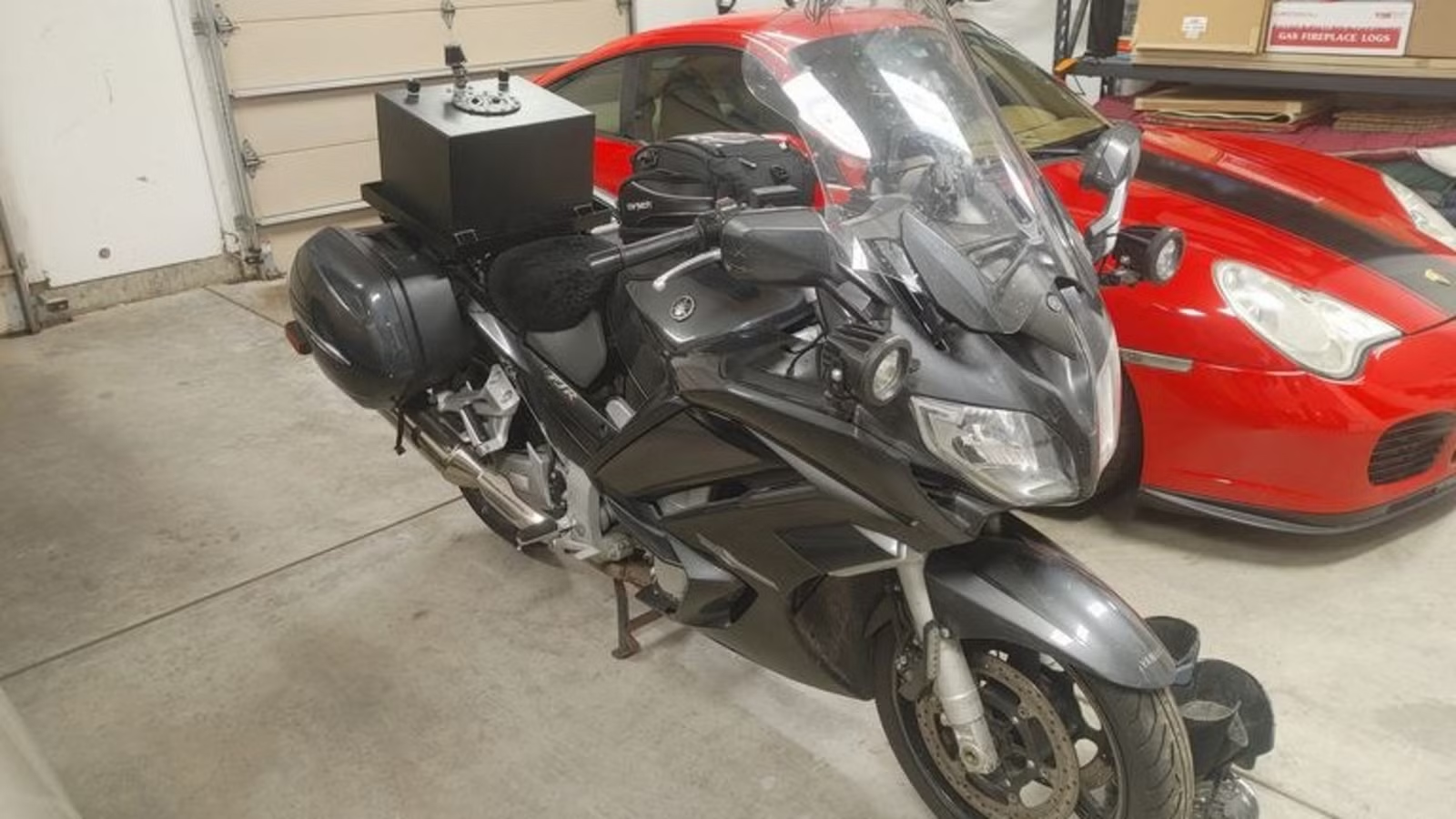
Eighty thousand miles is enough to send plenty of used-motorcycle shoppers back to the classifieds. Alex Jones bought this high-mileage Yamaha anyway. For $4,000, he had a motorcycle he intended to ride from New York to California, in the most legendary unsanctioned, cross-country race. By October 2021, it would carry extra fuel, aftermarket equipment, and a rider chasing an unofficial cross-country record.
A Coast-To-Coast Attempt Doesn’t Have To Start With An Expensive Motorcycle

Jones had read about Cannonball attempts made in expensive German cars. He wanted to try the journey, but those cars were beyond his budget. However, reading about a motorcycle attempt gave him another possibility. Two wheels would make the purchase considerably easier to afford.
He still needed something suitable for spending most of two days aboard. A low price alone wouldn’t supply wind protection, luggage, or a comfortable riding position. Yamaha already offered those things on its large sport-tourer. Buying a well-used example let Jones begin with the equipment rather than assemble a touring motorcycle from scratch.
Alex Jones Bought A Yamaha With 80,000 Miles For $4,000
The Yamaha cost $4,000 with approximately 80,000 miles already behind it. Jones then spent additional money preparing it. The headline figure covers the motorcycle’s purchase, and the available reporting doesn’t establish a complete build cost. It was an inexpensive starting point for a much more involved project.

The Yamaha FJR1300 Combined Inline-Four Power With Touring Equipment

The motorcycle was a Yamaha FJR1300, powered by a liquid-cooled 1,298cc inline-four. Factory output for this generation was 107.5 kW, or approximately 144 horsepower. Its five-speed gearbox fed a shaft final drive. Jones had bought a touring motorcycle with serious engine performance beneath the fairing.
Yamaha supplied the FJR1300A with heated grips, cruise control, sidecases, and an electrically adjustable windscreen. Seat and handlebar adjustments gave riders some room to change the fit. These were useful provisions for long days even before Jones added anything. The factory motorcycle already addressed several expensive items on a touring rider’s shopping list.
Shaft Drive And A 6.6-Gallon Tank Suited Long-Distance Riding
The standard tank held approximately 6.6 U.S. gallons. That was a substantial supply for normal touring, although Jones would more than double the nominal capacity. Shaft drive also meant there was no exposed chain to lubricate or adjust. Final-drive oil changes remained part of ownership.
The FJR was substantial in other ways, weighing approximately 637 pounds with fuel and oil. An aluminum frame carried conventional forks and a linked rear monoshock. Dual front discs handled braking. Yamaha gave it the hardware of a large road motorcycle, with accommodations intended for carrying a rider and passenger over considerable distances.
The Yamaha Needed More Than Factory Equipment For The Attempt
Jones fitted a different windshield, highway pegs, additional lighting, and mounted electronics. The changes concentrated on the hours he would spend aboard and the equipment he wanted within reach. The most obvious alteration sat behind him. An auxiliary fuel cell occupied space normally reserved for the passenger.
The auxiliary lights failed just as Jones needed them, with night setting in during the crossing. He also lost cruise control along the way. By the time he reached California, he described the rear tire as nearly bald. He attributed that wear to the wind and road conditions encountered during the trip.
A Seven-Gallon Auxiliary Fuel Cell Extended Its Range
The auxiliary cell reportedly held seven gallons, taking nominal combined capacity to approximately 13.6 gallons. It was a major change to the FJR’s touring setup. The stock passenger accommodation had given way to fuel storage. This was now a motorcycle prepared for a particular solo journey.
Jones reported stopping seven times for fuel during the crossing. Each stop added to the clock, so carrying extra gasoline had an obvious appeal. The auxiliary cell held slightly more than the factory tank. With no passenger to accommodate, he could devote the rear seat area to extending the distance between fill-ups.
Jones Reported Crossing America In 32 Hours And 52 Minutes

Jones left Manhattan’s Red Ball Garage at 6:24 a.m. on October 17, 2021. He reached the Portofino in Redondo Beach, California, at 12:16 p.m. the following day, Pacific time. Accounting for the time difference, he had crossed the country in 32 hours and 52 minutes. Jones claimed an unofficial motorcycle Cannonball record after covering more than 2,800 miles on the Yamaha.
Reaching California didn’t mark the end of the Yamaha’s travels. Jones still had to get home to Texas, and he rode the bike back. Before the attempt, he had also ridden it from near Dallas to New York. The timed crossing was therefore just one leg of a much longer trip on his $4,000 purchase.
The Unofficial Run Came With Supporting Documentation
Jones supplied notarized statements for the departure and arrival times. He also provided hourly GPS screenshots. Road & Track reported those materials when covering the claim. The magazine explicitly noted that it wasn’t a sanctioning body.
The documentation gave readers something beyond Jones’s word, although it didn’t turn the journey into an officially certified record. That qualification needs to be made clear once. The reported time remains the achievement covered here. It shouldn’t be presented as a current record without checking subsequent attempts.
The $4,000 Yamaha’s Purchase Price Was Only Part Of The Story
Jones’s FJR made the trip with far more equipment than it carried when purchased. It also needed maintenance and suffered failures along the way. The $4,000 price bought the underlying motorcycle. Preparation, fuel, and the rider’s commitment supplied the rest.
Still, an 80,000-mile Yamaha was an unlikely machine to attract this much attention. Its engine and touring equipment remained useful long after its original showroom appeal had faded. Jones found a demanding job for them. For everyone else, the same combination makes an older FJR worth remembering when a new touring motorcycle costs more than the travel budget allows.
Source: Road & Track, Danger Dan’s Talk Shop, Yamaha, Motorcyclist, Rider, RideApart

Related posts


Latest Post


No Comments