
This 8,000-RPM Civic Si Is Much Cheaper To Live With Than A BMW 3 Series
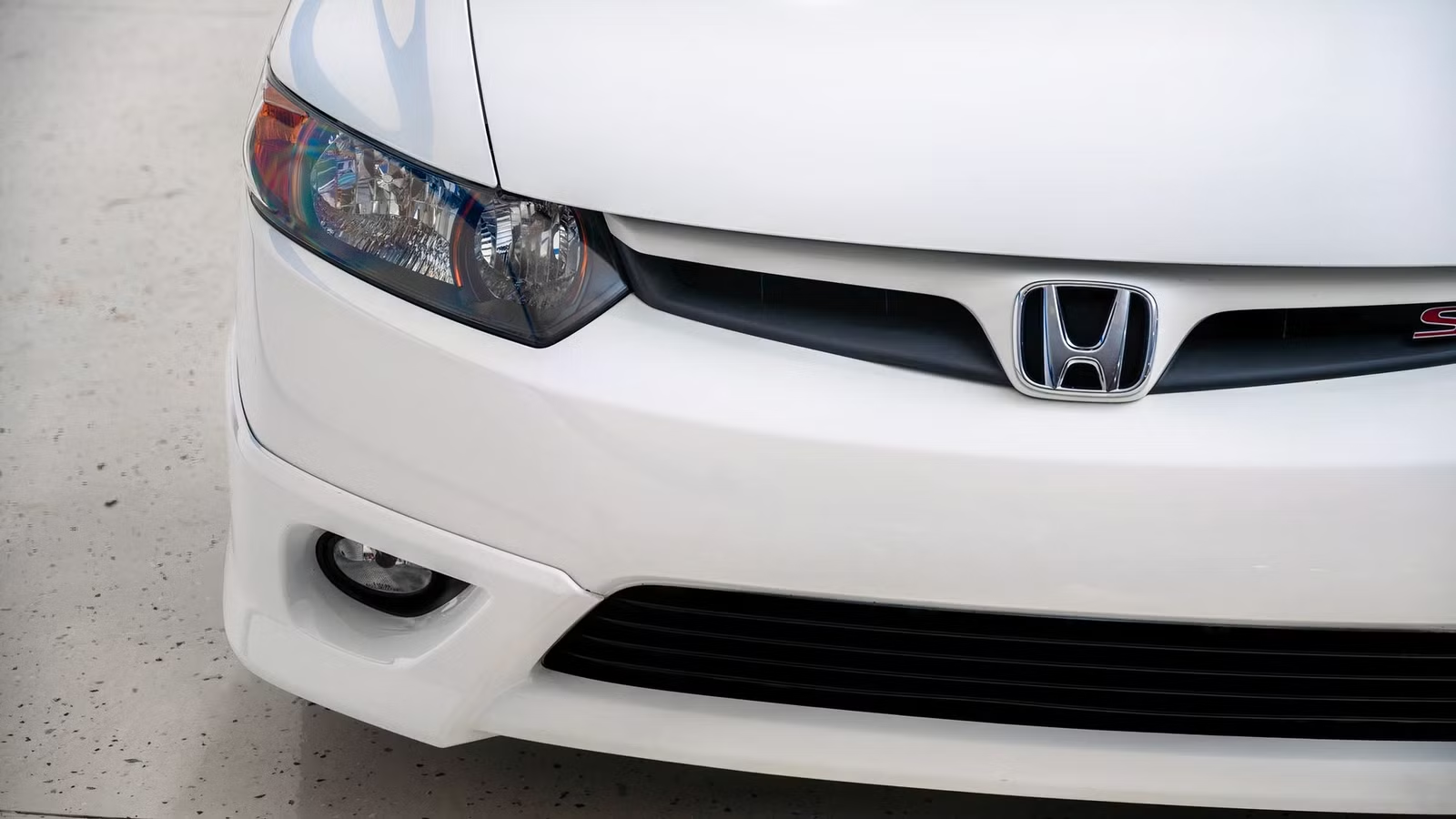
An 8,000-rpm redline belongs in a Honda that asks you to make sacrifices elsewhere. This one has room for passengers, a usable trunk, and running costs that make daily driving less intimidating than it can be in an older German sports sedan. That combination makes it an appealing alternative to a used BMW 3 Series, especially for drivers who value a responsive engine more than a luxury badge. It suits drivers who would rather drive than chase down expensive repairs.
Honda Built A Practical Compact Car With A Serious Performance Side

The compact car in question arrived in 2006 as a coupe, with a sedan joining the range for 2007. Both versions shared the standard model’s basic shape and cabin layout, but gained a more focused chassis. The proportions were modest, visibility was good, and the controls were easy to understand. It did not need a huge engine bay or a wide body to make its intentions clear. Its restrained appearance lets it pass as an ordinary commuter when driven gently, a welcome quality for buyers who prefer performance without constant attention. It looked purposeful without being loud or awkward.
The Sedan Made The Performance Package Easier To Live With

The four-door version widened its appeal without changing the central formula. There was room for adults in the back, a useful trunk for shopping or luggage, and enough comfort to handle a commute without feeling like a weekend toy. The coupe offered the same core hardware for buyers who preferred its shape. Either way, this compact could carry friends, handle errands, and make a winding road a good reason to take the long way home. The cabin avoided the cramped, stripped-out feel of some small performance cars, making it easier to keep as the household’s only car. It remains useful.
The 2.0-Liter K20Z3 Gives The Civic Si An 8,000-RPM Redline


Honda finally gets its name in the story here. The eighth-generation Honda Civic Si used the naturally aspirated 2.0-liter K20Z3 four-cylinder, rated at 197 hp at 7,800 rpm and 139 lb-ft at 6,200 rpm. That works out to nearly 100 hp per liter, a remarkable figure for a mainstream compact in the mid-2000s. The engine’s personality is built around revs rather than a big low-rpm torque hit. Drivers must work the gearbox and keep the needle moving to get the most from it. Unlike a turbo engine, it rewards commitment as the revs climb. That takes skill.
A Six-Speed Manual And Helical LSD Came Standard

The K20Z3 came paired with a close-ratio six-speed manual, and Honda included a helical limited-slip differential as standard equipment. That gave the front-drive Civic Si a more serious mechanical foundation than ordinary Civic siblings. The engine has an 8,000-rpm redline, while some specifications cite a rev limiter of around 8,300 rpm; those numbers describe different things. Honda let this four-cylinder spin unusually high, rewarding drivers willing to use the upper reaches of the tachometer. The standard hardware also means buyers need not hunt for a rare option package to get the full setup. A well-kept example should feel crisp throughout every gear.
The Civic Si Has The Performance To Back Up Its Practical Shape
The engine’s high-revving character is only part of the appeal. Period testing put the car’s 0-to-60-mph time in the 6.3-to-6.7-second range, depending on the test and body style. MotorTrend also recorded 0.89 g on the skidpad, a respectable result for a compact. Those figures do not make it a straight-line monster, but they show the Si had more than a lively engine and sporty badge. Its chassis could make proper use of the power, too. The steering helped it feel connected, even if front-drive limits remained under hard acceleration.
The Limited-Slip Differential Helps The Front Tires Do More

The helical differential helps manage torque between the front wheels when one tire has less grip, particularly when accelerating out of a corner. It does not turn the Si into a rear-drive sports car, but it gives the driver more confidence when leaning on the throttle. Buyers could choose a coupe or sedan without giving up the essential performance package, so the decision came down largely to body style and condition. That mix of pace, balance, and useful space makes the car easy to enjoy beyond a Sunday drive, without demanding an exotic operating routine during the week. It remains approachable.
The Civic Si Can Be Easier On Your Wallet Than An Older BMW 3 Series

A used BMW 3 Series offers a premium cabin and strong performance, but age and repair costs matter once the warranty ends. RepairPal estimates average annual repair costs of about $368 for a Honda Civic and $968 for BMW models. Those are broad brand-level averages, not a direct comparison between this Si and a specific 3 Series, so treat them as directional rather than a promise. Still, they underline the ownership advantage of starting with a mainstream Honda instead of an aging luxury car. That is the headline’s point. Repair bills count.
A Used Si Still Deserves A Careful Inspection
The Honda Civic is not immune to age-related problems. Early 2006 cars were associated with rev-hang complaints, while paint and clear-coat deterioration and air-conditioning problems have also been reported across the Civic lineup. Check service history, listen for unusual engine or transmission noises, and inspect the bodywork and A/C before buying. Values have moved since MotorTrend included these cars in a 2021 under-$10,000 list; current asking prices vary with mileage, condition, and originality. The 2008 Si Mugen sedan, limited to 1,000 units, adds collector appeal, but a clean standard Si remains the practical enthusiast buy.
Sources: Repair Pal, Bring A Trailer

Related posts



Latest Post


No Comments