
The Modern Sport Bike Destined For Dream-Garage Status
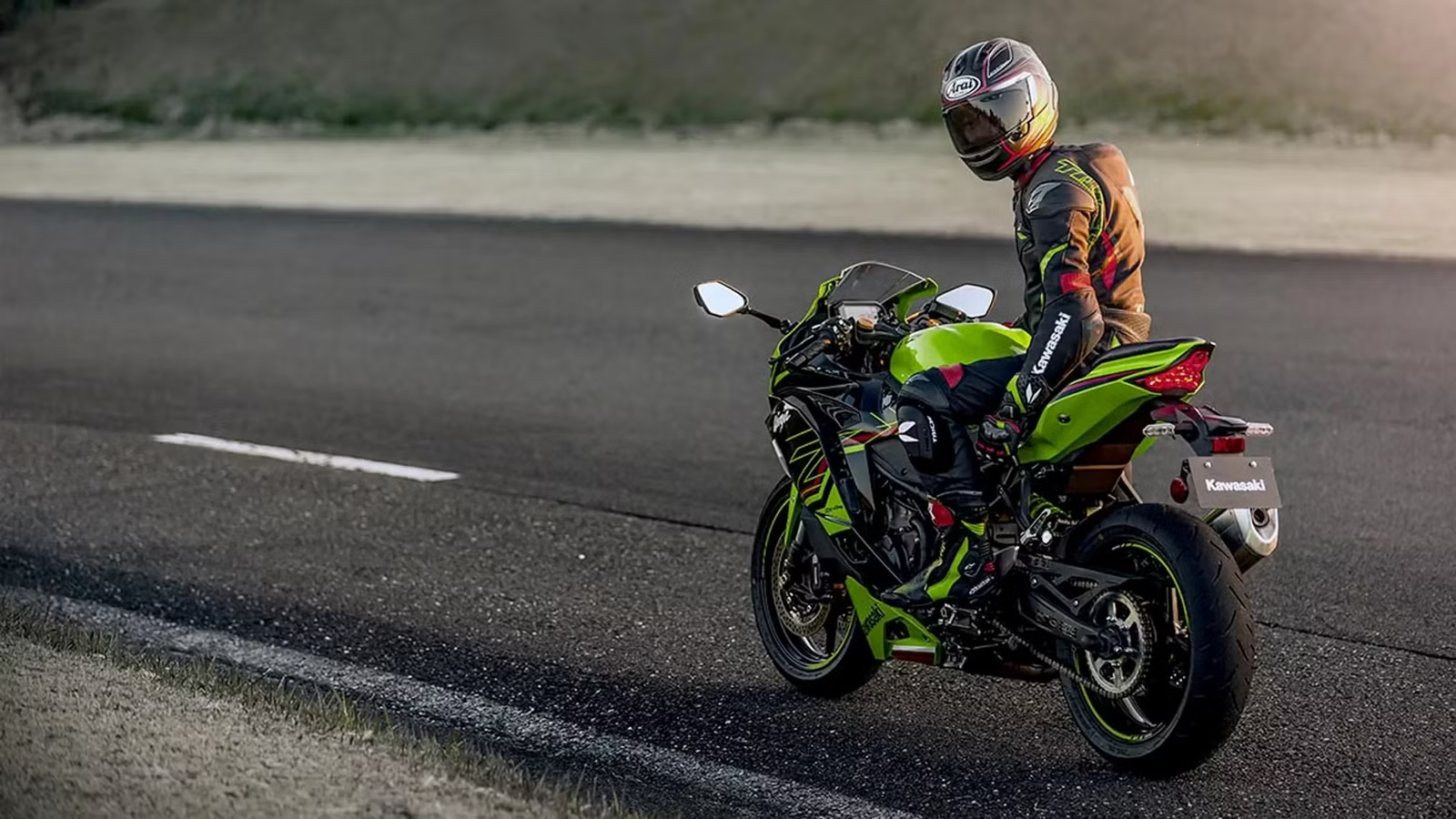
Future collector bikes are supposed to be special. They’re interesting because the industry stops making what once seemed normal, leaving a particular engine layout or riding experience stranded in time. And it’s not a case of the rarest or the most powerful being the best. It is often the machine that represents a short-lived engineering decision that nobody bothers to repeat. That is where one modern Kawasaki sport bike starts to look well positioned for the long term.
Low Production Numbers Don’t Alone Make For A Future Collector

Rarity helps only after people care about the bike’s existence. A motorcycle built in small numbers because nobody wanted it is still just an unpopular motorcycle. Stronger collector candidates tend to have a mechanical identity that remains recognizable years later, with some part of the experience yearned for that newer bikes cannot reproduce simply by being faster.
Japan’s 400cc sport-bike boom from the 80s to 90s was the kind of exception that we’re talking about. Small capacity, middle-of-the-road performance, yet big on character, is what defined them. Domestic licensing rules made the class important back then, while TT-F3 racing encouraged manufacturers to treat 400s as serious performance machines. Honda, Kawasaki, Suzuki, and Yamaha took on the task of building compact four-cylinder sport bikes housed in aluminum frames, revving to five figures.

This side of the pond only saw part of it. Yamaha officially sold the FZR400 here from 1988 through 1990, but bikes such as Kawasaki’s ZXR400 remained largely a Japanese and European-only offering. By the time lightweight sport bikes took center stage globally, singles and parallel-twins had taken over because economies of scale outweighed sheer character and outright performance, let alone simpler engineering and lower costs.

So a modern collector bike, then, does not need to be appreciated today if it already represents an uncommon piece of engineering with a defined place in motorcycle history. If that engineering disappears again, desirability can grow because the experience becomes harder to replace. The motorcycle in question checks those boxes today.
The Ninja ZX-4RR Brings A Lost Formula Back To America

The $9,999 2027 Kawasaki Ninja ZX-4RR ABS and its 399cc inline-four is at the base of this contention. Kawasaki rates the U.S. bike at a restricted 56 horsepower at 11,500 rpm and 26.5 pound-feet at 11,000 rpm, ordinary figures beside larger supersports, but the engine producing them is not. When derestricted (which isn’t a difficult task at all), it unleashes 76 horsepower at 14,500 rpm and 28.8 pound-feet at 13,000 rpm. The ZX-4R family is Kawasaki’s first completely new four-cylinder 400cc supersport design since the ZXR400 debuted in 1989. The company did sell the four-cylinder Zephyr400 until 2008, but that wasn’t a supersport.
Four Cylinders Turn 399cc Into A Unique Engineering Marvel

The 4RR’s 57.0mm bore and 39.1mm stroke divide the displacement among four pistons of roughly 100cc each. A 12.3:1 compression ratio, four 34mm throttle bodies, and ram-air induction help it improve its performance at peaky engine speeds, evidenced by the peak torque being made only above 11,000 rpm. This requires a different kind of riding technique.
The six-speed gearbox gets used a lot, as revs need to be carried, and acceleration builds through engine speed as there’s no large midrange hit to fall back on. It is not inherently better, but that is beside the point. Years from now, another 50- or 60-horsepower sport bike might be easy to find. Another 399cc inline-four that delivers its performance this way may not be.
The RR Specification Makes The Concept Whole

Kawasaki also avoided turning the engine into a novelty surrounded by entry-level hardware. The RR gets a 37mm Showa Separate Function Fork-Big Piston fork with preload adjustment, a Showa BFRC Lite rear shock with compression, rebound, and preload adjustment, and radially-mounted four-piston front calipers working dual 290mm discs. A bidirectional quickshifter, traction control, power modes, ABS, and a 4.3-inch TFT are standard. At 414.5 pounds curb, it is no featherweight recreation of an old 400 racer, but the cycle parts make sure that it’ll remain agile and nimble around a tight circuit.
The ZX-4RR Already Has A Clear Place In Kawasaki History

The ZX-4RR does not need an invented rarity to make its historical case. It brought Kawasaki’s four-cylinder 400cc supersport idea back to the U.S. market in 2023, decades after the original ZXR400 era, and it remains in the lineup for 2027. That run also means scarcity is not part of the equation yet to appeal to collectors in general. But riders experiencing the phenomenon that is the ZX-4RR know that it’s special. Kawasaki acknowledged the historical connection as well. The 2024 40th Anniversary Edition wore Lime Green, Pearl Crystal White, and blue graphics inspired by the ZXR models of the 1980s and 1990s, along with a silver frame, swingarm and lime green wheels, making the historical link very explicit.
Originality Could Matter More In the Long Run

Sport bikes rarely remain untouched forever. Exhausts, tail tidies, bodywork changes, track use, and crash repairs gradually separate clean factory examples from heavily used ones. A modified ZX-4RR may not be undesirable, but originality usually becomes more significant once replacement body panels, exhaust systems, decals, and other factory pieces stop being easy to obtain.
The first-year KRT Edition and anniversary bike may eventually attract attention, but the broader point applies to every ZX-4RR. A documented, original example preserves the mechanical and visual package Kawasaki originally sold. This is of significance if the model later becomes desirable, so its condition and completeness will matter to collectors and for a high resale value.
The ZX-4RR Could Become More Desirable After Production Ends

The ZX-4RR is not a collector bike yet, and there is no convincing market evidence that buyers are treating it like one. Its potential comes from what it represents rather than what somebody is currently willing to pay for it. Its appeal rests on engineering that makes little economic sense besides a simpler twin. The production ending would add the final ingredient by limiting the supply and closing this chapter of Kawasaki’s 400cc-four story.
If Kawasaki develops another generation of the bike or a similar concept, the current ZX-4RR still remains the bike that restarted the lineage. If it does not, this generation becomes a self-contained return to a format that disappeared for decades before making a short comeback. Either way, the reason to remember it is already built in.
Source: Kawasaki

Related posts

Latest Post


No Comments