
The 165-HP Triumph Outguns Indian’s Challenger And Weighs Roughly 170 Lbs Less
What’s the best way to beat Harley-Davidson? Well, for years, everyone thought it meant building a better Harley. Copy the classic V-twin, put on chrome, mimic that relaxed character, and undercut its sticker price. And hey, it actually worked for a while.

That formula no longer applies. Two notable cruiser-class machines have abandoned Milwaukee imitation to target its weak points instead. One relies on raw, ungodly displacement. The other does it with gadgets you’d normally find on a luxury SUV. Neither looks much like a Harley, and that’s precisely the point.
Harley’s Rivals Are Taking Two Very Different Routes To Beat It
The old way of keeping score was easy: engine size, shiny chrome, and how loud the pipes screamed. That used to win every argument, but these days, it doesn’t mean much. Riders are asking different questions. How does it actually handle? What do those electronics do when the road gets slippery? How hard does it pull when you crack it wide open, and how’s your back feeling after 300 miles?

These two challengers aren’t coming at the throne from the same angle. One takes on Harley’s muscular cruiser reputation by building a bigger, meaner muscle bike. The other goes straight after the touring crowd, the real bread and butter of the segment. That’s where the technology contest begins.
Triumph’s Rocket 3 Brings The World’s Largest Production Motorcycle Engine

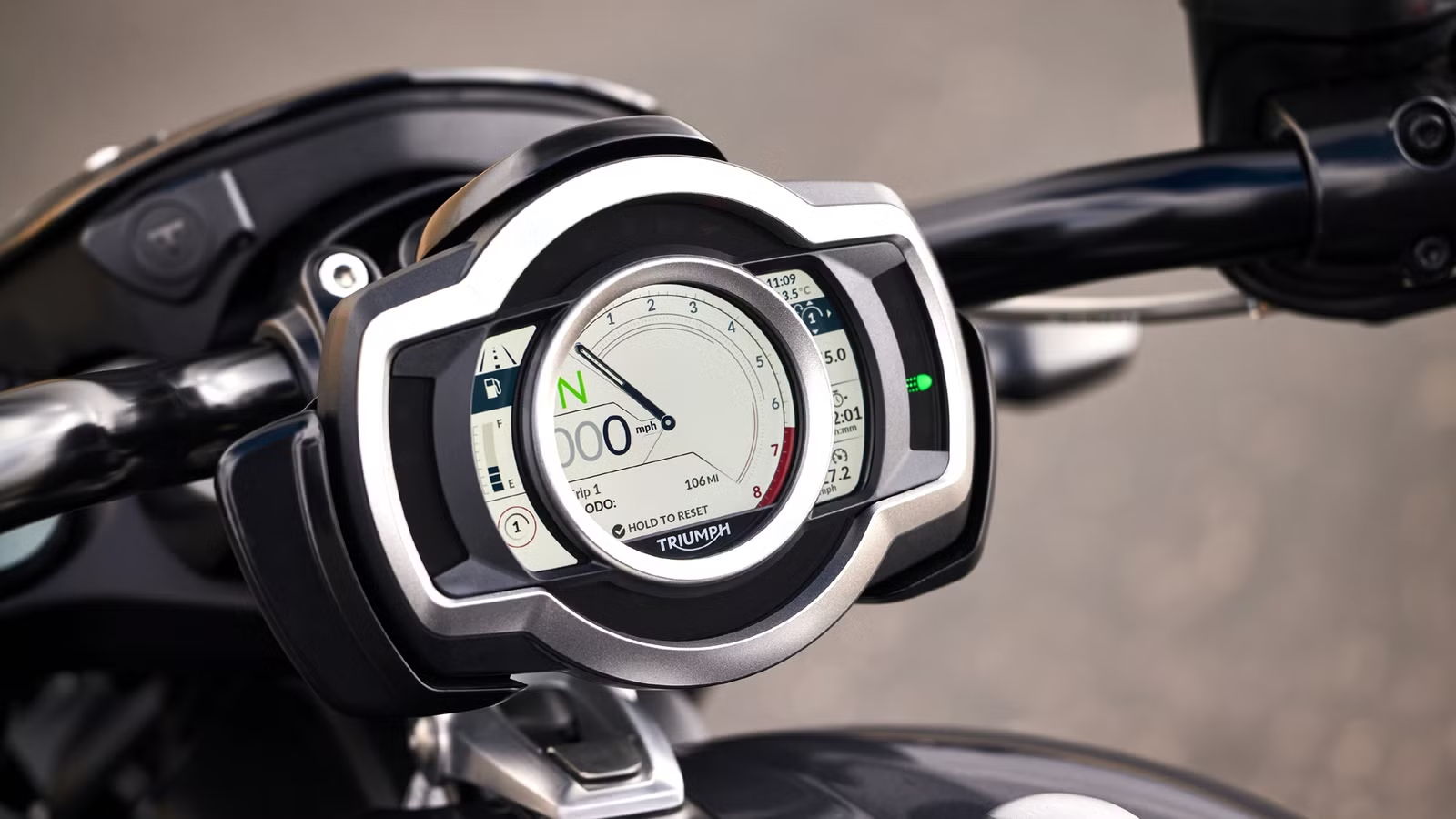
Let’s first look at that wild engine size. The Triumph Rocket 3 R houses a 2,458cc inline-three, making it the biggest production motorcycle engine in the world. You’re looking at 165 hp, 163 lb-ft of torque, and a motor that peaks at six grand. Now, giant displacement on a cruiser might often mean a lazy, sluggish beast. At around 641 lbs dry, the Rocket 3 R is still a heavyweight, no question. Yet, to be fair, it remains the lighter machine here and is widely recognised for its agility.
Besides, an advanced electronics suite helps keep that massive output manageable. You get cornering ABS, lean-sensitive traction control and selectable ride modes, along with explosive acceleration. In the US market, the Rocket 3 R carries a starting MSRP of $23,895. Outsized displacement was historically the defining trademark of American cruisers. But now, a British triple has claimed the biggest engine in the game.
Indian’s Challenger Takes The Fight To Harley With Touring Technology

The Indian Challenger plays a different game. For 2026, it runs the liquid-cooled PowerPlus 112, an 1,834cc V-twin that Indian rates at 122 hp and around 133.8 lb-ft. There are no record-breaking numbers here. The rest of the bike does the real work. You get a front fairing mounted directly to the frame instead of the forks, keeping the handlebars light without making you feel like you’re steering a massive sail in the wind.
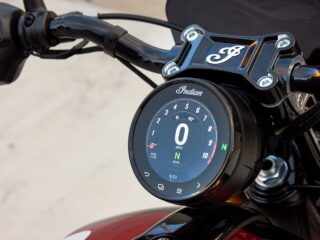
On the technology front, there’s a 7-inch touchscreen, cruise control, cornering ABS, traction control and selectable ride modes. Remote-locking bags offer over 68 litres of storage, too. For 2026, Indian has added Blind Spot Warning and Rear Collision Warning. To be honest, that’s proper luxury car tech making its way onto a big-bore motorcycle.
The Rocket 3 Has A Serious Power-To-Weight Advantage

Line the two up, and the difference is pretty significant. The Rocket 3 makes 165 hp against the Challenger’s 122, a lead of 43 horses. It also weighs around 304 kg against roughly 381 kg, leaving the Triumph with about 77 kg, or 170 lb, less to haul around.
Run the numbers, and the Triumph carries about 0.54 hp per kilogram. The Indian manages roughly 0.32. That’s around a 70 percent advantage, and you’ll feel it. Torque tells a similar story, with 163 lb-ft against the Challenger’s 133.8. But there’s a catch. Sitting on top of a 2.5-litre motor means you’ll feel that heat cooking your shins in stop-and-go traffic on a hot afternoon. Fuel range is tight, too. You’ll get maybe 200 km before hunting for the next pump. On a bike this quick, that’s a real limitation.
Indian’s Challenger Makes Touring Safer And More Convenient

A machine like this lives on the open highway for hours, and Indian built the Challenger specifically for that job. Cruise control holds your speed, while the chassis-mounted fairing blocks wind without loading up the steering. And 68-plus litres of saddlebag space means you can pack for the trip instead of packing around the bike.
The safety tech is the real star here. You get Blind Spot Warning to cover your sides and Tailgate Warning to catch tailgaters. Even better, Rear Collision Warning automatically pulses the rear lights to warn drivers coming up behind you too quickly.
On a heavy touring rig surrounded by interstate traffic, it might sound like a gimmick right until you actually need it. Features like this give the Challenger a real leg up in the American touring scene, especially with tech keeping tabs on your blind spots and traffic behind you. Besides, the Challenger isn’t trying to beat the Triumph in a drag race. It was never designed to. It wants to own the 500-mile day.
Two Different Ways To Challenge Harley-Davidson

So, which machine delivers the sharper blow to Milwaukee? Looking purely at the specs, it’s the Rocket 3. Raw displacement, strength and road presence used to be the strongest traits of American cruisers. Yet Triumph spawned the largest production powertrain on two wheels and the output figures to match. It weighs less, moves faster and packs a full suite of electronic aids.
The Challenger, meanwhile, zeroes in on high-mileage touring riders, the very core of the segment. That’s where technology, now, is beginning to matter more than sheer engine capacity.
If you want sheer muscle, the Rocket 3 takes it. But if you want to see where top-shelf American touring is actually headed, the Challenger steals the show. At the end of the day, classic looks and massive engines just don’t cut it on their own anymore.

Related posts


Latest Post



No Comments