
Mercury’s One-Year 345-HP Muscle Car Was Ordered With 8-Tracks And Power Vent Windows
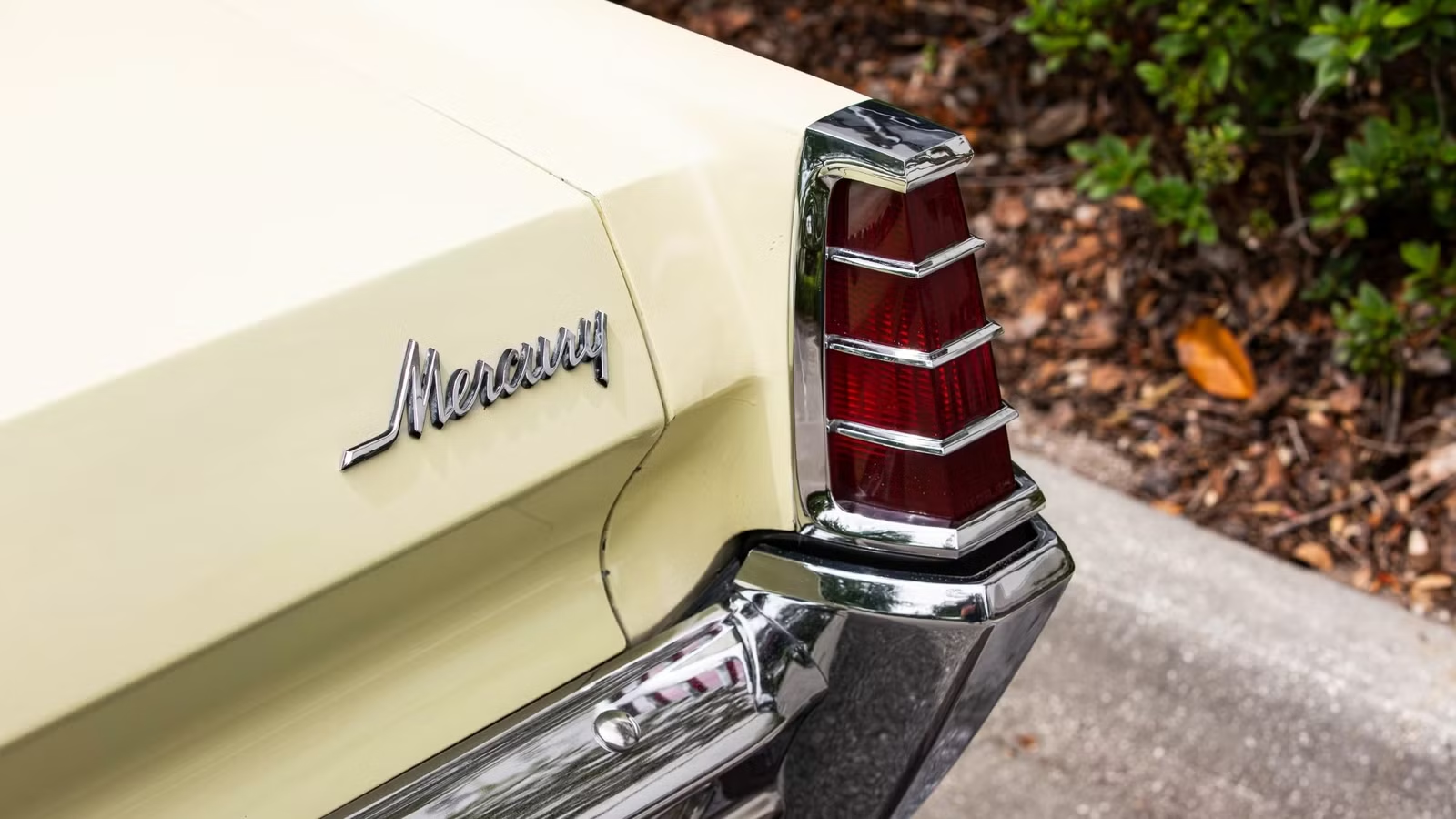
For one year only, Mercury buyers could enjoy the finer things in life from behind the wheel. However, this rare model was actually built and marketed as a muscle car. Unfortunately, this Ford experiment failed to excite most drivers because of how it was ordered. This plush powerhouse went against the street brawler trend of being stripped down to lighten the load. As a result, the impact on its speed was too big to ignore.
Mercury Wanted To Fight Full-Size Muscle Car Rivals

In the 1960s, Mercury wasn’t a stranger to muscle cars. For example, the Mercury Comet Cyclone served as an intermediate racer. Then the full-size Mercury Marauder was a serious muscle car, with an original run from 1963 to 1965 before returning twice in later years.
But in 1966, Mercury didn’t have a full-size muscle car to fight rivals like the Chrysler 300, Ford Galaxie 500XL, and Chevrolet Impala SS. But the brand still had big-block V8 power available, so it was time to launch a full-size model to outrun the competition. However, things didn’t exactly go as planned.
Unfortunately, for the brand that sat in between the standard Ford lineup and the luxurious Lincoln model line, times were changing. Younger drivers were becoming increasingly attracted to smaller, intermediate cars and pony cars. They were willing to give up creature comforts for extra power and the freedom of open-road independence.


That meant full-size luxury cruisers were going out of style, seen as cars for bankers or family haulers. It didn’t help that Mercury already had a reputation as a luxury line as it tried to stay relevant in the muscle car segment. On top of that, buyers weren’t buying Mercury cars in configurations as planned.
The 1966 Mercury S-55 Packs Plenty Of Muscle

When the 1966 Mercury S-55 launched, it was going against the popular muscle car trends as a full-size muscle car while other manufacturers were shifting to compact and mid-size models. It also had a lot of weight to carry on its shoulders as it replaced the outgoing Mercury Marauder model line.
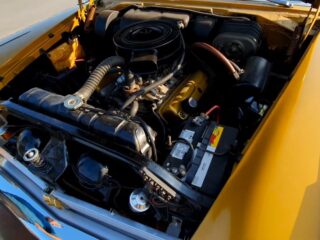
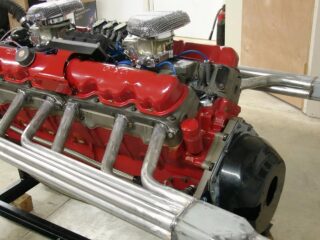
But it still featured incredible power. It came with the 428 cubic-inch (7.0-liter) Super Marauder V8 engine that delivered 345 hp and 462 lb-ft of torque. Unfortunately, it was too big and hefty to deliver an athletic performance. The Mercury S-55 accelerates from 0 to 60 mph in about 8.9 seconds and completes a quarter mile in roughly 16.9 seconds at 85 mph. It has a top speed of around 126 mph.
This was too slow to excite the masses. Plus, the same engine was found in the 1966 Ford Galaxie. The Galaxie could reach 60 mph in about 7.0 seconds, with a 15.2-second quarter-mile time at around 91 mph, and a top speed of roughly 131 mph. Plus, the 428 engine, or Thunderbird V8, was also found in police packages.

The engine performed at its best in stripped-down police cruisers, and Mercury tried to market the S-55 as if it had interceptor performance. A Park Lane “Police Special” was advertised as having the same 428 engine. But buyers weren’t fooled by the land yacht, and it gained a reputation as a gentleman’s car.
Buyers Didn’t Order The 1966 Mercury S-55 Like A Muscle Car

The 1966 Mercury S-55 weighs in at 4,166 to 4,266 lbs depending on body type and configuration. But the standard Ford Galaxie FE 428 model only weighs in at 3,800 lbs. Surviving models often carry the DSO 84 code, which means Home Office Reserve. This indicates that the car was primarily ordered by executives as a company car to showcase factory features.
These models were loaded with luxury features like power vent windows, eight-track players, automatically dimming headlights, power locks, power brakes, power steering, a deluxe steering wheel, a full-length center console, remote-controlled side mirrors, plush bucket seats, and deluxe wheel covers.
Most of the 1966 Mercury S-55 models were ordered with the Merc-O-Matic three-speed automatic transmission. The performance four-speed manual transmission was only ordered in 0.3% of models. This shows that the executives ordering this car were prioritizing comfortable cruising over raw performance.
Surviving 1966 Mercury S-55 Are Surprisingly Cheap

Only about 3,285 1966 Mercury S-55 models were produced, as the model wasn’t very popular. Roughly 2,916 were two-door hardtop models, and the other 669 units were convertibles. The S-55 was quickly discontinued after one year due to low sales and to make space for the 1967 Mercury Cougar. The failure of the S-55 possibly paved the way for the incredible success of the mid-size Cougar. It was the most popular model launch in Mercury’s history.
But the S-55 serves as a rare, affordable option. Models in project condition often sell between $10,000 and $19,000. Then examples in good, daily driving condition cross the auction block for between $24,000 and $37,000. Models in excellent condition hover around $44,000 to $58,000, while examples in pristine condition go for between $64,000 and $76,200.
Its sister, the 1966 Ford Galaxie 428, holds a bit more value. Models in project condition sell for around $15,000 to $25,000. Then survivors in solid driving condition can fetch between $35,000 and $55,000. Last but not least, Galaxie 428 models in pristine condition cross the auction block for between $120,000 and over $135,000.

The 1966 Mercury S-55 was a rolling contradiction that proved marketing a muscle car as a high-performance option without the speed to back it up isn’t an award-winning formula. Going against the popular downsizing trend and offering plush amenities didn’t pay off, but at least the brand quickly learned its lesson.
Source: Curbside Classic, Barrett Jackson, Hagerty

Related posts
Latest Post


No Comments