
Years Before The Grand National, Buick Built A Turbo V6 Fastback Nobody Remembers
Before stealth black paint, sequential fuel injection, and intercoolers turned the mid-1980s Regal Grand National into a street-racing icon, Buick took a different and largely forgotten gamble on forced induction. In the emissions-choked depths of the Malaise Era, when engines had to run low compression ratios and V8s were lethargic, Buick tried to resurrect American muscle with an unlikely car. It wasn’t a sleek sports car or a mean-looking coupe. Instead, Buick shoved a turbocharged V6 into a sloped, family intermediate. The result was a sleeper that quietly outran the era’s heavy V8s.
How Strict Regulations Killed The High-Compression V8

By the late 1970s, the golden age of big-block American muscle was effectively dead. The engines were low-compression, detuned shells of their former selves. Strict federal emissions regulations, rising fuel costs, and skyrocketing insurance surcharges stripped the V8 engines of horsepower, leaving buyers with engines that struggled to push heavy mid-sized coupes on the highways. Many manufacturers surrendered to the new normal and shifted their focus to aesthetics, adding vinyl roofs, plush velour bench seats, and opera windows instead of trying to fix the performance deficit.
Buick, however, unlike other Detroit manufacturers, had an ace up its sleeve. In 1975, a group of General Motors engineers began experimenting with turbocharging the brand’s workhorse 231-cubic-inch V6 engine for racing. The program’s racing ambitions hit the front page when a turbocharged pace car took the track at the 1976 Indianapolis 500, producing roughly 306 horsepower in modified race trim. That milestone proved forced induction could deliver V8-level performance without the heavy fuel-economy penalty that hampered all the era’s V8s.
Chasing NASCAR Speed In Fastback Silhouette


Putting a high-tech turbo engine into a family intermediate wasn’t purely about street performance; it was deeply tied to motorsports. NASCAR stock car racing demanded an aerodynamic edge over rivals, so Buick set out to build a silhouette that could slice through high-speed banking far better than traditional, boxy coupe designs. They developed a distinctive “Aeroback” fastback body style. Built on General Motors’ downsized A-body platform rather than the older Colonnade chassis, the sloping rear roofline was created to improve aerodynamic downforce and high-speed stability.
To complement that competition-bred body style on the street, Buick engineers needed a powertrain that delivered effortless mid-range passing power. The fastback was more unconventional than anything else at the time, polarizing showrooms, but it gave Buick the canvas it needed for its high-speed development program. What came out of it became the first chapter of the legendary turbo-powered car that Buick would later produce in the 1980s.
The Buick Century Turbo Coupe: The Turbo Unicorn

For the 1979 and 1980 model years, Buick launched the Century Turbo Coupe. Under the hood, it had a 231-cubic-inch iron-block turbo V6 fed by a draw-through four-barrel Rochester Quadrajet carburetor. This draw-through layout forced the fuel-and-air mixture straight through the turbocharger compressor wheel. That created unique throttle-response hurdles and thermal-management demands that later sequential fuel-injection systems eliminated, cementing its place as a fascinating transitional milestone in boost technology.
Because the carburetor sat upstream of the turbo rather than downstream, cold-start driveability was finicky, requiring drivers to master a delicate throttle technique before boost arrived. Because air-to-air intercoolers were still years away from mainstream use, preventing the engine from destroying itself under boost required real ingenuity. Power outputs also varied by source; some period magazines cited 165 hp, while others cited 175 hp. Torque varied similarly across sources, ranging from 265 to 285 lb-ft.
To run the engine without an intercooler, Buick paired a knock sensor with Electronic Spark Control. When the sensor detected early detonation, the system automatically retarded the ignition timing within milliseconds, protecting the non-intercooled engine while maximizing boost pressure. That gave it an edge over its V8 competitors, even if it was only for a couple of model years.
Outrunning The V8S On A Budget

On paper, sub-180 horsepower might sound modest by modern standards, but in 1979, the Turbo Coupe was a real sleeper. On the downsized A-body chassis, it hit 0–60 mph in about 9.1 seconds. That was fast enough to leave standard V8-powered intermediate sedans and coupes in the dust. Its original MSRP was around $7,870, with options making it a strong-value, decent-performance package for the money in the smog-choked era.
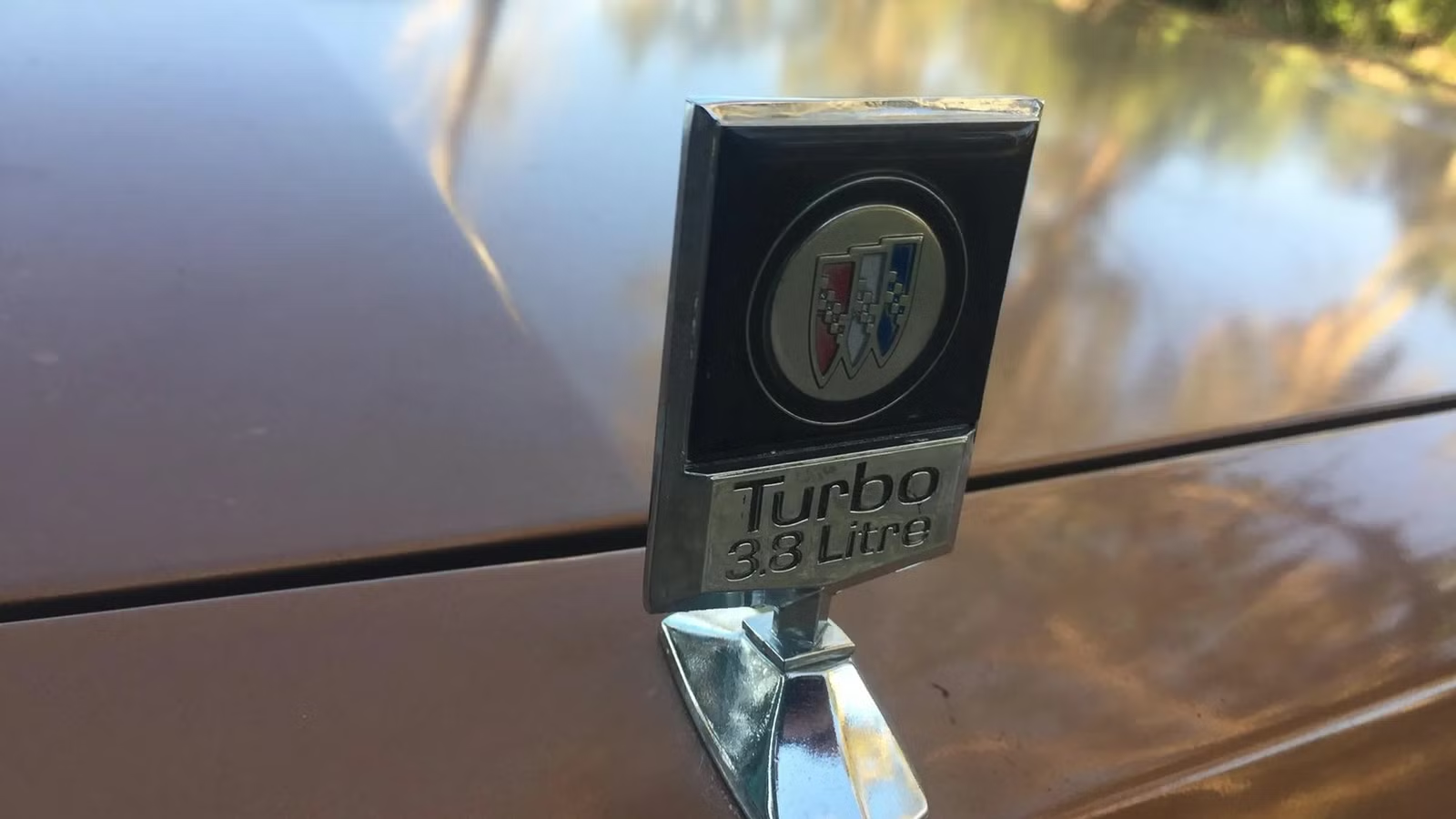
The Turbo Coupe stood out from the mundane family commuters with its functional, aggressive accents. It featured a distinct hood bulge to accommodate the top-mounted turbo and intake plumbing, cast aluminum turbine-style wheels wrapped in performance rubber, a standard dual exhaust, and bold “Turbo 3.8 Liter” door and decklid decals.
But despite these unique design cues, buyers struggled to connect with the car. Total production for the 1980 model year reached just 1,074 Aero Coupes across all trim levels, with the Turbo variant representing only a tiny fraction of that total. Adding to its obscurity, Buick also briefly offered a four-door Century Turbo sedan for 1979 and 1980, making those rare four-door variants even scarcer than the fastback coupe is today.
The Forgotten Engineering Bridge To A Legendary Era

Today, automotive enthusiasts and historians often skip straight from the 1970s V8 slump to the success of the mid-1980s Grand National and GNX. Yet the Century Turbo Coupe served as a risky but crucial engineering bridge, where Buick mastered knock management, boost control, and downsized performance. Those early trials of high-pressure turbocharging on restricted street blocks directly forged the metallurgical durability and electronic calibration that later let engineers push intercooled V6 power well past factory limits.
Without the oddball fastback taking a calculated risk in 1979, the following decade’s blacked-out turbo legends might never have achieved legendary status. The Century Turbo Coupe remains a fascinating footnote in Buick’s history of daring to innovate while the rest of the industry was asleep at the wheel.
Source: Bring a Trailer, CurbsideClassic, Hemmings.

Related posts





Latest Post



No Comments