
BMW i3 Drives Almost 5,900 Kilometers Across Europe With Less Than 3 Hours Of Charging
i3
The Neue Klasse electric sedan averaged just 12.5 kWh/100 km on its journey from Norway’s North Cape to Spain’s Tarifa, setting a new record in the process.
Article Summary
- It spent just 2 hours, 45 minutes, and 54 seconds charging along the way, beating the previous record by more than seven hours.
- The BMW i3 50 xDrive covered 5,886.7 kilometers (3,658 miles) from Norway’s North Cape to Spain’s Tarifa.
- It has an official WLTP range of up to 912 km (567 miles) and peak DC charging at 400 kW.
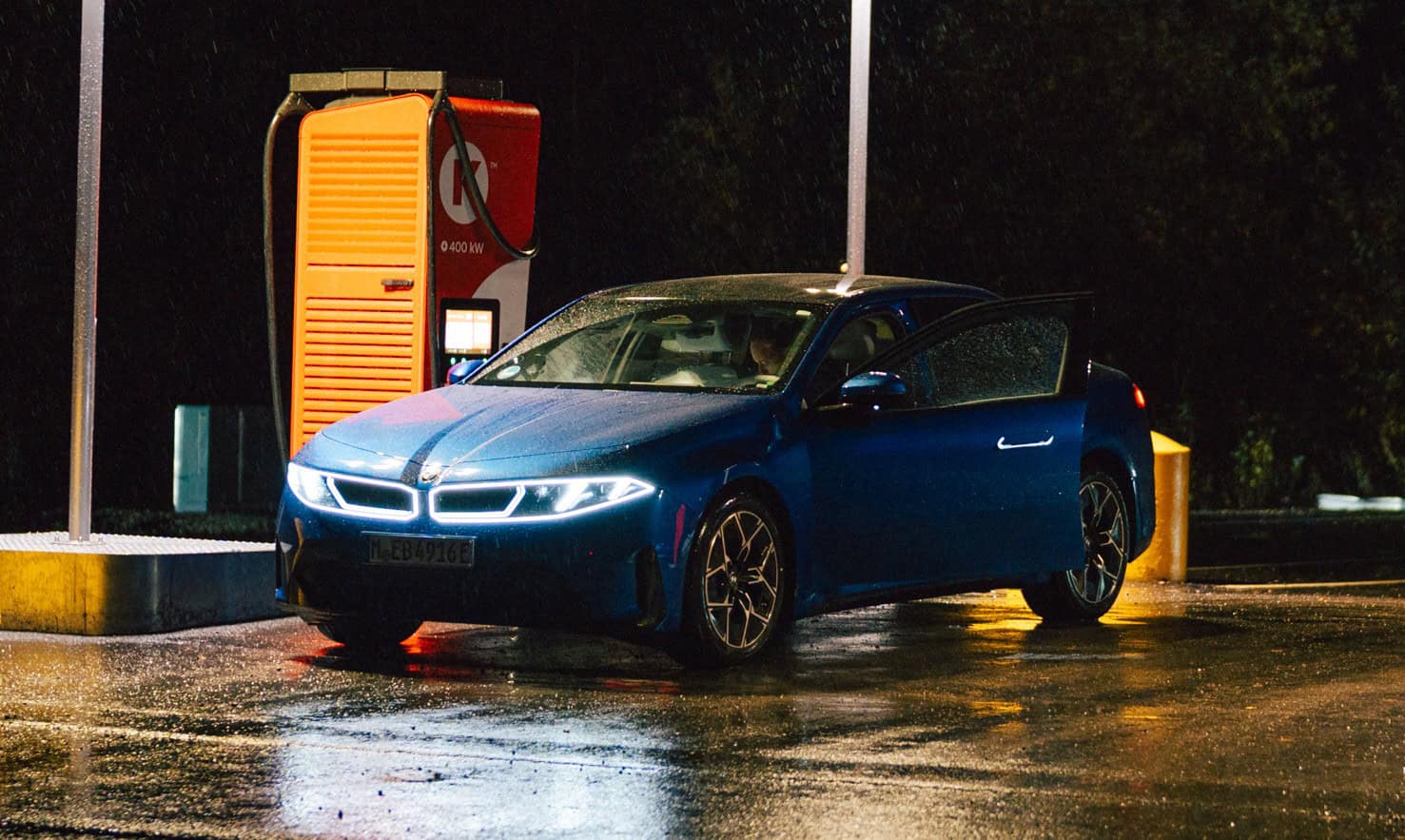
BMW is putting the long-distance capabilities of its Neue Klasse technology to the test with an ambitious road trip from Norway to Spain. The new i3 50 xDrive traveled from the North Cape to Tarifa, covering 5,886.7 kilometers (3,658 miles) across eight countries. More impressively, it spent just 2 hours, 45 minutes, and 54 seconds charging along the way.
The journey was part of the Paneuropeana, an efficiency and charging-speed challenge launched by Rafael de Mestre. Rather than rewarding outright speed, the competition focuses on completing a predefined route with the shortest possible total charging time. Participants must travel through designated checkpoints, using public charging infrastructure along the way.

BMW says its electric sedan beat the previous record, set in 2017, by more than seven hours. That’s a big improvement in less than a decade, especially given how much European charging infrastructure has evolved in the meantime.
The BMW i3 Averaged Just 12.5 kWh/100 Km
Efficiency was another highlight of the trip. The i3 50 xDrive averaged just 12.5 kWh/100 km (4.97 miles/kWh), comfortably beating its official WLTP consumption figure of 13.4 to 18 kWh/100 km. The journey included highways, country roads, and urban traffic, making the result more interesting than a laboratory test.

The BMW covered the distance across eight countries, averaging 79.7 km/h (49.5 mph). Driving time alone amounted to 3 days, 2 hours, and 41 minutes. One engineer drove the car throughout the challenge, while an identical i3 and an iX3 50 xDrive accompanied it as support vehicles.
Importantly, BMW insists all three vehicles had the same hardware and software specifications as the cars you’ll find at any dealership. The record-setting i3 also relied exclusively on publicly accessible charging stations within the national charging networks along the route. The i3 50 xDrive supports DC fast charging at up to 400 kW, thanks to its 800-volt electrical architecture. That’s an impressive peak figure, but perhaps even more telling is that the car averaged 275 kW throughout the European challenge. Maintaining such a high charging rate across multiple stops is no small feat, especially when relying on public charging infrastructure. It helps explain how BMW completed a journey of almost 5,900 kilometers with less than three hours plugged in.
Alleviating Range Anxiety, One EV At A Time
The North Cape-to-Tarifa challenge is another opportunity for BMW to demonstrate what its Neue Klasse architecture can do beyond impressive specifications on paper. The iX3 already proved its efficiency nearly a year ago by traveling 1,007 km (626 miles) from Debrecen to Munich on a single charge. Now, the i3 has taken things further by showing how little time a modern electric car needs to spend charging during a journey across Europe.
Naturally, real-world results will vary depending on weather, traffic, driving style, and charging infrastructure. Nevertheless, averaging 12.5 kWh/100 km over nearly 5,900 kilometers is impressive.
On a related note, China’s long-wheelbase i3 recently covered an astonishing 1,213 kilometers (754 miles) on a single charge, finishing with 1% battery capacity remaining. It averaged just 8.8 kWh/100 km (7.1 miles/kWh), despite being driven on a mix of highways, national roads, and urban streets. BMW didn’t disclose the average speed or the exact split between city and highway driving, but the test still shows that running out of battery juice is becoming less and less of a problem.

Related posts


Latest Post


No Comments