
Toyota Built A Rally Monster That Even Its Own Test Drivers Feared
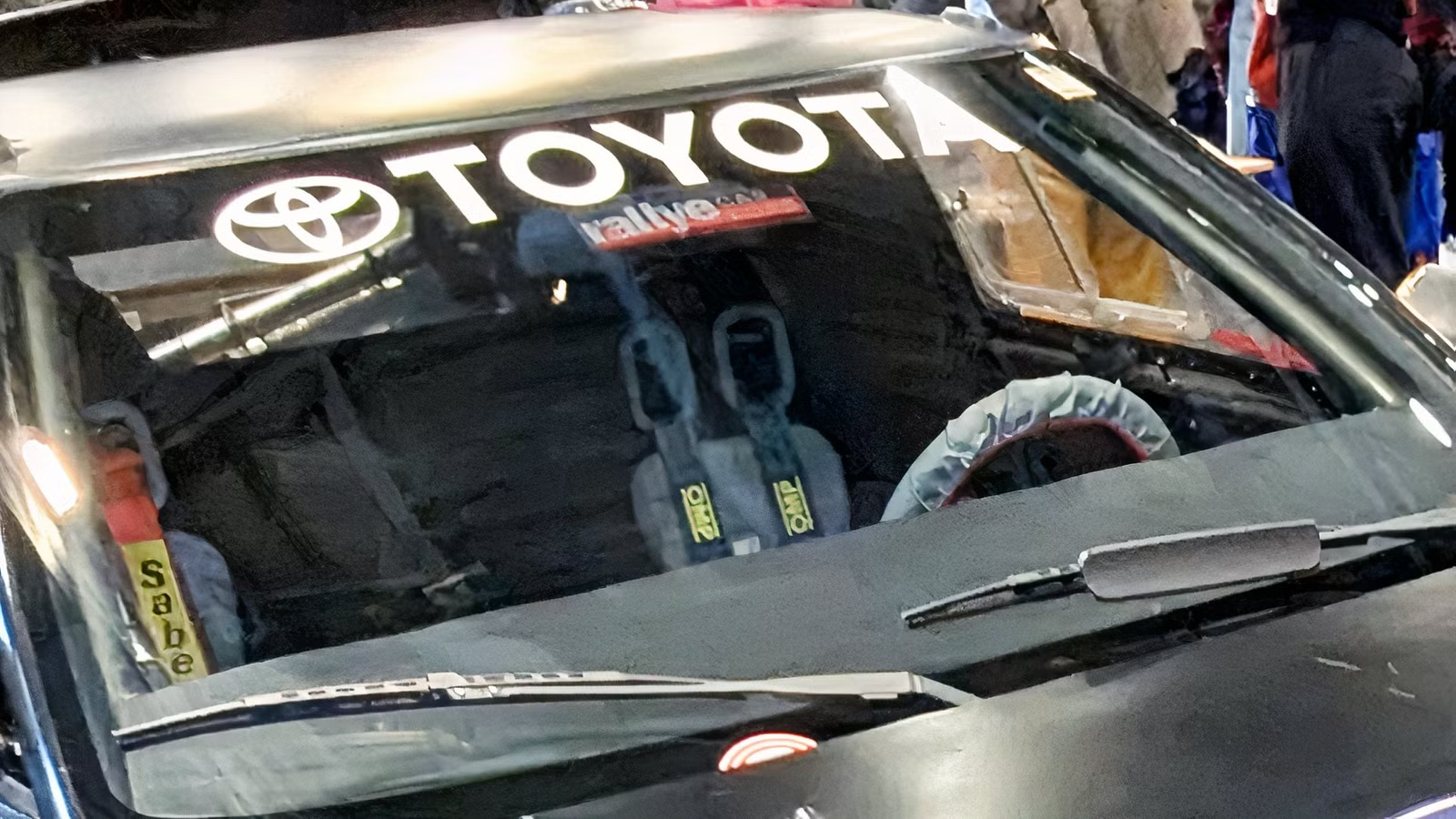
“It could swap ends at any time and without warning.” Ove Andersson wasn’t describing a rival’s rally car. He was talking about a Toyota prototype his own team was developing. Reports cite roughly 600 hp in rally trim, around 750 kg for a lighter rear-drive version, and nearly three seconds of turbo lag. Its short wheelbase didn’t help.

Built for a successor to Group B rally cars, the prototype was supposed to push Toyota into rallying’s next chapter. Then Group S was cancelled. Even how many survived is disputed.
Why 600 HP And A Short Wheelbase Made It So Frightening
Those numbers grab attention, but there’s a catch: they don’t describe one verified chassis. Around 750 kg belongs to a lighter rear-drive prototype; 600 horsepower is a reported rally-trim figure, not a confirmed output for that car. Toyota kept changing drivetrains. Test drivers still couldn’t predict the car’s response.


Imagine feeding in throttle as you exit a tight rally bend. You expect the engine to pull, but its full response hasn’t arrived. Reports estimated nearly three seconds of turbo lag at full power. By the time boost catches up, the next corner may already need your attention. Lancia’s twin-charged Delta S4 used a supercharger alongside its turbo to improve low-speed response. Toyota’s testers had to contend with the delayed boost.
Then there’s the short wheelbase. Add strong torque and unpredictable delivery, and a driver has less time to anticipate what the car might do. Andersson’s warning that the car could swap ends without warning says more than a horsepower figure. And the often-quoted 1,000 hp? That refers to claimed unrestricted endurance-engine potential, not a verified rally-car output. Power isn’t much help when you can’t judge when it will arrive.
Then Group S Lost Its Chance To Change Rallying Forever

Toyota was developing its prototype for Group S rules that never took effect. Group B required manufacturers to make 200 matching cars before racing them. Its proposed replacement, Group S, would need just 10. That change gave engineers room to create purpose-built rally machines without producing hundreds of road-going copies. For Toyota, it meant developing a mid-engine contender instead of relying on its front-engine, rear-drive Celica.

Group S wasn’t supposed to let horsepower climb forever. As officials worked on safety rules, proposals included a limit of around 300 hp. That meant the huge power figures reported for Toyota’s test cars weren’t necessarily what the team could use in a rally. Engineers had more freedom to build something unusual, but would still face limits on performance.
That plan came apart in 1986. Fatal accidents shook rallying, and in May officials decided Group B would end after that season. Group S was abandoned too. Toyota’s prototype wasn’t singled out or banned; the class it was designed for never began. Ford’s RS1700T had been dropped years earlier for different reasons, but it showed the same harsh reality: rally rules and technology could leave a promising project without a future.
The Toyota 222D Hid Unexpected Hardware Under MR2 Looks

The nightmare finally had a name: the Toyota 222D. It borrowed the first-generation showroom MR2’s shape, then made a mockery of the resemblance. Bulging arches advertised its wider stance. Fixed headlights replaced the pop-ups. Beneath composite body panels sat a purpose-built spaceframe with tubular supports. Toyota hadn’t merely toughened up an MR2; it had built a rally prototype around the silhouette.
The engines were just as wild. Toyota evaluated the Celica rally program’s turbocharged 2,090-cc 4T-GTE, plus the 2.1-liter 503E with Group C and IMSA endurance-racing roots. Its claimed 1,000-hp potential belongs to unrestricted endurance use, not the 222D’s rally specification. Even the often-quoted 600 hp describes rally trim, not every prototype.

And there was no single finished recipe. Toyota tested rear-drive and Xtrac-equipped all-wheel-drive versions while considering a torque-split mechanism that could switch between two and four driven wheels. The first prototype appeared in February 1985. By June, engineers were already requesting changes to engine placement, suspension travel, and tires. Sources even disagree on how transverse and longitudinal engines matched the drivetrains.
An MR2 face, endurance-racing muscle and a drivetrain still being reinvented.
Beyond The Missing Cars, A Replica Keeps The Legend Alive

Toyota reportedly built 11 prototypes. Their fate is less certain. Toyota identifies two known survivors, while other accounts put the number at three, with cars associated with Cologne, Japan and private ownership. At least one is confirmed, but nobody can responsibly claim that only Chassis 1 survived or that exactly eight were scrapped. A car doesn’t vanish from the tally just because it no longer runs.
Wim Hapers Built His Replica From Photographs

Belgian enthusiast Wim Hapers wasn’t going to let the shape die. With photographs, a first-generation MR2 and hardly any factory measurements, he taught himself metalworking to recreate the bulging arches and nose. Door handles and taillights became his measuring sticks.
Illness nearly ended the build. Hapers had to sell his home, workshop and tools, but a friend saved the unfinished car and others donated parts. His tribute ran a turbocharged 2.0-liter 3S-GTE, not an original factory powertrain.
By 2021, he’d tested it at Mettet and entered the Course de Côte de Sy hillclimb. Toyota’s original never got its championship start. Hapers built his answer from pictures.
Sources: Motor Sport, Toyota UK, Toyota Gazoo Racing, Hagerty

Related posts

Latest Post



No Comments