
Pontiac Answered The 1973 Oil Crisis By Turning Its Mid-Size Icon Into A Compact Weapon
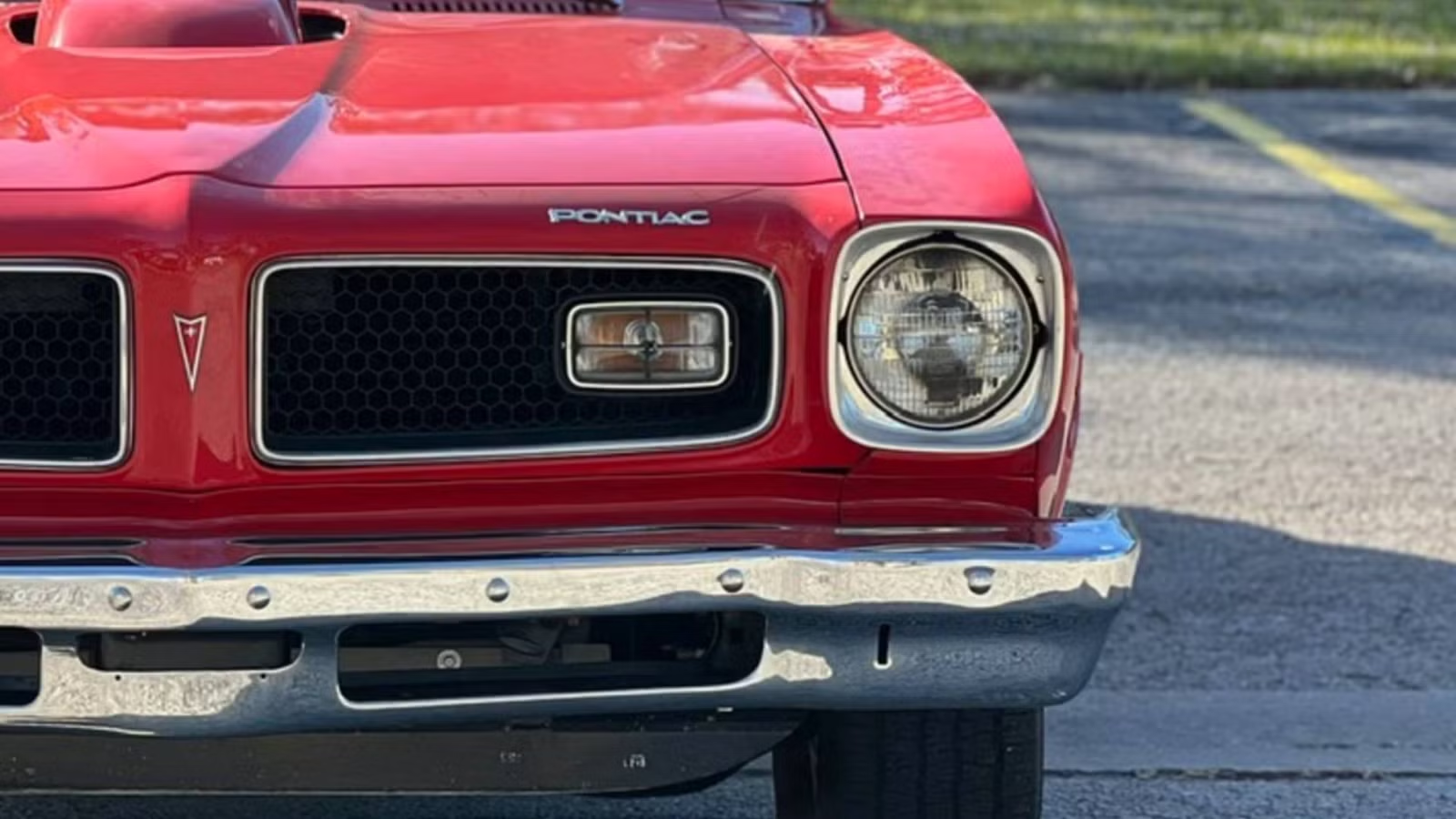
No carmaker was immune from the pressures facing the industry in the 1970s, and it was stunning just how quickly genuine American icons found themselves reduced to shadows of their former selves. Even iconic nameplates were fighting to continue existing at all under the new normal of automotive malaise, usually with efforts that resulted in nobody’s favorite generation of anything.

The GTO was no exception, because there were no exceptions. But Pontiac deserves more credit for how it met the moment.
By 1973, The GTO Had Lost Its Muscle Car Magic
A decade earlier, when Pontiac first introduced the GTO, the formula was as straightforward as it was revolutionary: take a perfectly normal midsize car, stuff a big V8 under the hood, and create a car that was more than a way to get to work and back.

The American muscle car scene was born and Pontiac was right at the center of it. Emissions regulations and rising insurance prices were starting to put the brakes on the whole scene, and the 1973 oil crisis arrived as a painful reality check that flashy cars with loud, fuel-guzzling V8s were becoming a luxury the country could increasingly ill afford.
The writing was on the wall. Pontiac could either throw in the towel on the GTO altogether, or try something different.
Pontiac’s Solution Was A Smaller, Lighter GTO
Until this point, a significant part of muscle car evolution had been finding ways to replace big V8s with bigger ones while leaving the cars more or less the same size. With fuel economy concerns and emissions regulations putting an effective cap on that premise, there was another option: make the cars smaller.
Pontiac did exactly that, abandoning the midsize LeMans platform that had supported the GTO and transferring the nameplate to the compact, more economical Ventura. You could read this move as a retreat from the muscle car ethos that had taken the segment so far, but the smaller, lighter platform gave the GTO a fighting chance at maintaining some sense of performance as its V8 powerplant was cut down to size.
The ’74 GTO weighed about 400 pounds less than the outgoing car and was ironically now closer in size to the very first GTO released in 1964than the increasingly bloated 1973 car had been. And the engine pushing it all forward wasn’t nothing.
The 350 V8 Wasn’t The Downgrade It Appeared To Be

If you’re following the GTO bloodline from generation to generation and looking at 400- and 455-cubic-inch engines, the 350 V8 hits the timeline like a slap in the face. With 200 hp and 295 lb-ft of torque, it hardly seems worthy of muscle car royalty like the GTO, at least not on paper.
But what about on the street? That might have been worse, actually.
Early tests showed a level of performance that was probably about what you’d expect looking at the spec sheet, with Motor Trend recording a borderline leisurely 9.4-second zero to sixty and a 16.5-second quarter-mile at 84 mph.
Yet different publications produced different results. CARS magazine put a pro drag racer behind the wheel with the four-speed manual and got to 60 miles per hour in 7.7 seconds, running the quarter in 15.72 seconds at 88 mph.
Better still, CARS brought along a 1964 GTO for comparison, and the original Goat managed the quarter-mile in 15.64 seconds. Granted, it was saddled with a two-speed automatic, but the notion that the humble 1974 GTO could run anywhere near the original was something worth celebrating.
Clearly, you couldn’t just stomp on the gas and let 400-plus cubic inches of displacement do the rest, but perhaps there was something there, if you knew how to push it.
Less Displacement, More Tricks Up Its Sleeve

It would have been easy to throw some GTO badges on the Ventura and call it a day, but not as easy as it would have been to rely on a massive, fuel-sucking V8 to carry the day. With the 350 under the hood, the bits that weren’t the engine became more important. In addition to being a smaller, lighter car, the ’74 GTO included a sportier suspension, dual exhaust, Rally II wheels, and a shaker hood scoop borrowed from the Firebird Trans Am.
Except unlike the Trans Am, which had its scoop rendered nonfunctional to comply with noise and emissions rules, the GTO got a real, working hood scoop that funneled fresh air to the engine under hard acceleration.
There was also a tent.
If you got the hatchback, there was an optional tent that attached to the back, turning the GTO into a makeshift camper long before the Pontiac Aztek would dare to do the same. (It was hard to design performance cars in the ’70s, okay?)
The 1974 GTO Deserved Better

Just 7,058 examples were built, including 5,335 coupes, 1,723 hatchbacks, and no word on the take rate for the tents. Pontiac dropped the nameplate after that model year, ending an 11-year run until the badge returned in 2004 as an Australian-built performance coupe for a new millennium.
Usually when you read about the ’74 GTO, it’s a sad footnote that marks the end of an era. The engine was smaller, the performance was spotty, and the once-mighty vehicle had become a dressed-up, economy-minded compact with a hood scoop.
But the styling was sharp, the package was lightweight, and the hood scoop worked, which is more than you could say about much of the competition at that time. It isn’t the muscle car that enthusiasts think of when they hear “GTO,” but considering everything Pontiac was up against in 1974, it’s remarkable how much of the original spirit survived despite it all.
Sources: General Motors

Related posts





Latest Post


No Comments