
The Premium ADV That Costs Less Than A Base-Level German Rival
Premium adventure motorcycles have become remarkably capable, combining long-distance comfort, sophisticated electronics, powerful engines, and suspension systems designed to handle everything from highways to broken back roads. European manufacturers have made this segment particularly desirable, but their flagship machines can become expensive once the price of optional equipment enters the picture. Japanese alternatives, on the other hand, often combine proven engineering with generous standard equipment at a more approachable price. For riders who want a serious touring motorcycle without automatically paying European premium prices, the difference can be substantial. The interesting question is how much capability that saving actually buys.
The Price Gap Between Japanese And European Adventure Motorcycles

The premium adventure segment is no longer just about building a motorcycle that can travel across continents. Manufacturers now compete through electronic suspension, advanced rider assistance, sophisticated displays, multiple riding modes, and engines powerful enough to make a fully loaded touring machine feel surprisingly quick. European brands have been particularly successful at turning these features into part of their flagship motorcycles’ appeal. The BMW R 1300 GS, for example, has become the standard for ADVs across the world. But once fully loaded with everything that makes this bike touring-ready, the price skyrockets.
Japanese brands, however, offer a different solution. Their top-spec ADVs with all the optional accessories usually aren’t as luxurious as fully-kitted BMWs, but in terms of capability, they don’t fall behind so easily. There’s a bonus, too: even stock, Japanese motorcycles tend to get more equipment than a higher-priced base GS. Our pick of the litter for this kind of comparison today is the Honda Africa Twin Adventure Sports ES.
Why The Africa Twin Adventure Sports ES Deserves A Place On The Shortlist


The Honda Africa Twin Adventure Sports ES comes in with a number of advantages over the base BMW R 1300 GS. While the engine is underpowered in a direct comparison, everything from transmission and suspension to fuel tank capacity and electronics gives the Africa Twin a distinct leg-up over the GS.
The Africa Twin Adventure Sports’ “ES” designation means electronic suspension, something that’s optional on the BMW. Honda also offers a DCT variant, and even with that extra cost, it is still cheaper than the GS. Overall, the Africa Twin’s blend of touring equipment and adventure-bike versatility is what makes the Honda worth considering.
The Africa Twin Gets A Compact Parallel-Twin Rather Than A Big Boxer

Powering the Africa Twin is a 1,084cc liquid-cooled parallel-twin engine that produces 100 horsepower and 82.6 pound-feet of torque. This is significantly lower than the R 1300 GS’s 1,300cc boxer twin that manages 145 horses and 110 pound-feet of twisting force. The difference, however, is in how the engines perform. The lower power and torque mean the Africa Twin is far more manageable when the trails get rough. Honda is also known for its refined engines, and the Africa Twin’s smooth and predictable throttle response makes it a very approachable bike when things get tough.
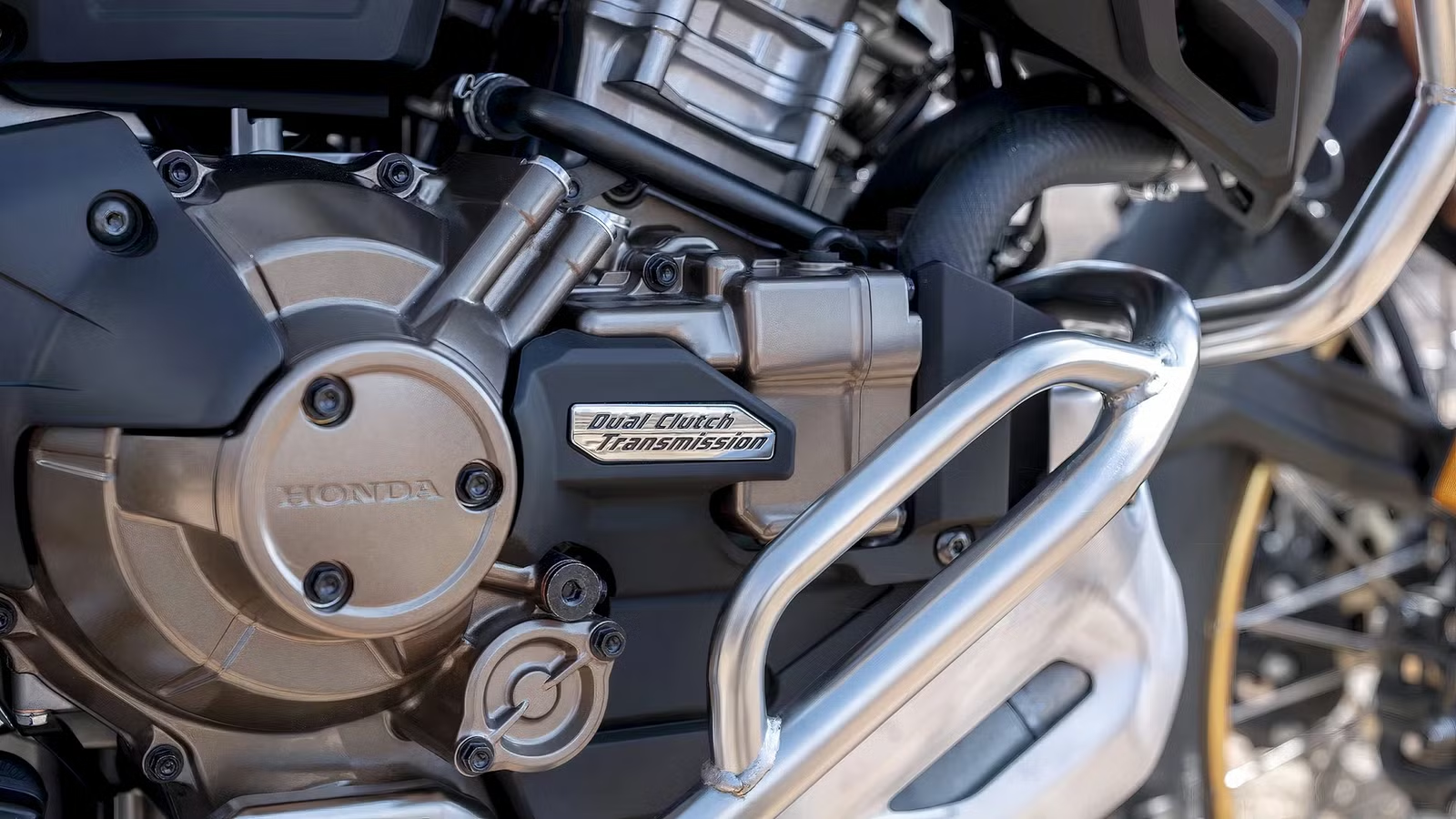
Another feature of the Africa Twin is the optional DCT variant, priced just slightly above the standard variant but still below the base GS. DCT makes the Africa Twin easy to use in urban traffic conditions, allowing riders to dispense with the clutch lever entirely. There is a manual mode, too, where riders can select gears using the paddles on the handlebars. Now, BMW also has something similar called Automated Shift Assistant, but it comes bundled with the Excellence Package, which adds another $4,000 to your final buying price.
The Honda Africa Twin Gets Premium Suspension As Standard

The Adventure Sports ES comes equipped with Showa Electronically Equipped Ride Adjustment suspension. The 45mm inverted front fork offers 8.3 inches of travel, while the Pro-Line rear suspension provides 7.9 inches. Riders can adjust the suspension electronically rather than relying exclusively on manual settings. This makes it easier to adapt to different road conditions and loads on the fly.
BMW, too, offers a fairly sophisticated suspension setup with the Telelever fork up front and the Paralever rear system, with 7.5 inches and 7.9 inches of travel, respectively. The Telelever does a great job of reducing front-end dive under heavy braking, and the GS also gets BMW’s Dynamic Suspension Adjustment, but again, this is part of the Excellence Package.
The Honda Leaves Money In Your Pocket
Price: $17,799 Vs. $20,395

The numbers make Honda’s case particularly easy to understand. For the 2026 model year, the Africa Twin Adventure Sports ES carries a base price of $17,799, and the DCT variant is priced at $18,599, which is barely $800 more. With destination charges, this price goes up to $19,374 for the DCT.
The BMW is priced at $20,395, which is already more expensive than the Africa Twin. Factor in that the bike only gets electronic suspension as part of the Excellence Package, priced at $4,765. Adding the company’s Automated Shift Assistance costs another $950.
Difference In Standard Equipment: What Do You Get For Your Money?

When comparing the Honda Africa Twin and the BMW R 1300 GS, the standard equipment tells a compelling value story. Electronic suspension, cruise control, touchscreen interface, and riding electronics all make the Honda Africa Twin a very compelling machine for the long road.
The BMW, however, is not sparsely equipped, and comes standard with heated grips, tire-pressure monitoring, keyless ride, hill-start control, dynamic brake control, and dynamic cruise control. The one area where the BMW clearly outshines the Honda is its shaft final drive, which requires less maintenance than the Africa Twin’s chain drive.
Source: Honda, BMW Motorrad

Related posts
Latest Post


No Comments