
The Sport Tourer That Combines Supersport Performance With Long-Distance Comfort
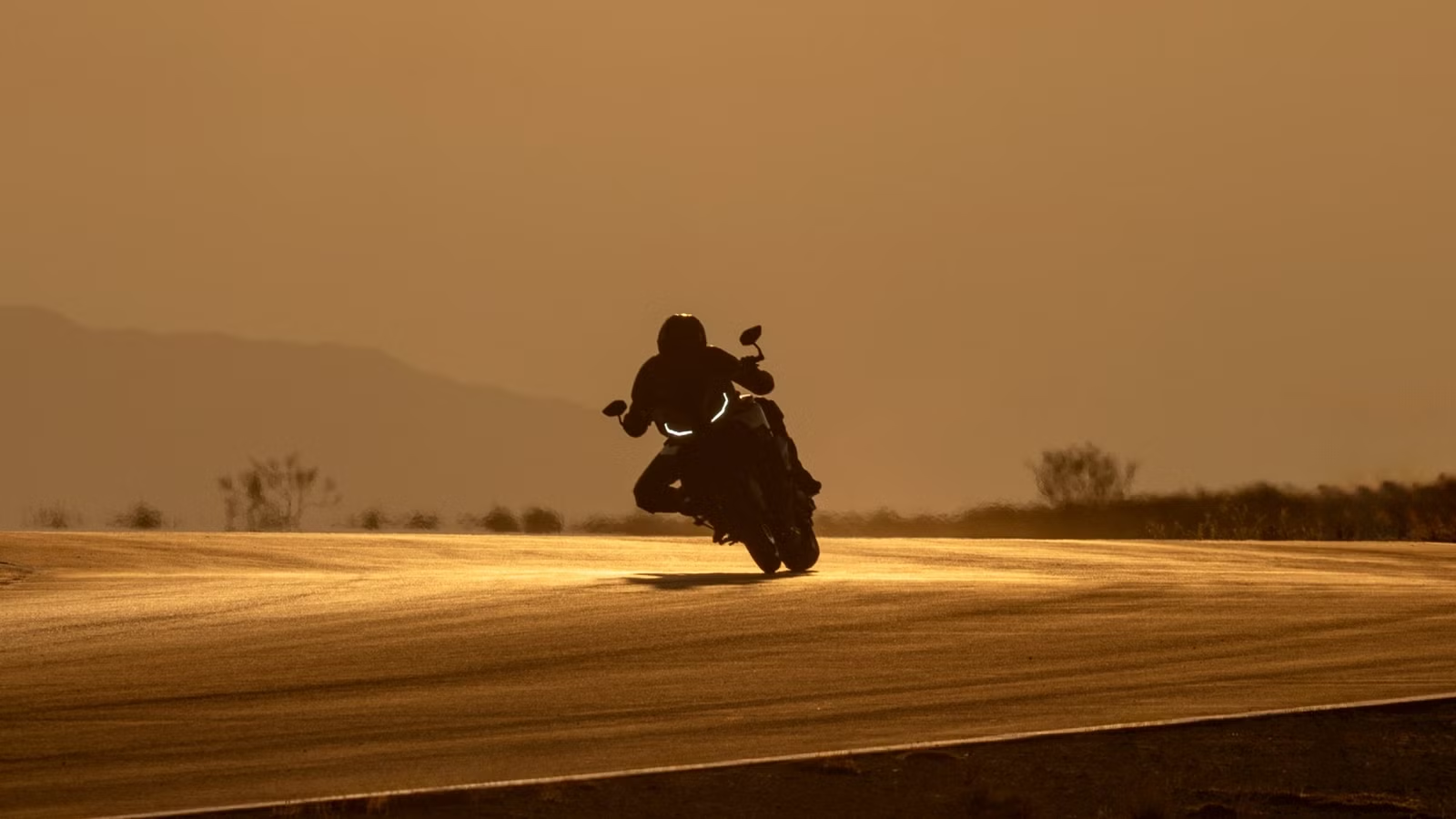
Sport tourers promise the perfect blend of performance and touring. Deep down, though, they hide a little secret. The sports bike energy has been told to behave. Manufacturers tame it on purpose, swapping that spine-tingling top-end rush for mellow midrange torque so it plays nice on long hauls. Smart move for comfort, but it means a true supersport-grade sport tourer is rarer than you’d think. One German machine, however, flat-out refuses to calm down. It keeps its superbike engine nearly untouched, yet still serves up the comfort to ride from sunrise to sunset.
Track-Grade Thrill And Sport Tourer Manners Rarely Get Along

The journey matters more than the destination. It’s a mantra every rider lives by, and sports tourer manufacturers seem to have taken it to heart too. Their engines serve up a smooth, relaxed pull all day long. A superbike engine has a very different idea of fun. It saves its best for the top of the rev range, where it feels electric on a racetrack.
Over a full day on the highway, though, living there means hours of heat, noise and fuel burn. The rest of the motorcycle faces the same tug-of-war. A comfortable seat, upright bars, a proper windscreen and a big fuel tank all add bulk, and a passenger with luggage asks even more of the chassis. Holding on to that wild top end while still delivering all-day comfort is the real challenge, and few manufacturers even attempt it.
The BMW M 1000 XR Brings A Superbike Punch To Sport Touring


BMW is one of the few that made this attempt, and the result is the M 1000 XR. That M badge signals an engine pulled from BMW’s superbike family and left largely in its natural, high-revving state. Instead of taming it for the long haul, BMW relies on smart electronics and a well-sorted chassis to keep all that power in check. Yet underneath the race-bred bits, it’s still an XR at heart. Its upright stance, adaptive suspension, fairing and passenger seat all remain, so it simply refuses to pick a side.
$25,695 Buys You BMW’s Wildest XR Yet

All that M magic does come at a premium. The M 1000 XR starts at $25,695, and that’s just for the base bike. Tick a few boxes on the options list, and the price quickly climbs north of $30,000. That’s enough to put two very different motorcycles in your garage, a superbike for the weekends and a tourer for the long hauls. The M 1000 XR, though, does both jobs on its own.
An Inline-Four That Lives For The Top End

At its heart sits a 999cc inline-four with BMW’s ShiftCam variable valve timing and variable-length intake runners, lifted straight from the superbike playbook. Peak power of 201 horsepower arrives at a screaming 12,750 rpm, while peak torque of 83 pound-feet doesn’t show up until 11,000 rpm. BMW claims it rips to 124 mph in 7.2 seconds and tops out at 170 mph.
Those numbers tell you everything about its character. Its best lives in the upper half of the tach, exactly where a supersport comes alive. ShiftCam helps keep things manageable lower down. Still, this isn’t an engine that bullies you with a low-down grunt. Its magic lies in how relentlessly it keeps pulling as the needle swings toward the limiter, and that’s an addiction few sport tourers can feed.
Built For Long Days In The Saddle, Not Just Hot Laps

That performance addiction means little if your body quits after an hour, and this is where the XR badge earns its keep. It starts with the chassis. A cast-aluminum bridge frame uses the engine as a load-bearing member, paired with a 45mm upside-down fork and an aluminum swingarm. Standard Dynamic Damping Control adjusts with the riding mode, firm for a canyon attack and more forgiving on a long interstate slog.
The cockpit follows suit. Instead of clip-ons, you get a wide handlebar and an upright riding position that keeps weight off your wrists. The seat sits at 33.4 inches, with optional M Sport seats at 32.3 and 34.3 inches available from BMW. Braking duties are handled by M brakes, with twin 320mm front discs gripped by four-piston fixed calipers and backed by BMW’s lean-sensitive ABS Pro. A 5.3-gallon tank and a 500-pound payload rating complete the package.
From Launch Control To Heated Grips, It’s Got Both Covered

Where the M XR really shows its split personality is in the electronics. On the performance side, Riding Modes Pro comes standard, with Rain, Road, Dynamic and Race modes plus three customizable Race Pro settings. Dig deeper, and you’ll find Launch Control, a Pit Lane Limiter, Dynamic Traction Control with wheelie and slide control, Dynamic Brake Control and Shift Assistant Pro for clutch less up- and downshifts.
Flip to the touring side, and the list is just as convincing. Cruise control, heated grips, Hill Start Control Pro, tire pressure monitoring and an adaptive Headlight Pro all come as standard, so the M XR is ready for long days from the moment it leaves the showroom. An optional carbon package with M Carbon wheels and bodywork trims claimed curb weight from 492 pounds to 485 pounds.
There Are A Few Compromises, Though

All that track-bred brilliance comes with a few trade-offs. The sport-oriented windscreen offers limited shelter, so long highway stints may call for BMW’s optional taller screen. Hard cases aren’t offered from the factory either, leaving luggage to the aftermarket. And unlike traditional shaft-driven tourers such as BMW’s own R 1300 RT, the M XR sticks with a chain final drive. It’s lighter and wastes less power than a shaft, but it needs regular cleaning and adjustment on long trips.
Ducati And Kawasaki Aren’t Backing Down Either

BMW isn’t alone in chasing this formula, though its two closest rivals bring very different weapons to the fight. Ducati’s Multistrada V4 RS packs a 1,103cc Desmosedici Stradale V4, from the same family as the Panigale, good for 180 horsepower and 87 pound-feet. It leans harder into touring tech, with radar-assisted adaptive cruise control and Ohlins semi-active suspension as standard. That exotica costs a steep $39,995, though.
Kawasaki’s 2026 Ninja H2 SX SE takes the supercharged route instead. Its 998cc four-cylinder makes 207 horsepower and 101 pound-feet of torque, backed by adaptive cruise, blind-spot detection, and electronic suspension for $29,999. All that hardware weighs in at 590.9 pounds, nearly 100 pounds heavier than the BMW. The M 1000 XR undercuts both on price and weight while delivering a rev-hungry character. For riders who want a supersport-grade engine with the comfort to ride from sunrise to sunset, few sport tourers come close to having it all.
Source: BMW Motorrad

Related posts


Latest Post


No Comments