
The Greatest Australian Muscle Car That Time Forgot
When enthusiasts debate the greatest muscle cars ever built, the conversation almost always stays north of the equator. But Australia was running its own high-octane arms race at exactly the same time — and producing machines just as wild, just as fast, and in some cases, even rarer than their American counterparts. The key players were Ford, Holden, and Chrysler, each developing models built specifically for Australian buyers and the ferociously competitive local racing scene.

One of the most prominent racing events in Australia is Bathurst, around the famous Mount Panorama racetrack, where the three marques fueled and settled their rivalry. The Bathurst 500 and Bathurst 1000 are some of the most famous endurance races, and the models developed by the three brands were homologation specials — race-ready, but also available for public sale.
Among the many muscle cars that graced the streets in Australia, we highlight one which we believe was highly significant, yet is generally forgotten and overlooked.
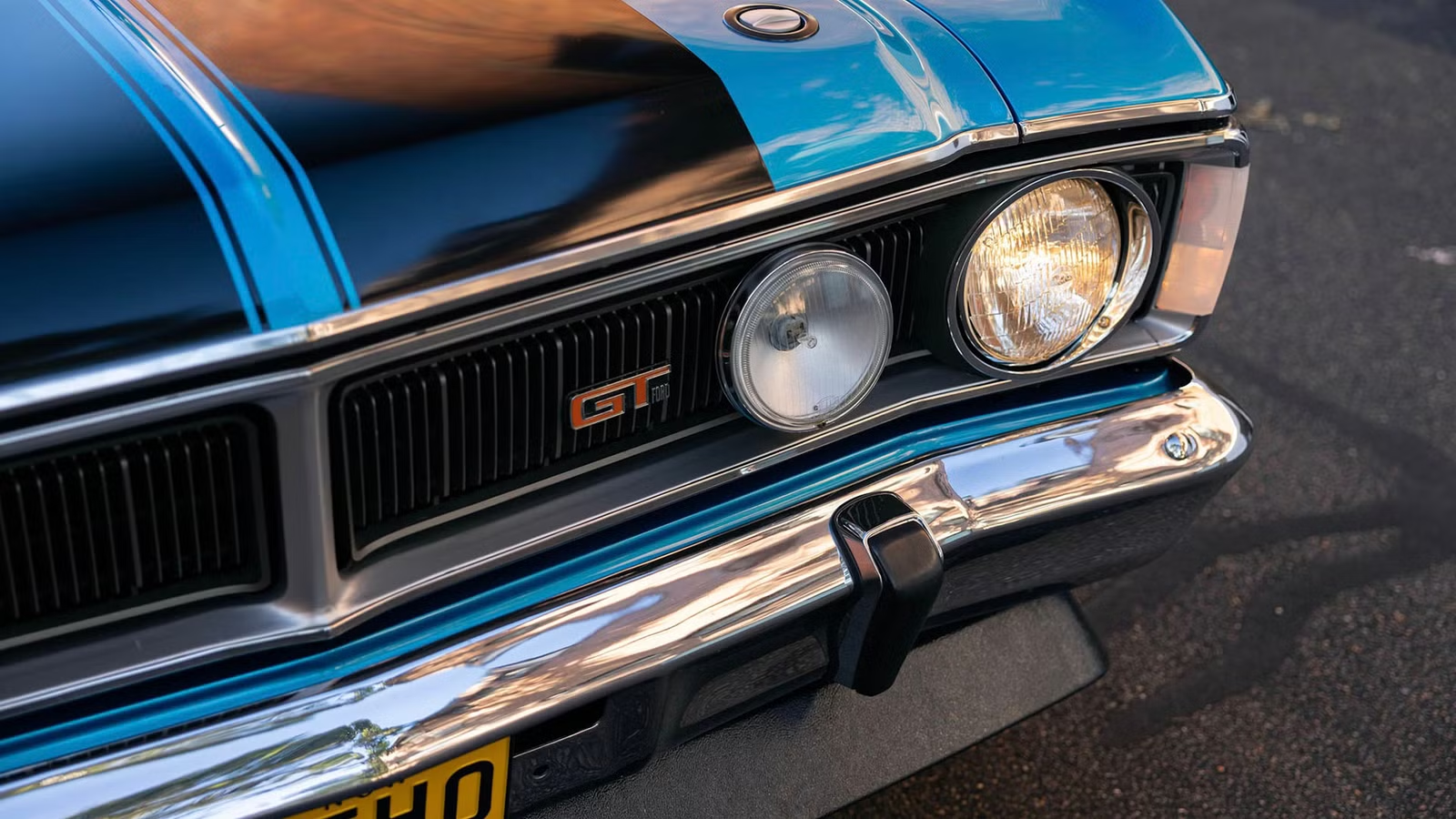
The 1971 Ford Falcon GTHO Is A Forgotten Australian Muscle Car Gem

The GTHO Phase III was based on the Ford XY Falcon body, featuring a muscular, aggressive stance with a shaker hood scoop and racing-inspired graphics. Because it was a racing homologation special, Ford of Australia manufactured just 300 units of the Falcon GTHO Phase III in 1971.
The Falcon GTHO Phase III was developed to race the Bathurst 500 endurance race — a race the car won in 1971, with Allan Moffat behind the wheel, cementing the car’s legacy.
The car is regarded as one of the most desirable Australian muscle cars today. Its racetrack success and remarkable performance, combined with its extreme rarity, make it highly sought-after among collectors. Well-maintained examples of the Falcon GTHO Phase III have sold for over $1 million AUD at auction. Despite its rarity and accolades, the 1971 Ford Falcon GTHO Phase III is often overlooked when talking about muscle cars because it was a four-door model. But it was the fastest four-door car in the world in its era.
Ford Falcon GTHO Was The Fastest Four-Door Production Car In 1971
Engine Specs
|
Manufacturer |
Ford |
|
Displacement |
5.8-Liter (351 cu-in) |
|
Configuration |
Naturally Aspirated Cleveland V8 |
|
Power |
300 hp |
|
Torque |
380 lb-ft |
|
Transmission |
4-Speed Manual |
|
Top Speed |
142 mph |
|
0-60 MPH |
6.4 seconds |
All 300 examples of the Ford Falcon GTHO Phase III were built between May and November of 1971. They were powered by the Ford 351 Cleveland V8 engine. The 5.8-liter unit was officially rated at 300 hp at 5,400 rpm, though it is widely believed to have produced closer to 350 hp in real-world trim. Maximum torque is largely reported to be around 380 lb-ft at 3,400 rpm.
As standard, the Falcon GTHO Phase III uses a 4-speed Toploader manual transmission. The model was also offered with two rear-end options. The Falcon GTHO used a 9-inch LSD Traction Lock as standard with a 28-spline, or a 31-spline option. The standard rear-end ratio was 3.25:1, with optional 3.5:1 or 3.91:1 ratios also available.
Models fitted with the standard 3.25:1 rear end could achieve a top speed of 142 mph, making the GTHO Phase III the fastest four-door production car in the world in 1971. It is reported that the Falcon GTHO Phase III could sprint to 62 mph in 6.4 seconds and cover the quarter-mile in 14.2 seconds.
The Falcon GTHO Was The Fastest Four-Door Car With A Luxurious Interior
Even though the 1971 Falcon GTHO Phase III was a homologation special, its interior was far from spartan. It struck a balance between simplicity and functionality, designed with performance driving in mind rather than outright luxury.
The dashboard featured a straightforward design with a black, textured finish to reduce glare. A cluster of analog gauges covered the essentials: speedometer, tachometer, oil pressure, coolant temperature, and fuel level. GTHO badges placed throughout the cabin served as a constant reminder of the car’s special status. The steering wheel was a wood-rimmed 3-spoke unit, adding a touch of refinement. Being a four-door sedan, the Falcon’s front row featured bucket seats as standard, while the rear offered a vinyl-wrapped bench capable of seating three occupants, or two with a folding center armrest. Vinyl door trims with wood grain inserts finished the cabin, and a basic radio was available, reflecting the priorities of the era.
While the GTHO Phase III’s interior wasn’t overly luxurious, it was well thought out for drivers, with all controls and gauges positioned for easy access. The minimalist yet purposeful design kept the car lightweight, reinforcing its role as a homologation special.
The 1971 Ford Falcon GTHO Was Mighty On The Racetrack
The 1971 Ford Falcon GTHO Phase III holds legendary status in Australian motorsport, thanks to its dominance in the racing scene during the early 1970s, especially in the Bathurst 500 endurance race. The Phase III won the Bathurst 500 in 1971 at the hands of Allan Moffat around Mount Panorama. Moffat qualified on pole and largely dominated the race from the front. The Cleveland V8’s strong power output, combined with the car’s superior handling, allowed it to outperform its rivals throughout the event.
The Falcon GTHO Phase III faced stiff competition from the Holden Monaro GTS 350, which was more powerful but less agile. The Chrysler Valiant Charger R/T E49 was another key contender — lighter and nimble, but unable to match the Falcon’s endurance and top-end speed. The Holden Torana XU-1 was equally agile but lacked the outright pace of the GTHO.
The GTHO Phase III was also designed for the Australian Touring Car Championship (ATCC) and the Group E Series Production Cars series. Equipped with the 5.8L Cleveland V8, the Phase III had unparalleled straight-line speed, and its finely tuned suspension gave it a decisive edge through high-speed corners.
Furthermore, the Phase III was not only a formidable machine in the hands of a professional driver and team. Privateers who competed with the Falcon GTHO also found success, making it extremely popular among those looking to compete in the Australian touring car scene of the early 1970s.
Sources: Ford of Australia, CarSales Australia, Collecting Cars.

Related posts






Latest Post



No Comments