
The Motorcycle That Makes More Sense At 50 Than It Does At 25
At 25, a brutal motorcycle ride feels like a badge of honor: a clutch hand cramping in traffic, a neck sore from fighting the wind at eighty miles an hour, and hips aching from balancing eight hundred pounds at a red light. You call it a good workout and wear the soreness proudly. By 50, that romance is completely gone; those aches settle straight into your lower back and knees, and they become the exact reason a bike sits in the garage instead of heading out across state lines. Conventional wisdom says touring performance is about massive torque and imposing presence, but real cross-country riding is actually an exercise in subtraction. It is about removing the physical work, the engine heat, and the continuous low-speed wrestling matches that wear you down before lunch.
Why High-Center Traditional Tourers Punish Aging Joints

Traditional heavyweight tourers look the part, but their basic layout works directly against your body over a long day. Most rely on tall, heavy engines mounted high in a steel cradle, which puts a massive amount of weight right up near the fuel tank and handlebars. The moment you pack saddlebags, add a passenger, and crawl through road work or pull into an off-camber gas station, you spend continuous physical effort just keeping the bike upright.
Standard telescopic forks dive under braking and send road jolts straight up into your wrists, while heavy manual clutches turn bumper-to-bumper traffic through tourist towns into pure misery for your left hand. Instead of shielding you from fatigue, these traditional layouts force your body to absorb every bit of chassis flex, engine shudder, and awkward weight distribution.
Low-Slung Flat Architecture And Automatic Gearing Eliminate Physical Strain

Fixing that fatigue requires throwing out styling traditions and getting the physical mass as close to the pavement as possible. Putting an engine’s weight flat and horizontal down by the rider’s boots drops the center of gravity so far that a massive machine suddenly feels light and obedient off the side stand. This focus on functional engineering over nostalgia has always been Honda’s greatest strength.

Rather than trying to look like a mid-century cruiser, Honda treated long-distance travel as an engineering puzzle to solve. By pairing that flat engine layout with a maintenance-free shaft drive and an automatic dual-clutch transmission, they eliminated the physical work of shifting entirely, proving that smart packaging saves a rider’s joints far better than just bolting a thicker seat onto an awkward frame.
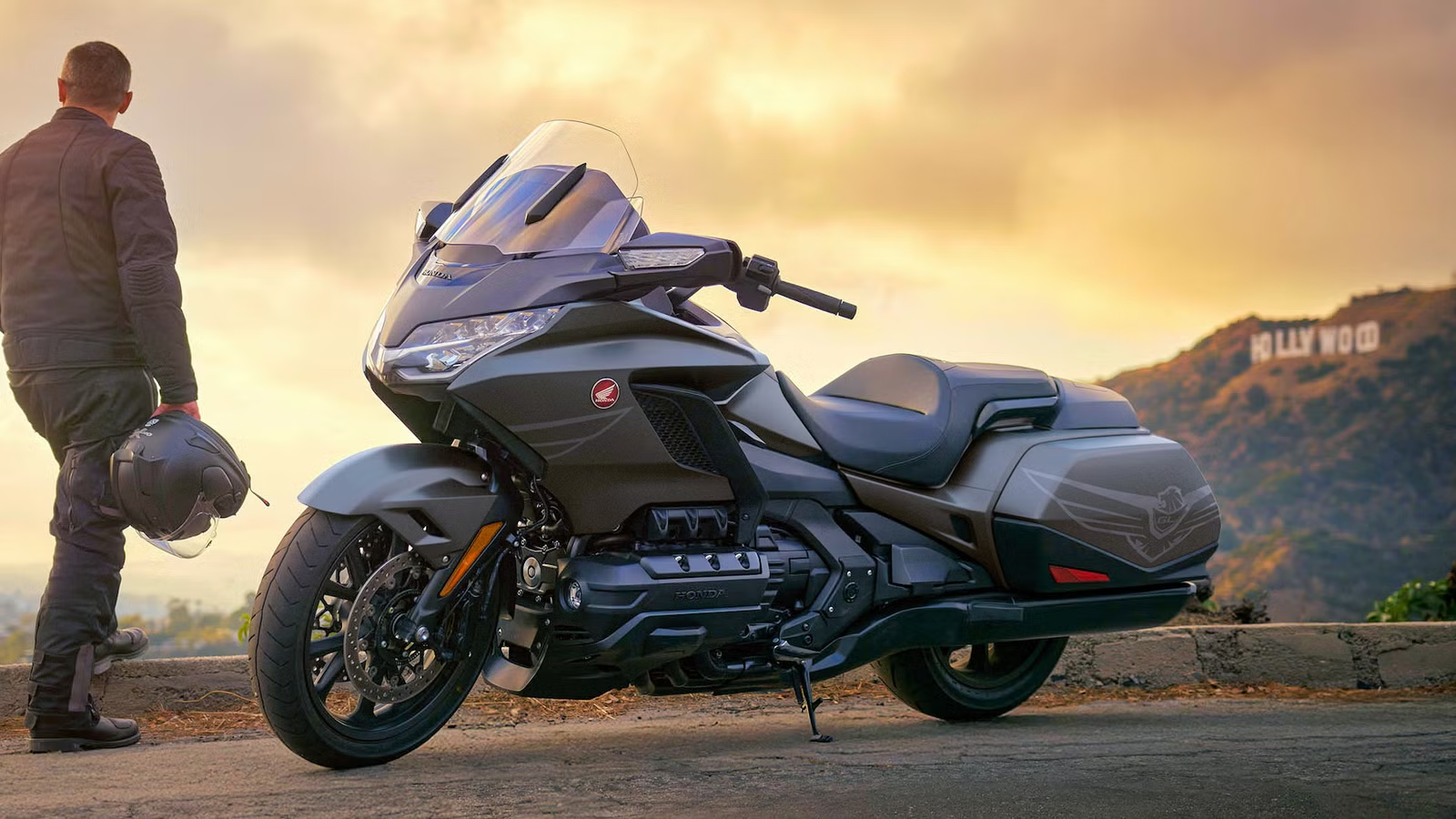
The $26,700 Honda Gold Wing DCT Prioritizes Pure Effortless Miles

The $26,700 Honda Gold Wing DCT makes total sense the moment your riding priorities shift from looking tough to feeling fresh after six hundred miles. Its flat-six engine runs with electric-smooth balance, while the seven-speed dual-clutch gearbox (a mere $1,000 more than the manual) completely removes the left-hand workout of working a clutch through stop-and-go highway jams.
Up front, the automotive-style double-wishbone suspension separates steering inputs from braking forces, letting the bike track straight through rough sweepers without diving or hammering your arms. It trades youthful bravado and spec-sheet bragging rights for the kind of mechanical ease that makes riders want to keep it forever, delivering the kind of quiet, low-effort competence that only experienced riders who want to enjoy retirement exploring and touring trouble-free truly appreciate.
The 1,833cc Flat-Six Delivers Turbine Smoothness And Fatigue-Free Shifting

The Gold Wing’s flat-six engine is unique in the two-wheeled world and is built to defeat fatigue with its turbine-like smoothness. It displaces 1,833 cc and generates 124.7 horsepower at 5,500 RPM and 125.3 pound-feet at 4,500 RPM. This generation of engine has a four-valve-per-cylinder configuration but is not wide because of the Unicam SOHC heads.
It is available with a six-speed manual gearbox with an assist and slipper clutch, but when you are 50 years old, you want your motorcycle to do the shifting for you. Therefore, the dual-clutch transmission, with its seven forward speeds and one reverse speed (not to mention the ‘walk’ mode that allows you to maneuver it around a parking lot without exerting your legs), is the transmission of choice.
Double-Wishbone Front Suspension And Low-Slung Mass Hide Its 808-Pound Weight

The Gold Wing utilizes a twin-spar aluminum chassis with the engine as a stressed member. There is a single-sided swingarm with a Pro-Link monoshock, and at the front, Honda has given the Gold Wing wishbone suspension. This has allowed the bike to locate the engine further forward, moving the rider closer to the handlebars. This is also electronic suspension, so you can set the preload at the touch of a button, and it adjusts damping automatically. Despite all the electronics, this remains one of the most dependable touring motorcycles today.
The linked brakes consist of twin 320 mm front discs paired with massive six-piston fixed calipers, and a 316 mm disc with a three-piston floating caliper at the rear. An 18/16-inch alloy wheel combination is present. This is an exceptionally long motorcycle at 103 inches, and it has an equally long 67-inch wheelbase. The seat is quite low at 29 inches, and it has a 5.5-gallon fuel tank. The wet weight is 808 pounds for the automatic, but it carries that weight down low, and the engine is placed far enough forward that it does not interfere with the rider’s shins, making the engine’s width a non-issue.
Thoughtful Cockpit Blends Modern Connectivity With Sensible Analog Controls

With everything moving to TFT touchscreens, the 50-year-old riders among us will be pleased to know that Honda has not given up on analog dials and LCD screens despite being the Honda touring bike with the most tech features. It does have a central TFT screen with Apple CarPlay and navigation that also happens to work in tunnels, but it is flanked by analog dials displaying the speedometer and tachometer.
There are a number of reverse-LCD screens that will show you all the other possible information that you might want. Otherwise, Honda has kept things extremely simple, with its electronic suspension and six-axis IMU offering different ride modes and cornering functions for the traction control and ABS. In short, the Gold Wing’s features take the strain out of most scenarios and replaces them with solutions that cater to a seasoned rider.
Source: Honda PowerSports

Related posts

Latest Post


No Comments