
The 47-HP Yamaha Two-Stroke America Never Officially Got Because Of Emissions Rules
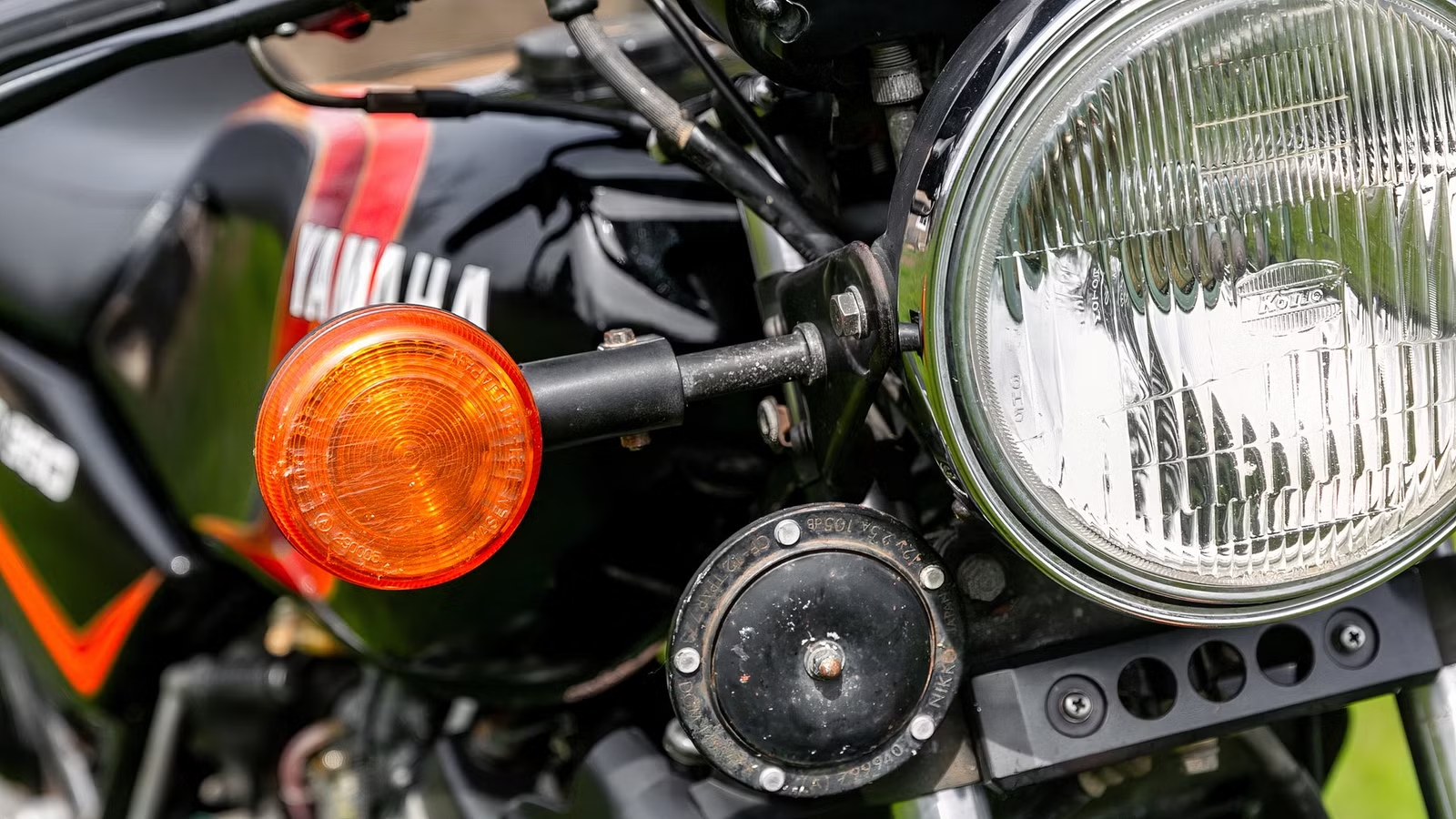
In the early 1980s, making 47 horsepower from a motorcycle weighing just 315 pounds was an effective way of embarrassing larger, more expensive machines. The secret wasn’t sophisticated electronics or exotic engineering, but a two-stroke engine with a rather explosive personality. It was docile enough at low revs to appear manageable, then delivered a sudden surge of acceleration that made every straight feel considerably shorter. Developed with racing ambitions and sold as a road-going version of a championship-winning machine, this lightweight Japanese motorcycle became a cult favorite in Europe.

American enthusiasts, however, never received an official version. Tightening emission regulations at the time kept one of the era’s most entertaining performance motorcycles out of US showrooms.
Yamaha Developed A Lightweight Two-Stroke With Racing DNA For European Riders
Yamaha had already established a reputation for building entertaining two-stroke road bikes, but its next move involved borrowing considerably more from its racing department. The company’s TZ350 Grand Prix racer had demonstrated what a lightweight liquid-cooled two-stroke could achieve on a circuit. Yamaha wanted to bring some of that experience to public roads without turning the resulting motorcycle into an uncompromising race machine.

Interestingly, the development was heavily influenced by Yamaha’s European operations in Amsterdam. Former Norton-Villiers-Triumph engineers Bob Trigg and Paul Butler, alongside designer Mike Ofield, helped shape the project. The objective was straightforward: create a compact, sporty motorcycle that looked and felt closer to a competition machine than a conventional Japanese road bike.
Liquid cooling was an important part of the equation. It allowed Yamaha to maintain more consistent engine temperatures and tighter operating tolerances than its earlier air-cooled two-strokes. The chassis followed the same philosophy, replacing conventional twin rear shock absorbers with a cantilever monoshock inspired by Yamaha’s racing motorcycle.
The resultant motorcycle arrived when Japanese bikemakers were increasingly moving towards large four-stroke engines, making Yamaha’s decision to make a high-performance two-stroke particularly interesting.
The 1981 Yamaha RD350 LC Produced 47 HP From Its 347cc Two-Stroke Twin

The motorcycle was the 1981 Yamaha RD350 LC, with LC standing for Liquid Cooled. Nicknamed Elsie by enthusiasts, it packed a 347cc liquid-cooled parallel-twin two-stroke engine producing approximately 47 horsepower. Those numbers become considerably more attractive when its weight enters the equation. At approximately 315 pounds dry, the Yamaha had an impressive power-to-weight ratio at the time.
It featured a six-speed gearbox that helped keep the engine well within its relatively narrow powerband. Below approximately 5,000 to 6,000 rpm, the RD350 LC was surprisingly manageable. Open the throttle, though, and the two-stroke twin delivered a sudden surge that completely transformed its personality. It was this transition from everyday docility to explosive acceleration that made the RD350 LC so entertaining. Period performance reports indicated a quarter-mile time of 13.82 seconds at 92.03mph, while Yamaha claimed a top speed of around 110mph. The RD350 LC was not particularly powerful by modern standards. Its appeal came from making everyday horsepower so entertaining.
US Emission Regulations Kept The Yamaha RD350 LC Out Of American Showrooms

The RD350 LC was primarily developed for European riders, but the increasingly restrictive American Emissions environment made its absence from US showrooms particularly significant. Unlike a conventional four-stroke, a two-stroke engine burns its lubricating oil along with the fuel-air mixture. This creates a relatively simple and lightweight engine, but it also produces considerably higher unburnt hydrocarbon emissions.
The problem was already receiving attention in the United States during the 1970s. A November 1975 report published by Cycle World cited California emissions data showing that an uncontrolled two-stroke motorcycle produced 18 times the hydrocarbons of a 1975 California-compliant car. The comparison helped explain why regulators were increasingly concerned about the technology. California had already adopted motorcycle exhaust emission standards that would apply to motorcycles manufactured from January 1978. Federal clean-air legislation was also pushing manufacturers towards increasingly sophisticated emission-control systems.
The RD350 LC was never officially sold in America, with Yamaha concentrating on markets where its performance-oriented two-stroke formula could be sold unhindered. However, this was not an outright ban on every two-stroke motorcycle. Yamaha eventually brought the later RZ350 to the US market in 1984, using catalytic converters to meet emission requirements.
The Yamaha RD350’s American Rarity Made It A Cult Classic

It was not like the Yamaha RD350 LC did not make its way into Europe. American enthusiasts did eventually get their hands on the motorcycle through private imports, including Canadian-market bikes, creating a small but recognizable grey-market presence. A particularly interesting example appeared for sale in 2024. It was a 1981 RD350 LC imported from Canada, and offered with a clean Arizona title. It was advertised for $15,000 before being sold to a private enthusiast. Another example went on auction in 2021, eventually trading hands for $5,300, while another Canadian-market motorcycle sold for $12,000 in February 2024 on Bring a Trailer.
Today, the RD350 LC represents a particularly interesting chapter in Yamaha’s history. Its combination of lightweight construction, explosive two-stroke performance, and racing-derived engineering made it a giant-killer in Europe. The irony is that the motorcycle’s greatest limitation wasn’t its engineering. It was the increasingly difficult emissions regulations that kept it away from our shores.

Related posts


Latest Post


No Comments