
Ford’s 1963 Galaxie & 1964 Thunderbolt: Factory Drag Racers
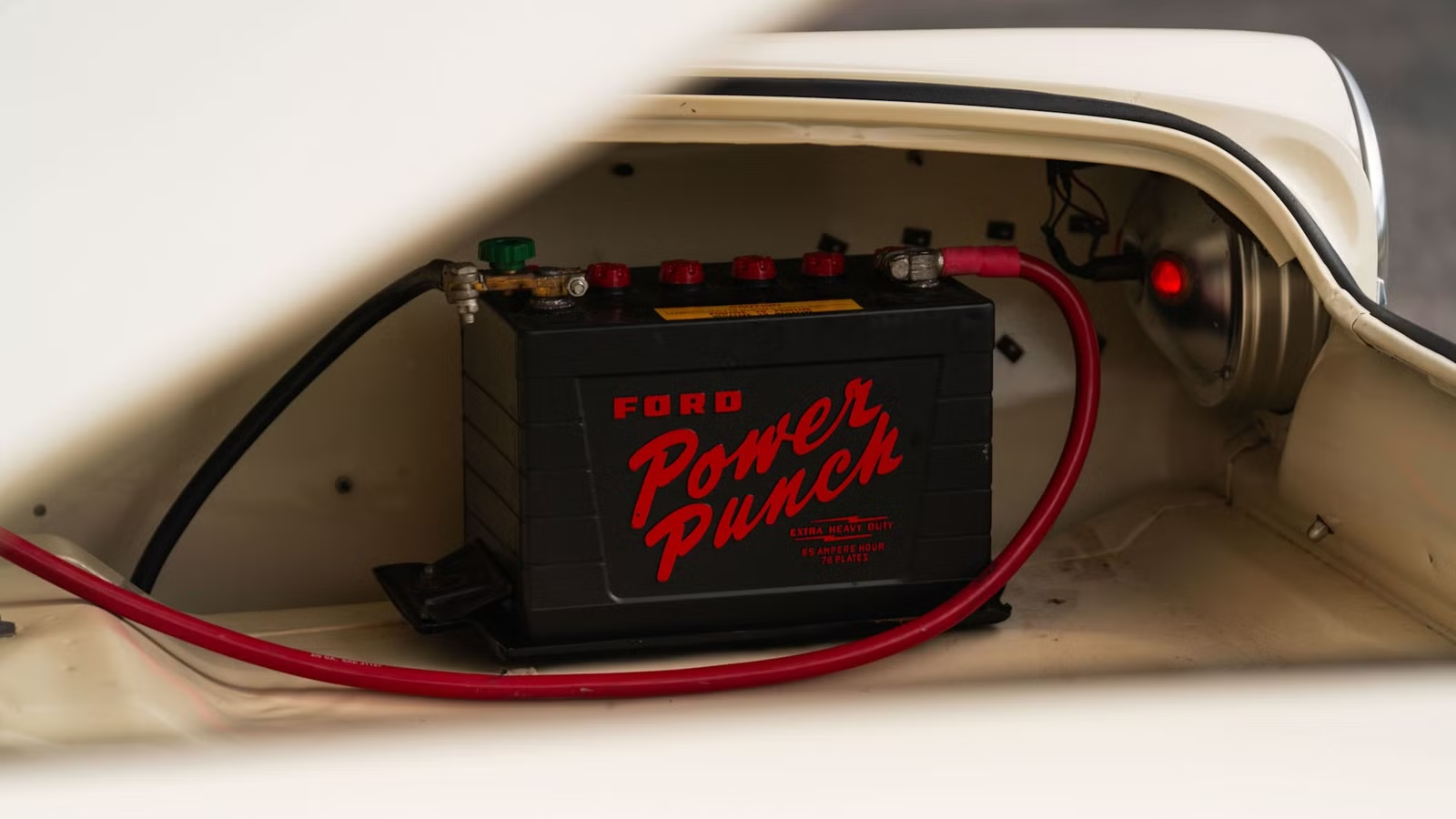
Imagine you’re a Ford engineer, designing factory-built drag racers. You start with the Galaxie 500 and 427-cubic-inch V8 that’s been competitive in NASCAR, then pull out all the stops. You drop weight by swapping steel for aluminum or fiberglass and deleting every creature comfort possible. You work tirelessly to get the car ready halfway through the 1963 season. Then the drag racers who take it to Nationals have the audacity to complain that their cars were losing to lighter competitors. But there’s nothing left to tear off before 1964. That’s when you have a wild idea.
By 1963, Detroit’s Factory Drag Racers Were Barely “Stock”

By the early 1960s, the factory-stock drag-racing class had evolved from a polite competition for bragging rights to an all-out brawl between the Detroit Three. Automakers were shutting down factories for a day to assemble barely disguised race cars as “special editions.” These “stock” cars had exotic lightweight bodywork, no creature comforts, and the most aggressive V8s ever built.
Take the 1963 Dodge 330 Max Wedge Lightweight. Chrysler installed a 426-cubic-inch V8 rated at 425 horsepower, then replaced the hood, front fenders, and bumper hardware with aluminum. The heater and radio were also deemed excessive.
General Motors also had a loose interpretation of “stock.” Chevrolet’s Z11 Impala made 430 horsepower and broke 120 mph in the 1/4-mile. Pontiac’s engineers took the phrase “cutting weight” literally when they drilled about 120 holes in their Super Duty Catalina’s frame for 1963.

Ford Built 212 Fiberglass Galaxies With 425 Horsepower

Ford’s answer was to drop the “R-code” 427-cubic-inch FE V8 into a Galaxie 500. The 427’s twin Holley four-barrels were good for a factory-rated 425 horsepower. Ford only built 212 of these stripped-down Galaxies for 1963. Dearborn Steel Tubing helped transform ordinary full-size Galaxies into racers. Fiberglass replaced steel in the hood and front fenders. Aluminum bumpers and brackets shaved more pounds off. Ford deleted the heater, radio, armrests, and sound deadener before swapping in Bostrom lightweight bucket seats. The cars even had lightweight decklids, and some of the later examples wore fiberglass doors.
Gas Ronda’s Galaxie 500 covered the quarter-mile in a reported 12.07 seconds at 118.04 mph. Yet Ronda’s Galaxie still struggled against lighter Chevrolets and Mopars. Ford had already removed almost everything that wasn’t necessary for racing. To go faster, the only thing left to discard was the full-size Galaxie itself.
Ford Reengineered The Fairlane Around Its Massive 427 V8

In ordinary showroom trim, Ford’s intermediate Fairlane was about 630 pounds lighter than a regular Galaxie 500. But its engine compartment was far too small for the FE big-block. So the Blue Oval called Dearborn Steel Tubing again. The company trimmed the shock towers and relocated or reinforced front-suspension mounting points to wrap the smaller car around the company’s largest racing V8.
The 1964 Fairlane Thunderbolt had a fiberglass hood and front fenders, an aluminum front bumper, lightweight windows, and a gutted cabin for a final weight of about 3,200 pounds. The one place Ford didn’t skimp was the rest of the powertrain: a 9-inch rear end and either a four-speed manual or a three-speed automatic transmission. With a 427 High Riser V8 rated at 425 horsepower and 480 lb-ft of torque, it was a drag-strip weapon.

Ford wanted to get its new Thunderbolt into the hands of drag racers who could win championships. It finished its first 11 in a now-iconic Vintage Burgundy color, and sold each for $1. But it did make the racers promise to provide competition feedback. The next 89 were Wimbledon White. After 100, the extremely limited run was over.
Ford’s 11-Second Thunderbolt Dominated The 1964 Drag Strip

In a November 1963 test at California’s Lions Drag Strip, a four-speed Thunderbolt ran 11.61 seconds at 124.8 mph. Less than 12 months after an Impala had set records by breaking 120 mph in the 1/4-mile, Ford had responded decisively. The stage was set for a major shakeup during the 1964 season.

Gas Ronda was one of the racers who made the Galaxie-to-Fairlane switch. At the 1964 NHRA Winternationals, the Super Stock Stick class final was an all-Thunderbolt contest between Ronda and Butch Leal. Ronda won with an 11.78-second pass at 123.40 mph. The former dance instructor went on to claim the inaugural Hot Rod Magazine Championships and NHRA’s national Top Stock crown that season.
From The Drag Strip To Daytona, Ford’s Fairlane Changed Racing Forever

Ford doubled down on its big engine/small car formula. When it redesigned the Fairlane for 1966, it gave the intermediate a larger engine bay and offered the 390 FE as a factory option. That made installing a 427 far easier, although mechanics still needed to drill access holes through the shock towers to fit the exhaust headers. Ford built just 57 white, 425-hp R-code Fairlanes for drag racing that year.
The formula eventually found a home beyond the drag strip. In 1967, Mario Andretti drove a 427-powered, Holman-Moody-prepared Fairlane in the Daytona 500, leading 112 of 200 laps and winning the race. It wasn’t a Thunderbolt adapted for oval racing, but another branch of Ford’s increasingly successful 427 Fairlane family tree. Because the production Fairlane used unibody construction, NASCAR allowed purpose-built racing chassis beneath stock-appearing bodies for safety. This decision paved the way for the sport’s second generation of stock cars.
The Lightweight Galaxie proved Ford could make a full-size sedan brutally fast, but it could only make it so light. That took the Thunderbolt, which wrapped the same basic 427 FE engine in a lighter Fairlane and gave Gas Ronda a national title. By the time Ford’s 427-powered Fairlanes reached Daytona, a solution born on the drag strip had reshaped American stock car racing.
Sources: Ford Racing, Ford Period Brochures, NHRA, NASCAR, Mecum, Sports Car Market

Related posts

Latest Post


No Comments