
This Toyota Is Having A Better Sales Year Than Most SUVs Out There
Toyota holds a dominant position in the American automotive market as a trusted industry leader, maintaining robust sales momentum through 2026. The manufacturer achieves this success by implementing a diverse multi-pathway product strategy that prioritizes high-efficiency electrified powertrains.

By focusing heavily on hybrid technology, the brand effectively meets contemporary consumer demand for substantial fuel savings without range anxiety. Furthermore, a strong reputation for long-term vehicle dependability, high resale value, and lean manufacturing operations allows the company to navigate shifting economic landscapes while maintaining widespread consumer loyalty across its extensive dealership network.
Toyota’s Dedication To Gasoline-Electric Hybridization
Toyota maintains a steadfast strategic focus on hybrid technology, positioning gas-electric powertrains as the cornerstone of its long-term environmental and commercial roadmap. Rather than rushing a pure battery-electric transition that might alienate pragmatic buyers, the manufacturer champions diversified electrification.

This balanced philosophy provides motorists with immediate fuel efficiency gains without imposing charging infrastructure limitations or range anxiety. This calculated approach works heavily in the company’s favor, particularly as consumer demand shifts toward practical, fuel-saving alternatives amidst fluctuating energy costs. By refining hybrid manufacturing scalability and integrating these systems across diverse vehicle segments, the brand secures high sales volumes, robust profitability, and sustained market leadership.
The Toyota Sienna Dominates Some Of Toyota’s Best SUVs

The 2026 Toyota Sienna achieved 10,934 sales in October 2026, marking a 29.1 percent volume increase over October 2025. This brought its calendar year-to-date total to 95,704 units, representing a 13.5 percent growth rate compared to the same period in the previous year. This robust sales performance allowed the hybrid minivan to outsell several notable sport utility vehicle options within the Toyota brand portfolio during October.
Specifically, the Sienna outpaced the Highlander, which recorded 3,727 units, and the larger Sequoia, which finished the month with 2,330 sales. It also significantly outperformed the flagship Land Cruiser, which managed 1,124 sales during the same monthly period.
How The Sienna Keeps America’s Minivan Market Alive

The 2026 Toyota Sienna occupies a unique space in Toyota’s North American catalog as its exclusive, dedicated hybrid minivan built on the TNGA platform. For the 2026 model year, its MSRP starts at $41,915 for the entry-level LE, stepping through the mid-tier XLE at $46,615 and sporty XSE at $49,840, moving to the upscale Limited at $52,600 and rugged Woodland Edition at $52,695, and topping out at $59,305 for the luxury Platinum trim.
Despite broader long-term demand contractions for traditional multi-purpose vehicles in favor of sport utility alternatives, the Sienna continues to defy expectations by posting strong commercial growth. This sustained appeal stems primarily from its standard, highly efficient hybrid powertrain, alongside available electronic all-wheel drive and family-centric utility features that outmatch traditional family haulers.
The Sienna’s Hybrid-Exclusive Drivetrain

The 2026 Toyota Sienna relies on a 2.5-liter naturally aspirated inline-four engine paired with electric motors and an electronically controlled continuously variable transmission eCVT, delivering a net system output of 245 horsepower. While official manufacturer torque figures are measured around 176 pound-feet from the internal combustion engine supplemented by electric motor assistance, testing indicates a 0 to 60 MPH acceleration time of 7.5 seconds alongside an electronically limited top speed of 112 MPH. This hybrid architecture provides a maximum towing capacity of 3,500 pounds.
Fuel consumption reaches an EPA-estimated 36 MPG for front-wheel-drive models and 35 MPG combined for electronic all-wheel-drive variants. Its 18.0-gallon fuel tank yields a driving range approaching 648 miles. Energy storage is handled by a compact 1.9 kWh nickel-metal hydride traction battery pack. Operating on regular unleaded petrol, the hybrid system generates substantial annual fuel cost savings exceeding $700 compared to traditional V-6-powered multi-purpose vehicles.
Americans Trust The Sienna’s Drivetrain

The Toyota Sienna secures stellar reliability metrics, achieving top honors as the highest-ranked model in its segment in the J.D. Power Vehicle Dependability Study. Long-term durability estimates from iSeeCars indicate an impressive average expected lifespan of approximately 191,700 miles, or roughly 14 years. Consumer feedback on platforms like Edmunds highlights significant pros, including exceptional hybrid fuel economy, abundant family storage solutions, and smooth ride comfort. Conversely, reported cons involve engine noise under heavy acceleration, reduced glove box dimensions compared to older iterations, and second-row seats that cannot be completely removed from the vehicle.
The 2026 Toyota Sienna is backed by a comprehensive factory warranty package, including a three-year or 36,000-mile basic new-vehicle warranty, a five-year or 60,000-mile powertrain warranty, and a five-year unlimited-mileage corrosion perforation warranty. Because the Sienna features a standard hybrid system, specialized components receive extended protection, with hybrid-related electrical parts covered for 8 years or 100,000 miles and the hybrid battery pack covered for 10 years or 150,000 miles. Routine maintenance and servicing follow a strict factory schedule structured around intervals of every 5,000 miles or six months.
Minor milestones involve standard tire rotations, multi-point inspections, and fluid top-offs, while full synthetic oil and filter changes occur every 10,000 miles. More comprehensive service milestones happen every 30,000 miles, incorporating engine and cabin air filter replacements alongside thorough checks of the braking, steering, and all-wheel-drive systems to ensure long-term mechanical health and preserve warranty validity.
No Shortage Of Standard Features

The 2026 Toyota Sienna provides a comprehensive array of standard comfort, convenience, and entertainment features across its model range. The entry-level LE trim includes fabric-trimmed seating, power sliding side doors, tri-zone automatic climate control, and an infotainment setup featuring an 8.0-inch touchscreen with wireless Apple CarPlay and Android Auto compatibility, alongside multiple USB ports. Stepping up to the XLE introduces SofTex-trimmed seating, heated front seats, power-adjustable front seats, a power sunroof, hands-free power sliding doors, a hands-free power tailgate, and four-zone automatic climate control.
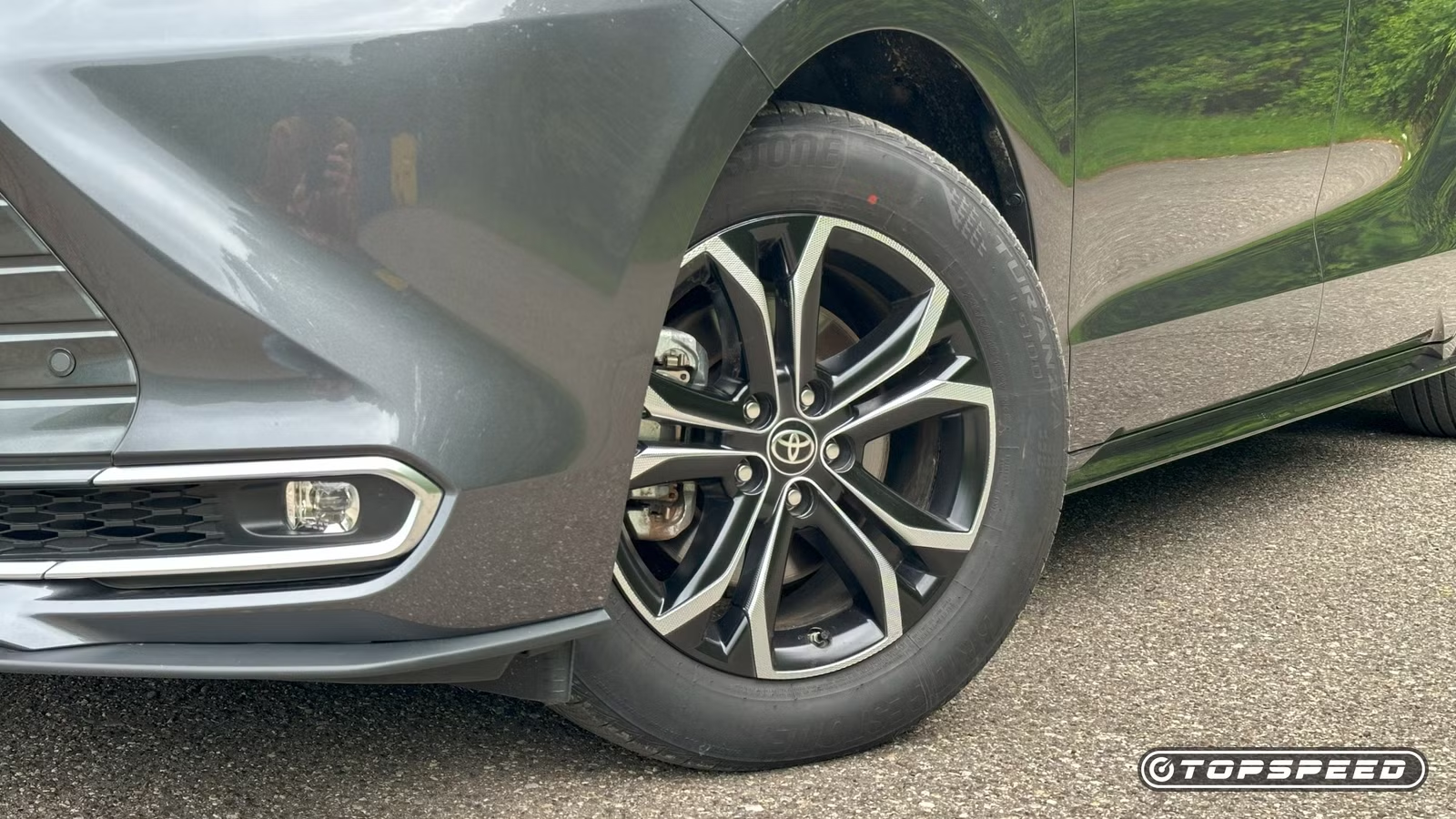
The sporty XSE adds distinct dark-finish 20-inch alloy wheels and a sport-tuned suspension while retaining dynamic family-oriented amenities. The Woodland Edition emphasizes adventure readiness with standard electronic all-wheel drive, increased ground clearance, roof rails with crossbars, and a high-output 1,500-watt power outlet. The luxury-focused Limited incorporates leather-trimmed seats, ventilated front seats, a 12.3-inch digital gauge cluster, a 12-speaker JBL premium audio system, and a digital rearview mirror. The top-tier Platinum trim rounds out the lineup with premium quilted leather upholstery, heated second-row captain’s chairs, a 10-inch color head-up display, and a 360-degree panoramic view monitor.
SUV-Beating Interior Dimensions

The interior architecture provides expansive spatial utility and passenger volume, with total passenger volume measuring between 159.7 and 162.5 cubic feet depending on the presence of a sunroof. Cabin dimensions across the three rows offer generous clearance, featuring 40.3 inches of front legroom, 39.9 inches of second-row legroom, and 38.7 inches of third-row legroom, alongside front, second, and third-row headroom metrics of 40.1, 39.3, and 37.4 inches respectively. Shoulder room spans 62.4 inches in the front, 62.7 inches in the middle, and 58.5 inches in the rear row.
Cargo capacity is exceptionally versatile, offering 33.5 cubic feet of storage space behind the upright third-row seats, which expands to 75.2 cubic feet when the second row is utilized or the third row is stowed using the 60/40 One-Motion-Stow feature. Maximum cargo volume reaches an impressive 101.0 cubic feet with all rear seats folded or removed, supplemented by up to 18 cupholders and multiple connectivity zones distributed throughout the cabin.
Sources: Toyota, J.D. Power, iSeeCars, and Edmunds.

Related posts


Latest Post


No Comments