
The 415-HP Pontiac Sedan With Near-M5 Speed At Roughly Half The Price
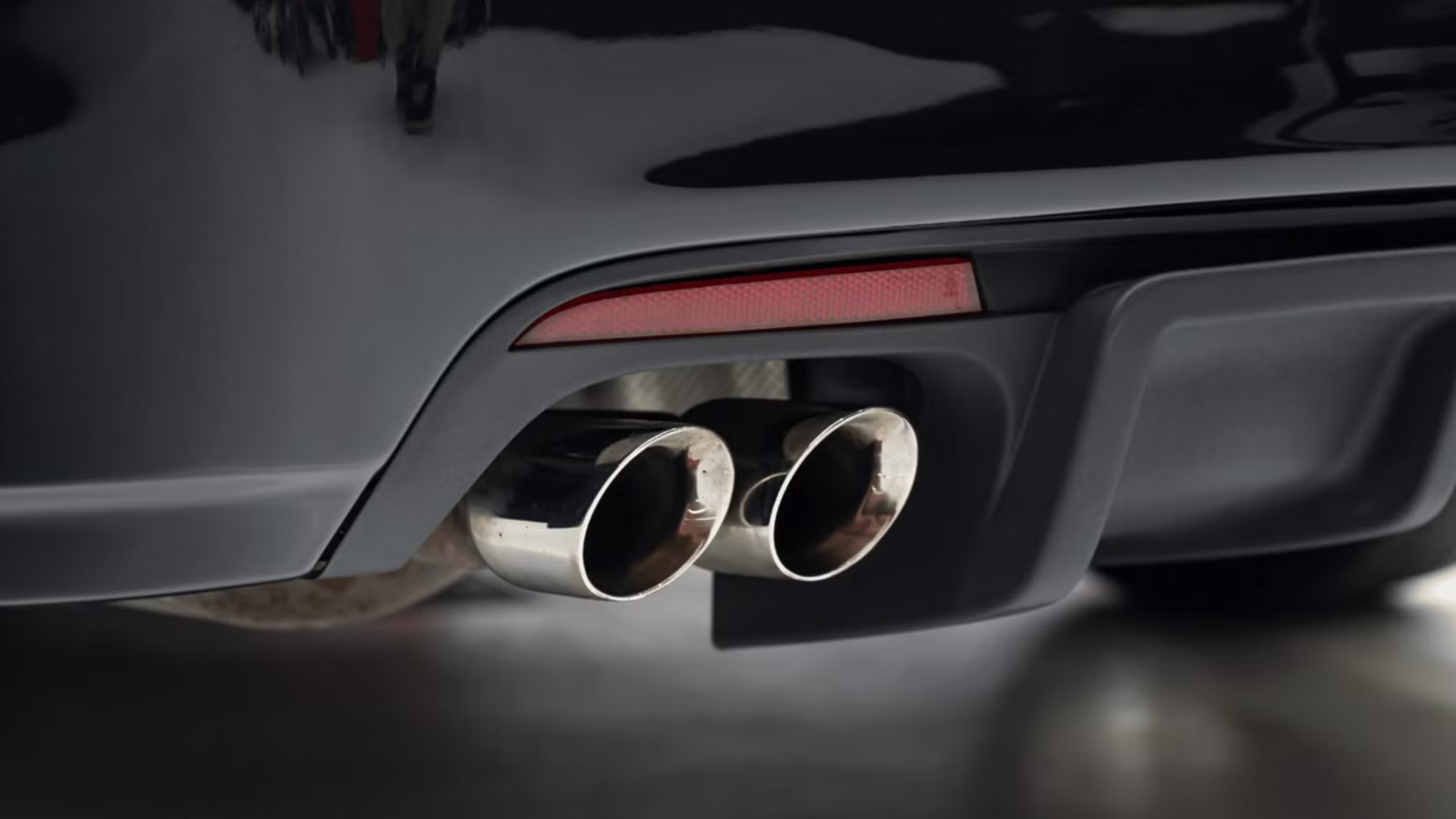
The OG muscle cars did things their own way, providing a sledghammer punch that could see off lightweight European exotica, in a straight line at least. But one of the best and underrated muscle cars of all time was a Pontiac model that squared up to the German super sedans that ruled the Autobahn and Nürburgring in the 2000s. This four-door muscle car was good enough to hold its own, fast enough to not be left behind, and, most importantly, half the price. So what went wrong?
Pontiac Was Looking For A Miracle In The 2000s

By the end of the ’90s, Pontiac was like that dive bar that somehow still survives among a sea of third wave coffee shops in the trendy part of town. Once the darling of the muscle car scene, having invented the genre in the first place, ’90s Pontiac was possibly best known for the aging Trans Am, which was starting to look a bit out of place in the techy new pre-millennial world. It is said that Pontiac was struggling to make a profit by the end of the ’90s, and coming into the 2000s the company was fighting for survival. What followed was a scramble to reinvent the company with some whizzy new products.
One of them was the Aztek, a car so bad that Bob Lutz, GM’s vice chairman of product development, said in one interview that it scored rock bottom in product clinics. Lutz had been pushing another product around this time, the Solstice, a decent Mazda Miata competitor, but these two products seen side by side showed how little cohesion there was in the Pontiac range. But Lutz was acutely aware of Pontiac’s link to muscle, and this is where he pushed on with a model that seemed to have every chance of changing the company’s fortunes.
The G8 GXP Was A Half Price M5


The G8 was essentially Bob Lutz’s vision for Pontiac’s future. With the premium German manufacturers such as BMW, Mercedes and Audi cleaning up with fast, well-made sedans in the 2000s (before everyone used SUVs for everything), clearly Maximum Bob wondered if the company could have a piece of that pie, and lean into its muscle car roots. The G8 launched for the 2008 year with rear-drive architecture (borrowed from Australia’s Holden Commodore) and admirable luxury, all at a knock-down price. The base model had an all-aluminum (LY7) 3.6-liter DOHC V6, good for a competitive 256 horsepower and 248 lb-ft. of torque.
There was a G8 GT with a 6.0-liter L76 mill, but at the top of the pile sat the G8 GXP. This thundering sedan was fitted with a Corvette-sourced 6.2-liter LS3 V8 producing 415 hp and 415 lb-ft of torque, delivered in a package that could easily seat four adults while providing plenty of executive luxuries. You could even spec a Tremec TR-6060 six-speed manual transmission. The output placed the GXP in the same ballpark as the best sedans on offer from AMG and BMW’s M Division.
The GXP’s Performance Was Up There With German Super Sedans

The GXP clocked a sprint to 60 mph in 4.7 seconds (some said even quicker) and a quarter in just over 13 seconds at 109 mph. This meant it could just about hang with a V10-powered E60 BMW M5. The 2008 Mercedes-Benz E63 AMG (W211), with a handbuilt 6.2-liter V8, would be fractionally quicker at around 4.3 seconds. But the GXP should have delivered the killer blow in the showrooms, with a $40,000 sticker price.
The Reason The G8 Failed To Save Pontiac

If Pontiac was struggling at the turn of the millennium, it was all hands on the pumps towards the end of the first decade. The 2008 global economic crash was looming, and GM received a bailout. Buick seemed like a natural candidate, but was saved by a newfound fanbase in China among young and affluent buyers. Pontiac was the other option. The truth was that the company had suffered from a hollowing out from badge engineering in the ’90s, and the reality was that the G8 was just a Commodore by another name. Reported high production costs in Australia and reliance on good exchange rates also meant that the G8 failed to save Pontiac.
Of just over 38,000 G8s produced in two years, just 1,829 were GXPs. In reality, Pontiac will forever remain the great “what if”. The muscle car’s second Golden Age was just starting, and Pontiac had plans for both a new, more bespoke G8, and a rear-drive G6 built on the Alpha platform. But they were never to be. Pontiac shut down in 2010.
The Reborn GTO Suffered The Same Fate As The G8

The Pontiac GTO kickstarted the muscle car era, and in 2004 the company had the idea to bring back the badge. The problem was that it really was just the badge, with the car arriving in the USA as a hastily rebranded Holden Monaro. The top-end version of this modern muscle car did have a Corvette LS1 engine (later an LS2) and a six-speed manual, however, and was incredibly quick for its time, clocking 60 mph in 4.7 seconds. It didn’t sell quite so fast, however, with just under 13,600 GTOs shifted in 2004, thousands less than projected. By 2006, the new GTO was pulled from the market.
Buying A G8 GXP Today

GXPs are rare, fast, and, for the time being at least, fairly cheap. Hagerty Valuation Tools puts the price of a good condition 2009 model at $24,200. Hagerty even points out that the price is down some 20% in the last three years. Interestingly, a 2009 BMW M5 is almost the same price at $27,500, but arguably you will have a considerably more complicated 17-year-old car on your hands. If other rare Pontiacs are anything to go by, the GXP could one day see its prices rocket – only time will tell.
Sources: Hagerty

Related posts



Latest Post



No Comments