
The Lightweight ADV That Could Be The Perfect Second Motorcycle
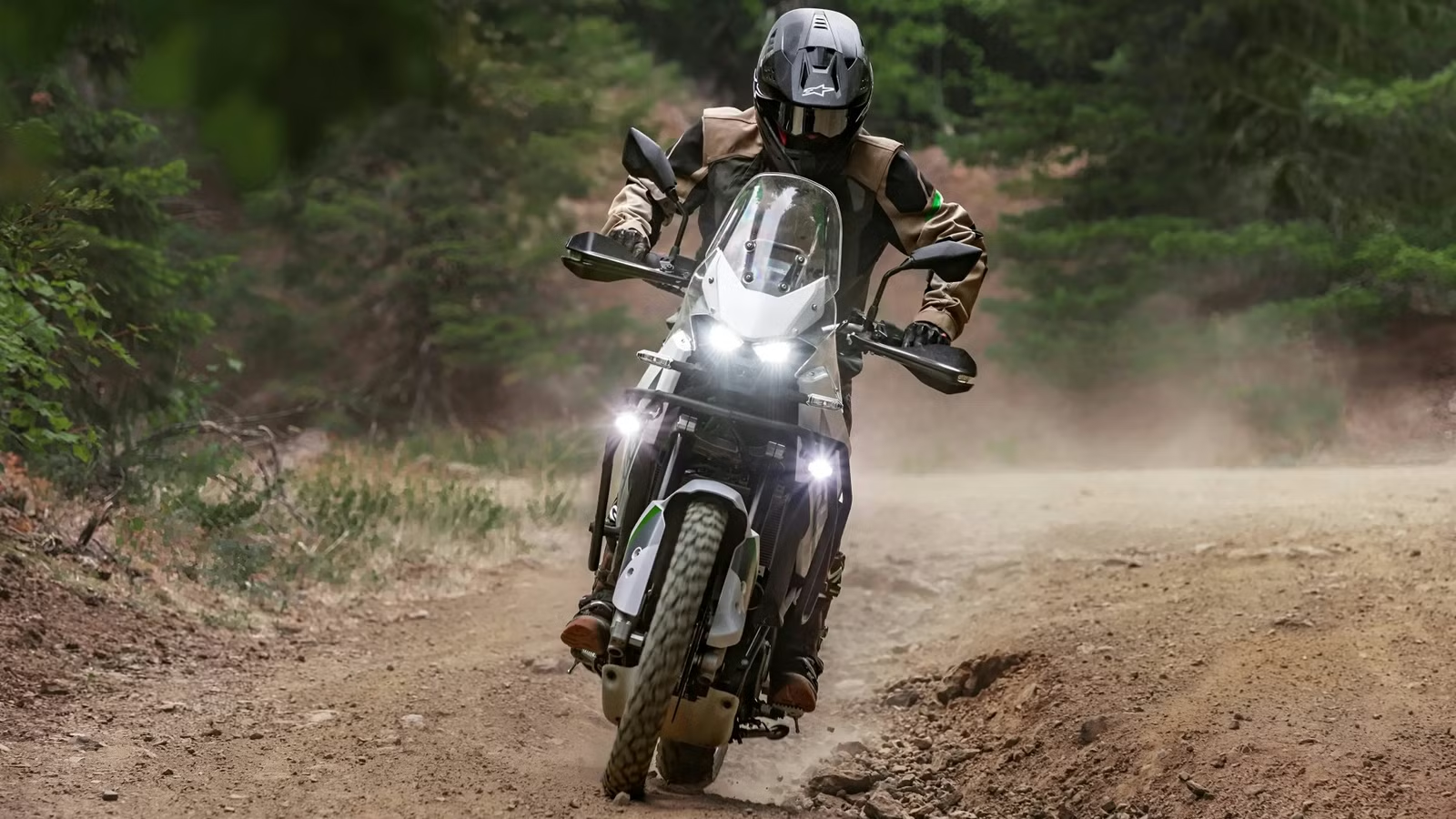
Most motorcycle garages have a main attraction. It could be a big cruiser, a sporty middleweight or a fully-equipped touring machine. However, it isn’t necessarily the motorcycle its owner reaches for every time they want a quick ride. That’s where a second bike makes sense. Something easy to manage, relatively affordable and capable of handling everything from city traffic to gravel roads without demanding too much commitment. Lightweight adventure motorcycles seem like an obvious answer, although finding one that balances highway comfort, off-road ability and everyday practicality isn’t always easy.
Why Lightweight ADVs Fit The Role

Adventure bikes put you upright, which is a significant deal if you plan to venture into long-distance touring. The relaxed posture and wide bars work just as well for a 20-minute commute as they do for a 200-mile day, and you sit high enough to see over traffic. Then there’s the suspension. Long-travel units are built for rough roads, so potholes, cracked pavement, and washboard gravel stop being things you steer around.

Most ADVs are also luggage-ready, which means a weekend away doesn’t need its own planning session. Bolt on some bags and you’re set for your journey. The catch is size. Big ADVs are capable, sure, but they’re heavy, tall, and expensive, and that’s a lot to ask of a bike that isn’t your daily rider. Wrestling a 500-plus-pound machine out of the garage for a quick errand gets old fast. Smaller bikes make more sense here, and the segment has plenty of them. Most are singles, with just a few twins in the mix. One new twin from Kawasaki stands out.
The Kawasaki KLE500 Brings A Rally-Style Twin To U.S. Showrooms
Base Price: $6,599


The motorcycle in discussion is the Kawasaki KLE500. The base KLE500 ABS carries an MSRP of $6,599 and comes in Metallic Carbon Gray/Ebony. Step up to the KLE500 SE ABS, and it’s $7,499, with a choice of Pearl Blizzard White or Metallic Bluish Green. For 2027, Kawasaki adds an SE SmartRide ABS trim at $7,999, reportedly arriving in November.
In Kawasaki’s lineup, the KLE500 slots between the Versys-X 300 and the KLR650, a sensible gap for a mid-size adventure bike. It isn’t the cheapest option in its class, though. In comparison, the CFMoto Ibex 450 costs roughly $100 less, and single-cylinder rivals like the Royal Enfield Himalayan and KTM 390 Adventure R are cheaper still.
An Old Name That Never Officially Reached The U.S.

There’s an interesting piece of history behind the KLE500 badge. Kawasaki originally introduced the motorcycle in 1991, and the first generation remained in production until 1997. It returned in 2005 before being discontinued again in 2007. The original motorcycle used a 498cc parallel-twin engine and featured an adventure-inspired design with a front cowl, small windscreen, and 21-inch front wheel.
Despite being available in several international markets, it never officially made its way to American dealerships. The modern KLE500 changes that, giving U.S. buyers their first opportunity to purchase a motorcycle wearing this name. Its 21-inch front and 17-inch rear spoked-wheel combination also retains some of the original’s adventure-oriented character.
The KLE500 Checks All The Necessary Boxes

Under the plastics sits the same 451cc parallel-twin family found in the Ninja 500, Z500, and Eliminator. Kawasaki claims 51 horsepower at 10,000 rpm and 31.7 lb-ft of torque at 7,500 rpm. For adventure duty, it gets a larger air-box, a downdraft intake, and an updated 46T/15T final drive. The six-speed gearbox comes with an assist-and-slipper clutch.
It’s an interesting combination for a second motorcycle. The engine is relatively smooth, likes to rev and offers enough performance to make highway riding less demanding than it can be on smaller single-cylinder ADVs. Independent ride impressions suggest that cruising at 70–75 mph is well within its capabilities, with sufficient headroom for faster highway sections and overtaking.
The Chassis And Suspension Are Suitable For ADV Duties

Weight is where the KLE500 earns its keep. The high-tensile steel trellis frame weighs just 41.8 pounds, and the whole bike comes in around 426 pounds with fuel (roughly 384 dry). Up front is a 43mm KYB inverted fork with about 8.3 inches of travel; the rear gets a Uni-Trak shock with 7.7 inches. Only the rear preload is adjustable. Stopping duties are handled by a single 300mm front disc and a 230mm rear disc, with ABS that you can switch off for dirt.
Ground clearance is 7.3 inches, and that’s adequate for gravel roads, uneven back roads and moderate trails, but it isn’t particularly generous for aggressive off-road riding. Its 34.3-inch seat height also deserves consideration, especially for shorter riders. Meanwhile, the 4.2-gallon fuel tank gives it enough capacity for longer day rides. Independent testing has recorded fuel economy around the 50–54 mpg mark, suggesting a potential range of roughly 200 miles between fill-ups, depending on riding conditions.
There’s Average Tech, But SE Variant Ups The Premiumness

Don’t expect a gadget-filled cockpit. The standard KLE500 gets an LCD dash, a three-position adjustable windscreen, and a standard skid plate, plus LED headlights and taillights. There are no ride modes, no quick-shifter, and no traction control. Just ABS, on or off. Smartphone connectivity comes through Kawasaki’s Rideology app, which handles ride logging, phone notifications, and navigation.
Spend $900 more and the SE adds a 4.3-inch color TFT display, a taller windscreen, a heavy-duty skid plate, metal-reinforced hand guards, and LED turn signals. In addition, the factory accessory catalog is deep, offering panniers, a top case, heated grips, a USB-C port, a center stand, and an engine guard are all on the list.
How The KLE500 Fits A Multi-Bike Garage

This is where the KLE500 makes the most sense. Throw a leg over it, and it promises to just work. The modest engine should keep fuel and running costs well below those of a big ADV or tourer. Dirt is where you’ll feel the limits. The suspension suits moderate-pace exploring better than hard riding, so ease off a bit over rough stuff, and the bike will treat you fine. For 2027, there’s a twist for riders who’d rather not touch the clutch lever at all. The new SE SmartRide adds a mechanical centrifugal clutch built into the conventional one. You can sit at idle in gear without pulling the lever, and it engages on its own when you roll on the throttle. You still use the lever and shift pedal to change gears. That suits a second bike that might sit a few days between rides. Moreover, this trim also gets tubeless tires, a welcome change from the tube-type rubber on the outgoing 2026 models.
Source: Kawasaki

Related posts

Latest Post


No Comments