
Honda Built A 20-HP Bike Before The Super Cub And Maybe Five Survive
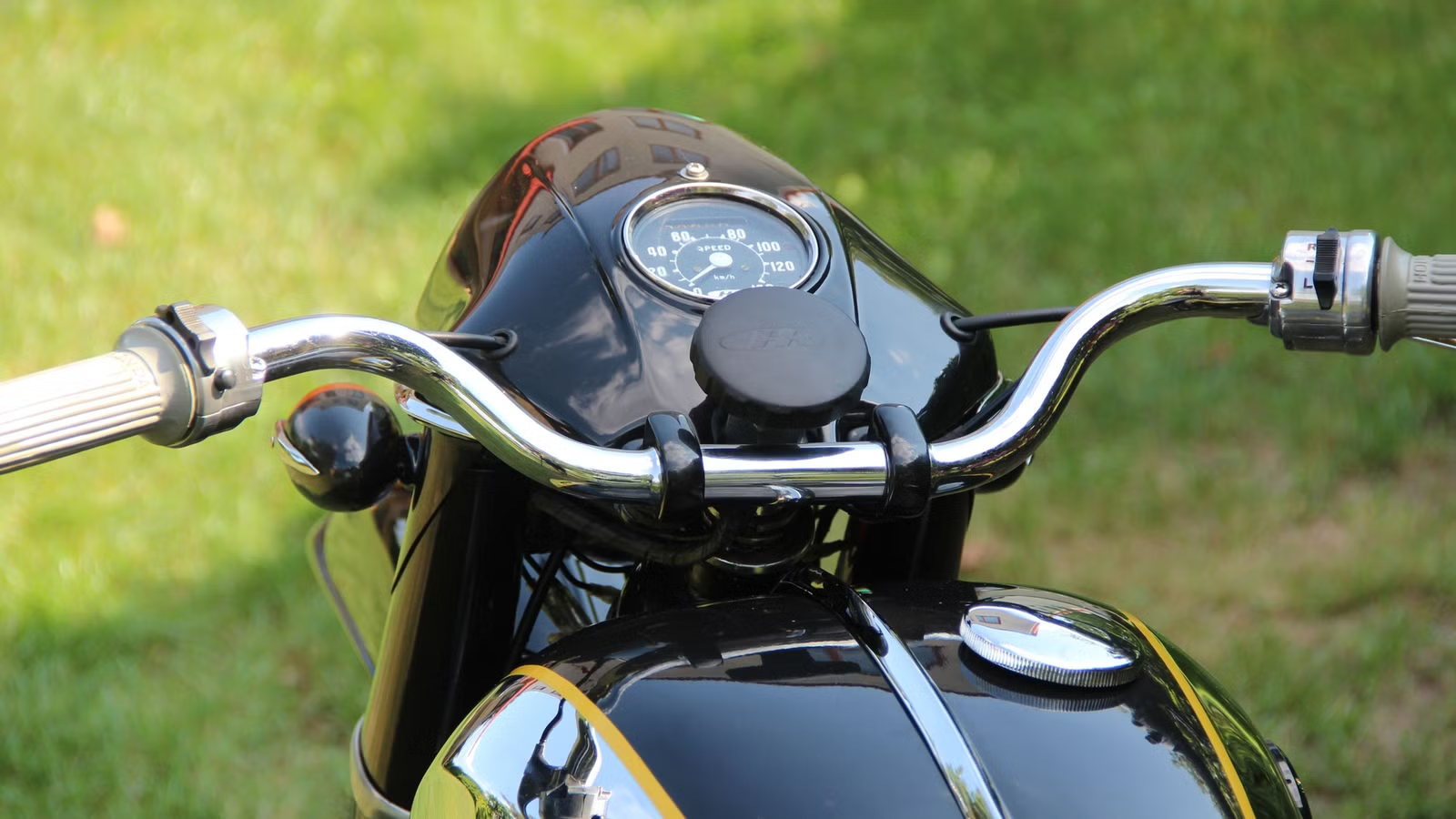
Honda isn’t a brand that has ever shied away from trying something different and exciting. Experimentation and learning from failure is baked into its DNA, as it has constantly tried ideas that many others would deem unconventional or unusual. Some have been technological experiments, some have been attempts to push performance further than anyone could expect. And some have been trying to rethink the very way motorcycles work. This bike did just that, but hardly any of this innovative bike exist today.
Before The Super Cub, Honda Was Already Experimenting With Something Very Different

Honda’s motorcycle history is usually told through a series of landmark machines. There are the motorized bicycles that started it all in 1946, the first fully-fledged motorcycle in the 1949 Dream D-Type, and the 1958 Super Cub that went on to sell over 100 million units. These weren’t just motorcycles, though, they were demonstrations of what Honda was wanting to achieve in the motorcycle industry. They showed Honda wanted to do more than simply provide affordable, reliable bikes for the masses, but wanted to explore performance, unconventional engineering solutions, and find technologies that competitors couldn’t. The Dream in particular exemplified this, taking the Japanese brand from pedal bikes to proper motorcycles in just a handful of years. And while those three years were exciting, the next decade would prove this even more.
Honda’s 1950 Performance Ambitions Were Far More Radical Than You Might Expect

Though still developing its identity, the 1950s saw Honda establish some approaches still used today — most notably its willingness to eschew normality and experiment. For example, founder Soichiro Honda favored pressed-steel frames due to their manufacturing consistency and capability for larger-scale production, at a time when other Japanese manufacturers were continuing with conventional tubular steel frames. This wasn’t restricted to frames, though, as it also tried electronic turn signals and even ram-air intake systems long before either became popularized. But while the Super Cub might be the most well-known example to come out of this period, there’s one bike that’s arguably more important — and undoubtedly less well-known.

The Honda Dream MF350 Was A 20-HP Performance Machine With Technology Ahead Of Its Time

Among Honda’s experimental bikes of the 1950s, the Dream MF350 is arguably the most obscure. But while the bike represented a large leap forwards in Honda’s 350 cc offerings, it’s not one that many will know of.
The bike was introduced in 1956 and evolved from the Dream SB350 — a 14-HP pressed-steel bike released the year prior. This 6-HP bump might seem inconsequential today but, by the 1950s’ standards, it was a considerable leap.
The MF350 was powered by a 344 cc, air-cooled, four-stroke single-cylinder engine and was mated to an integral four-speed gearbox and separate oil reservoirs for the engine and transmission. Its unusual gearbox allowed riders to shift up from top gear and return to first, making the gear-position indicator particularly useful. It was a remarkably sophisticated bike for the time and, coupled with an exhaust that had an expansion-chamber-style header, was clearly a bike with one thing on its mind: performance.

But the innovations didn’t stop at the engine. The MF350 also had an early version of a ram-air intake that, reportedly, used the bike’s hollow pressed-steel frame to send air towards the carburetor, creating a stronger vacuum and drawing more fuel out the jets to increase power. The bike even had electric turn signals built into the design in what was Honda’s first time using the technology on a motorcycle.
Unfortunately, for all the bike’s forward-thinking design, it was produced in shockingly small numbers. The model appeared in 1956 and 1957, with production reportedly lasting just months (though exact details are likely lost to history). This incredibly limited run also makes estimating manufacturing numbers difficult, but just five examples are estimated to have survived to this point, per Bonhams.
One of these reportedly five remaining bikes was a matching-numbers example that had undergone a painstaking ten-year restoration (and which sold for over $30,000 in 2019). The result was a motorcycle that represents far more than just a variant of a slightly more common bike from over 70 years ago. With increased power, pioneering innovation, and an extremely limited production window, the MF350 is a glimpse at Honda experimenting with what it could achieve on two wheels — something it continues to do to this day. The Super Cub might have transformed the company’s reputation, but the MF350 was an important step on that journey.
The MF350’s Disappearance Shows Just How Much Of Honda’s Early History Has Been Forgotten

The Dream MF350’s fade into obscurity is almost as interesting as the bike itself. Its short production run and scarce supply meant that it was never able to build a reputation like later models did and, by 1956, Honda had already introduced its first two-cylinder motorcycle engine in the Dream C70 series.
Honda’s pivot to the Super Cub in 1958 further established its form in creating affordable, reliable, dependable transportation for the masses, leaving little room for experimental bikes like the MF350. Today, it exists as a rarity that little know of. A remarkably obscure chapter in Honda’s development that hinted at its eventual, but not immediate, future.
The Honda Dream MF350’s Legacy Is Bigger Than Its Tiny Production Run

The exciting thing about the Dream MF350 isn’t just its rarity. Sure, five remaining bikes is interesting, but to focus on that is to overlook its position as a time capsule to early Honda. It’s a bike that wasn’t afraid to test, experiment, and push boundaries, with a powerful-for-the-time engine and innovations that were well ahead of its time. It might have disappeared as quickly as it arrived, but the MF350’s influence remains an integral part of Honda’s legacy. It reminds us that before Honda became a household name with the Super Cub, it had a Dream.
Sources: Honda, Bonhams

Related posts


Latest Post



No Comments