
1965 Chevelle Z16: The Big-Block Chevy Kept Secret
The key to generating hype for a new car model is making the public aware of it, but automakers haven’t always employed this obvious PR step. It’s widely reported that Chrysler was trying to generate interest in their new-for-1966 426 Street Hemi engine by equipping it in Dodge Coronet Deluxe four-door sedans. The problem is, they only made five and virtually nobody has heard of them until even today, so either Chrysler totally screwed up or there was another reason for the Hemi four-doors.

The 2014-2017 Chevrolet SS, on the other hand, is a perfect example of a lack of advertising dooming an otherwise awesome ride. Chevy expected to sell between 10,000–15,000 units of the high-performance full-size sedan a year, but instead averaged less than 3,000 before the SS was unceremoniously discontinued. Chevy should have known better because they came out with a special big-block version of the Chevelle in 1965 and basically kept it as a company secret. Maybe the lesson wasn’t learned since the big-block Chevelle went on to be the most popular muscle car of the Golden Age, but it’s still surprising they would have kept such an impressive car under wraps.
’64 Pontiac GTO Unleashes The Golden Age Of American Muscle
There wouldn’t have been a ’65 Chevelle big-block or any kind of muscle car if not for the genius of the 1964 Pontiac GTO, which effectively launched the Golden Age. A lot of people mistakenly believe that the GTO was the first powerful American car, but there were high-performance rides coming out of Detroit for decades. What the GTO did was take performance that used to be reserved for expensive full-size luxury models, and put it into an intermediate that was affordable. All of a sudden, young people of normal means had access to the same level of power as cars costing twice as much, and since the GTO was smaller and lighter, they also had better performance available. It didn’t hurt that the Tempest-based GTO had bold, aggressive styling, and the formula of an attractive car with V8 power and a reasonable price tag proved to be a winning combination that started a street revolution.
The GM GOAT Herd


The success of the GTO did not go unnoticed by GM’s divisions, with everyone but Cadillac almost immediately trying to replicate it. It was quite easy, since Pontiac had already drawn up the blueprint for an A-body two-door coupe with an elevated level of street performance. Chevy was the first to strike mid-model year in 1964 with the Chevelle performance package on the Malibu. Around the same time, Oldsmobile came out with the Cutlass-based 4-4-2, which stood for four-barrel carb, four-speed manual transmission, and dual (two) exhaust. The next year, in 1965, Buick created the Gran Sport performance trim for the Skylark, and with that, all the divisions had a muscle car. Of course, they were all subject to GM’s ban on equipping engines larger than 40 cubic inches in intermediate cars, so the first-year offerings weren’t particularly impressive, but the divisions would find ways to extract strong performance within the rules going forward.
Chevy Malibu Chevelle Sets The Standard

Determining the number of Chevelle muscle cars sold in 1964 is impossible since the SS package was available on any Malibu with any engine, while the ones equipped with 327ci V8 were the only legitimate street machines and there is no record of their distribution. For the first year of the Golden Age, the GTO led with 32,450 sales, followed by the Chevelle (presumably), with the 4-4-2 bringing up the rear by moving 2,999 units. In 1965, however, the Chevelle Malibu SS was in the lead with 81,112 sales, which was good enough to hold off the GTO’s 75,352-unit sophomore surge. The 4-4-2 did much better in ’65 with 25,003 sales and the Gran Sport made a respectable debut, pushing out 15,780 units. Though the GTO was first, the Chevelle SS quickly overtook it and went on to be the best-selling muscle car of the Golden Age with 723,000 of them driving off dealer lots between 1964-1971.
The Holy-Grail Chevrolet Muscle Car That Practically Doesn’t Exist Anymore
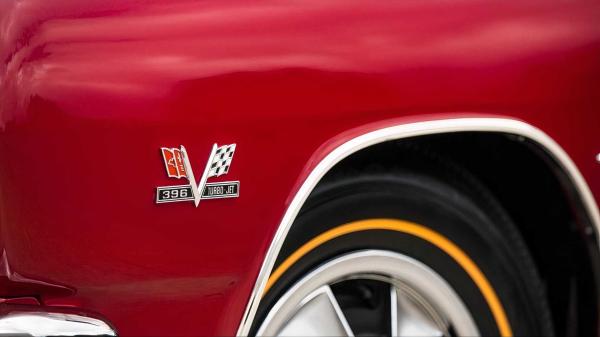
Even Indian Jones would have a hard time finding Biblicly rare 1965 Chevy Malibu Chevelle SS Z16.
’65 Chevelle Z16 Stealth Street Superstar

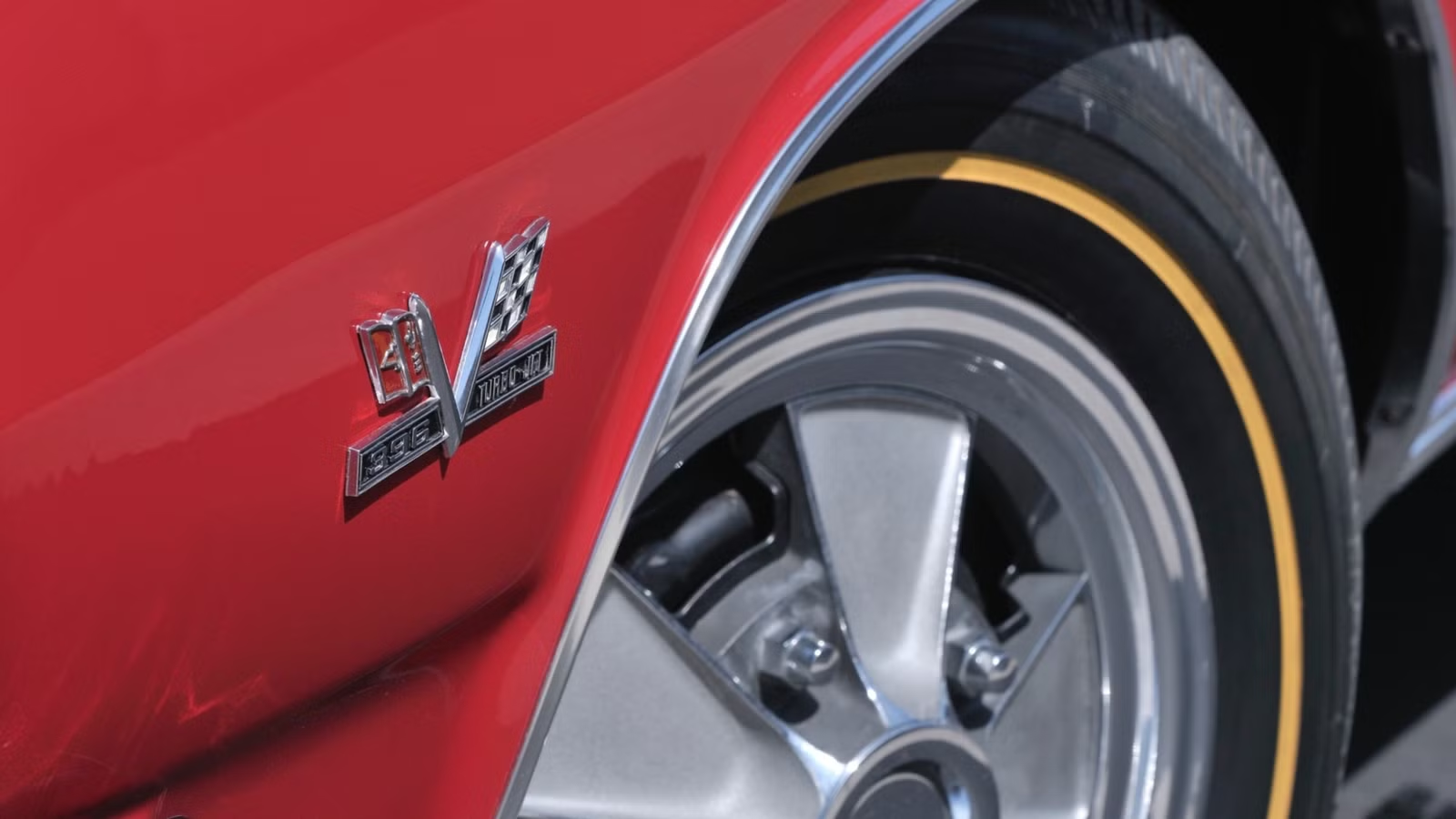
The 1964 Pontiac GTO caught Chevy completely by surprise, and realistically they didn’t have anything that could compete with it at the time. The GTO had a 348-horsepower 389 Tri-Power V8 option, while all Chevy had available for intermediates were small-blocks. They were developing a 396 big-block V8, but it wasn’t ready for the launch of the muscle car craze. Late in the 1965 model year, the 396 Turbo-Jet was finally ready, and Chevy did a test run with a small-batch Chevelle special edition. Known as the 1965 Chevelle Z16, it was produced in a run of only 201 units. All but one were two-door coupes and included major upgrades to the suspension, brakes, and cooling system. This is considered Chevy’s first real muscle car by modern enthusiasts, but back in the day nobody knew of its existence.
The Z16 was more like a science experiment to prove the viability of a big-block Chevelle as opposed to an attempt to generate interest in the brand. As such, this car wasn’t advertised, included in the catalog, or available to order, so most people in the country had no idea there was a 1965 Chevelle big-block, which was probably better because its small production run wouldn’t have met the demand. It would have been frustrating for fans to know about the Z16 with no hope of ever acquiring one. Being such a rare and nearly mythical car, the Z16 has its own urban legends, including a tale that a single convertible was built for Chevrolet General Manager Semon E. Knudsen, but that has proven harder to verify than a Bigfoot sighting.
Chevy 396 Big-Block Beast

|
Displacement |
Horsepower |
Torque |
|
396 Cubic Inches |
375 HP |
420 LB-FT |
The reason why the ’65 Chevelle Z16 is cited as the first real Chevy muscle car is because the 1964 version wasn’t particularly muscular. By the end of the ’64 model year, the Chevelle got a 300-hp 327 small-block V8 that delivered quarter-mile ETs in the high 15s and low 16s, which is obviously not all that impressive. With the Z16’s 375 hp and 420 lb-ft of torque, the Chevelle was running 0-60 in 5.8 seconds and hitting the quarter-mile in 14.1 seconds, which was better than anything on the street that year that wasn’t a Mopar. With a hydraulic-lifter camshaft, aluminum intake manifold, large-port cylinder heads, and dual exhaust fed by a Holley four-barrel carburetor, the 396 Turbo-Jet V8 represented the most performance Chevy could extract from a big-block that conformed with GM’s displacement ban.
Quiet Distribution of the Z16

Chevy built 201 big-block Chevelles without publicizing them, but the cars still needed to move, so they were available for purchase — just not through the usual channels of a regular production model. Chevy distributed them to a small group of performance-oriented dealers like Nickey Chevrolet in Illinois and Yenko Chevrolet in Pennsylvania. Both of those dealers would become famous for their COPO Camaros, which were GM big engine ban beaters that had special order 427 V8s. The Z16 was also made available to VIPs such as GM executives and Chevy-friendly individuals who had connections with the automaker. It was essentially an underground operation, not unlike Fight Club, except that you were actually allowed to talk about the ’65 Chevelle Z16.
Chevelle Z16 vs. GM

The ’64 GTO didn’t just start the classic-era muscle car craze, it ignited a full-on horsepower war, and the ’65 Chevelle Z16 was the first shot in that conflict. In 1965, the Buick Gran Sport’s 325-hp 401 Nailhead V8, which was technically in violation of GM’s 400ci cap, turned a 14.8-second quarter-mile. Next was the Oldsmobile 4-4-2’s 345-hp 400 V8, which had it running in the mid-14s. The Pontiac GTO’s 389 Tri-Power V8 was up to 360 hp in ’65, which had it delivering 14.5 ETs, but that wasn’t good enough to take on the Chevelle Z16. As previously noted, Chevy’s stealth muscle car was running 14.1-second quarter-miles, and it wouldn’t be until 1969, when both the Pontiac GTO Judge and the Trans Am equipped with the 400ci Ram Air IV dipped into the 13s, that a GM car could outrun a Chevelle SS 396.
Not Quite a Mopar Killer

The Chevelle Z16 was a significant entry in the horsepower wars of the Golden Age, but its objective was to neutralize other GM cars and Fords, as Dodges and Plymouths were unbeatable. 1965 was one year before the era-defining 426 Street Hemi claimed the muscle car era for Mopar, but the brand still had some formidable big-blocks that were untouchable. A 1964 Plymouth Fury with a 426 Max Wedge V8 was scorching the quarter-mile in 13.3 seconds, and even the tamer 365-hp ’65 Street Wedge was still a 13-second car. 1965 was also the year of the Dodge Coronet A990 lightweight factory drag car with a 426 Hemi V8 that could blast quarter-miles in the 12s, so the Z16, while powerful and competitive, wasn’t the Mopar killer Bowtie fans hoped it would be.
Z16 Value and Prices

Even though they were produced in large numbers, any Golden Age Chevelle is a valuable collectible, but the rare ’65 Z16 is a true Holy Grail car. Hagerty sets the fair condition value for a clunker at $84,700 and goes all the way up to $212,000 for a Concours condition show car. That number is a little light, as one dropped the gavel at Mecum Kissimmee 2016 for $280,000.
In fact, Mecum auctions have sold five Z16s over the Hagerty top-condition value and another four close to it. It is believed that just 71 Chevelle Z16s still exist, so this already rare Chevy is even more elusive, and could climb into the Million Dollar Muscle Car Club if a low-mileage survivor car were to show up at auction.
The Z16 Is Chevy’s Greatest RPO Ever

At GM, the Regular Production Order (RPO) was a code for equipment installed on its vehicles, which included everything from radios to engine options. The ’65 Chevy Chevelle Z16 RPO pertained to its 396 big-block V8, and it stands as the best there ever was. The L88 427 V8 RPO on the ’67 Corvette and the LS6 RPO of the ’70 Chevelle SS 454 are amazing options, but neither fundamentally changed the vehicle. The ’65 Z16 RPO, however, transformed the Chevelle from a mediocre GTO wannabe into an iconic Golden Age muscle car. It is arguably the most important development to happen to a GM vehicle in the classic era, and it is what established the Chevelle as one of the premier street machines. People can argue about the importance of the 1970 Buick 455 Stage 1 RPO or the 1973 Pontiac 455 Super Duty, but neither of these had quite the same impact as the Z16.
Sources: Chevrolet, Hagerty, Mecum

Related posts



Latest Post


No Comments