
The Most Powerful Motorcycle Engine Harley Never Put In A Cruiser
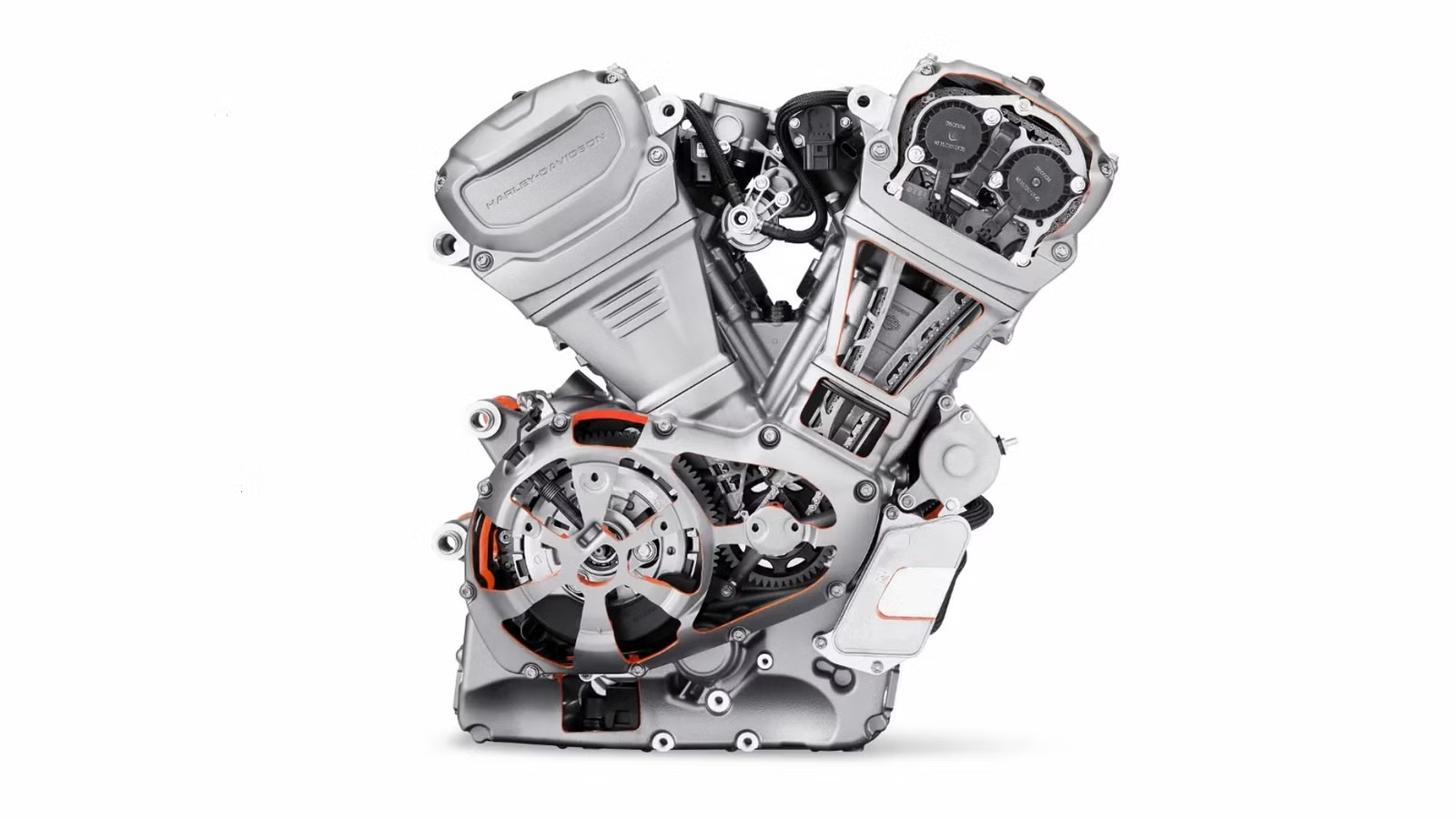
One of the oldest and most successful motorcycle brands in the world, Harley-Davidson has been synonymous with cruisers, bobbers, and characterful air-cooled V-twins since its inception in the early 1900s. Riders generally associate Harleys with a heavy surge of torque at the twist of the right wrist. While that’s a big part of the brand’s identity, the company proved in 2021 that it can make a lot more than just relaxed, torque-rich V-Twins. It can create a sporty 150-horsepower engine and make those players nervous who have been doing something similar for much longer.
Typical Harley Engine Configurations: The Heritage Blueprint

The century-old 45-degree V-Twin has been the foundation of the ‘character’ that most of us associate Harleys with. The configuration was first rolled out to the public way back in 1909, and it was updated at regular intervals, either to improve reliability, meet ever-changing emission norms, or to boost performance. The feel, however, has remained largely that of a long-stroke thumper optimized for brisk low-to-mid torque with revs barely crossing 6,000rpm.
High revs and lofty horsepower were seldom a topic of discussion among Harley lovers. But that changed drastically in 2021 when Harley-Davidson took the wraps off the Pan America 1250 series. It was not just the American giant’s first plunge into the world of adventure tourers, but it was also the first time that the company had horsepower numbers to brag about.
How the Revolution Max 1250 Breaks the Mold


The modern Revolution Max 1250 plonked on the PanAm didn’t completely break from Harley’s tradition; it is still a V-twin, after all. But the rest of the elements speak of the sheer modernization it went through. The 60-degree V-Twin has an over square layout with bore and stroke measuring 105mm and 72mm, respectively. While that’s unusual for a Harley, their first-ever offering to adopt an over square design was the 2001-17 V-Rod, developed in association with Porsche.
Other modern bits on the Revolution Max 1250 include dual overhead cams, four valves per cylinder, and dual downdraft throttle bodies. With a 90-degree firing order, it revs up to a staggering 9,500rpm. The 150 hp engine serves as the stressed member of the chassis, which indicates Harley also focused keenly on the handling department, apart from extracting maximum performance.
Engineering the High Performance: How They Got 150 hp

All the modern bits mentioned above played a vital role in helping Harley-Davidson push out the highest performance it ever did from a powerplant. While the oversquare layout itself facilitates high-revving, horsepower-intensive behavior, the inclusion of DOHC gives further push by reducing valve inertia. It also allowed inclusion of variable valve timing (VVT) on the intake and exhaust cam to broaden the powerband.
Using lightweight engine internals was a major part of the engineering memo, as was the use of hydraulic lash adjusters and dual spark plugs. While the engine functions at its best on premium-grade fuel, Harley made sure lower-grade gasoline doesn’t ruin it and used knock sensor technology. The American bike maker also went for forged aluminium pistons, low-friction coating on the piston skirt, and low-tension piston rings, all of which provided further assistance in the whole horsepower-heavy exercise. Extracting all that performance also meant running higher temperatures, and that was addressed through liquid cooling.

Boffins at Harley-Davidson did not just focus on putting a powerful lump on the PanAm, but they also made sure it had the dynamic abilities to handle it. Eliminating the traditional chassis design to include the engine as the stressed member of the frame helped in keeping the chassis stiff and shaving off weight. It also helped with mass centralization. All that engineering effort paid off, as test riders have always praised the Pan America’s handling and stability.
Why Harley Never Put The Peak Version In A Cruiser

As it is crystal clear, the Revolution Max 1250 is designed to rev profoundly high, reach scenery-blurring speeds, and feel extremely sporty. All those traits are contradictory to the idea of traditional Harley-Davidson cruisers and bobbers that purists have in their head. This is a demographic which needs the relentless torque without having to rev the guts out of the engine. The classic pulse and air-cooled aesthetics take precedence over modern technology. Hence, Harley chose to keep its more traditional Milwaukee line of engines for the cruiser and bobbers.
An ADV rider, on the other hand, is a more demanding breed — people who want to potter around lazily at times but also rip the tarmac chasing miles when the opportunity presents itself. Harley reserved the versatile and flexible Revolution Max 1250 for such a group of buyers. Meanwhile, Harley also knew that there existed some niche buyers who wanted the sporty and modern character in a cruiser, and served them the low-power tune of the same engine. Christened the Revolution Max 1250T, this version is found on the Sportster S. It has a lower rev ceiling and makes less power and torque at 121 hp and 93 lb-ft, respectively.
A Glimpse Of Harley’s Parallel Future

The modern Revolution Max 1250 can be considered a symbol of Harley-Davidson’s sheer potential and engineering prowess. It showed the world that the American cruiser giant can play the horsepower game if the market demands it. It came at a time when the BMW R 1250 GS was killing it on the sales chart and Ducati had just taken the covers off the V4 version of the Multistrada. The PanAm seemed like a great attempt to deliver the best of both worlds. While today it stands as the epitome of tech-laden, sporty, and versatile Harley, the American brand knows its foundation lies in characterful cruisers, tourers, and bobbers, and that’s why they remain untouched.

Related posts


Latest Post



No Comments