
How Ford Is Combatting Its EcoBoost Engine Failure Problem
Few things unsettle a driver quite like an unexpected warning light or an unfamiliar sound rising from under the hood. Modern vehicles are engineered to minimize those moments, and routine maintenance goes a long way toward keeping them rare. But no service schedule can guard against a factory defect — the kind that originates on the production line and works its way into tens of thousands of vehicles before anyone catches it. That is precisely what Ford and Lincoln owners with certain EcoBoost-equipped models are now dealing with, and it is serious enough to have drawn federal attention.

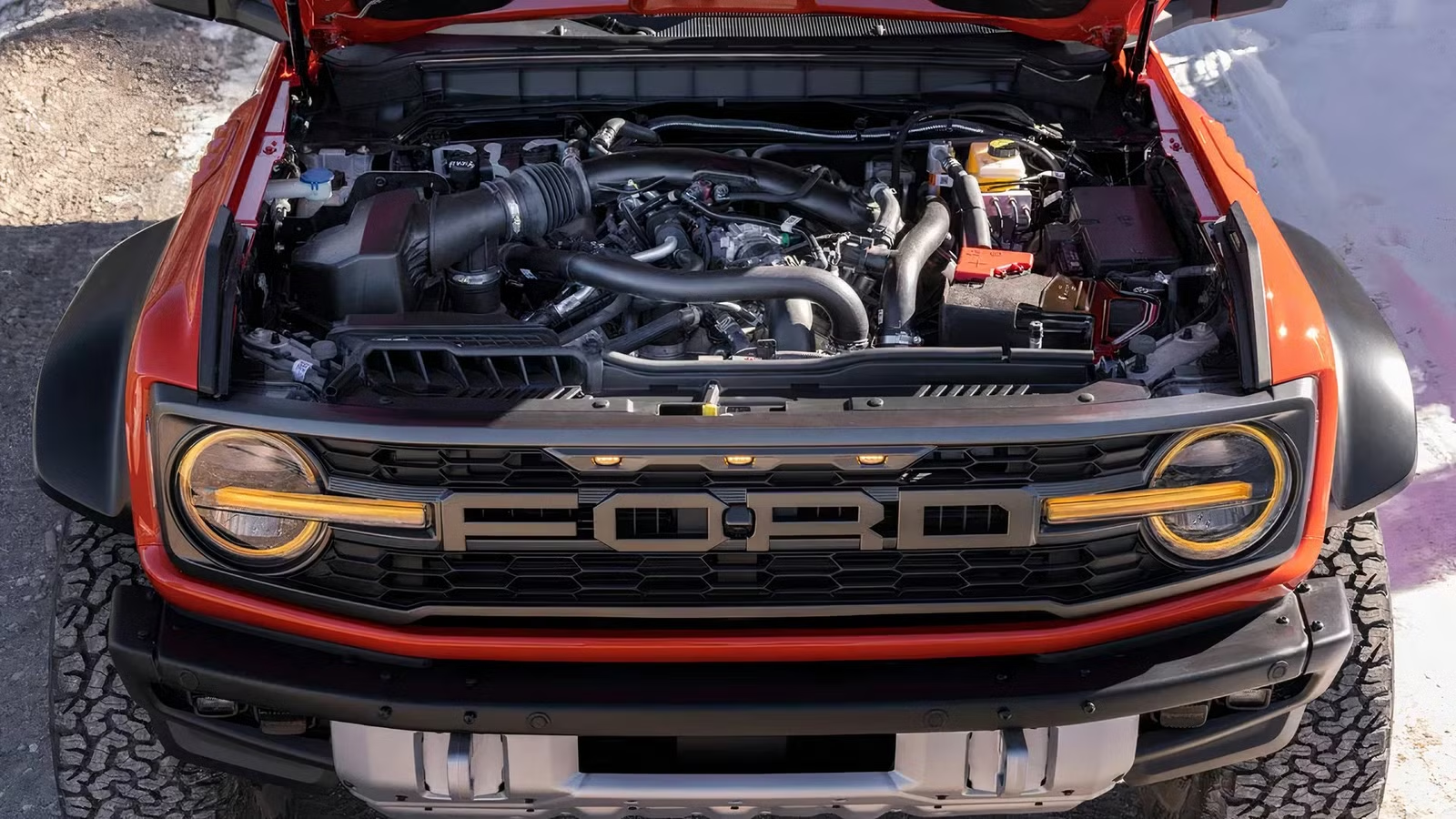
The recall centers on Ford models equipped with the 2.7-liter or 3.0-liter EcoBoost V-6. Tens of thousands of vehicles — including the Ford Bronco and the Ford F-150 — are potentially affected, along with a number of luxurious Lincoln models that carry these engines.
The Problems And Recalls For The Ford EcoBoost Engine
The recall affecting Ford’s EcoBoost engine family has stirred serious concerns among owners of vehicles powered by the 2.7-liter and 3.0-liter variants. These engines are well regarded for their blend of power and efficiency, which makes the critical issue identified by the NHTSA all the more alarming.

The recall specifically affects certain Ford and Lincoln models that may be at risk of catastrophic engine failure due to a defect in the intake valves. Ford determined that the affected intake valves were manufactured using an alloy called Silchrome Lite, which can crack and fracture under excessive heat, potentially leading to catastrophic engine failure. Ford revised its production process in October 2021, switching to a tougher alloy called Silchrome 1. Ford also established that these failures tend to occur early in an engine’s service life, meaning that vehicles likely to fail have, in most cases, already done so.
The intake valve plays a crucial role in controlling the mixture of air and fuel entering the engine’s cylinders. The problems that a cracked or faulty intake valve on your EcoBoost engine may cause include:
- Engine Misfires and Stalling. When the intake valve is cracked, it disrupts the proper air and fuel mixture, which can cause the engine to misfire. In some cases, you may notice rough idling or even unexpected stalling, which is particularly dangerous if you are out on the road.
- Power Loss. A cracked intake valve can also trigger a sudden loss of power. This is a concern for all affected drivers, but owners of vehicles like the F-150 and the Bronco — which are frequently used for towing — may find it especially worrying.
- Complete Engine Failure. In severe cases, a cracked intake valve can lead to catastrophic engine failure. If enough air leaks through the valve, it could cause the engine to overheat, seize, or fail entirely.
The Ford And Lincoln Models That Are Affected By The Failing EcoBoost

There are potentially 90,736 vehicles affected by the Ford EcoBoost intake valve failure, though it is important to note that this concerns only 2021 and 2022 model-year vehicles fitted with either the 2.7-liter twin-turbocharged EcoBoost V-6 or the 3.0-liter turbocharged EcoBoost V-6.
The models affected by the EcoBoost recall are:
- 2021-2022 Ford F-150. Trims such as the Ford F-150 XL, XLT, and Lariat are all available with the 325-horsepower 2.7-liter EcoBoost V-6.
- 2021-2022 Ford Bronco. Both the Ford Bronco Wildtrak and First Edition come equipped with the 330-horsepower 2.7-liter EcoBoost V-6.
- 2021-2022 Ford Explorer. Ford Explorer trims like the ST, King Ranch, and Platinum all feature the 400-horsepower 3.0-liter EcoBoost V-6.
- 2021-2022 Ford Edge. The top-of-the-range Ford Edge ST boasts a 325-horsepower 2.7-liter EcoBoost engine.
- 2021-2022 Lincoln Aviator. All trims of the 2021 Lincoln Aviator — the base trim, Reserve, Grand Touring, and Black Label — feature the 3.0-liter EcoBoost V-6.
- 2021-2022 Lincoln Nautilus. The top-tier 2021 and 2022 Lincoln Nautilus Black Label features a 335-horsepower 2.7-liter EcoBoost V-6.
Models affected don’t include the Bronco Raptor or the F-150 Raptor, as the change of materials used to produce the intake valves appears to have resolved this issue before the later release of these high-performance models.
Ford Is Offering You A Free Extended Warranty For Peace Of Mind

Originally, the engine failures were thought to stem from a faulty valvetrain, but a report released by the NHTSA and the ODI (Office of Defects Investigation) confirmed that the intake valve was the root cause of the problems.
The affected vehicles were built between May 2021 and October 2021, a period during which production volumes increased for both Ford and the supplier manufacturing the intake valves. Ford initiated the preliminary investigation into the engine failures, after which the NHTSA launched its own probe — one that ran for two years before concluding.
Investigators found that there were thankfully no reported fatalities or injuries linked to the engine failures. Ford had not implemented any field action for vehicles built during the critical 2021 window, but has since moved to address this by offering a 10-year/150,000-mile extended warranty covering all potentially affected vehicles.
The probe into the faulty EcoBoost engines has now been closed by the NHTSA, but it is still worth checking to see if your vehicle is affected.
How To Check If Your Ford EcoBoost Is Affected By Failures
Ford and Lincoln have likely reached out directly if your vehicle is among those affected by the recall, but if you want to confirm for yourself that you’re not driving an SUV or pickup with a potentially compromised engine, here are the steps to take.
- Check Recall Status. Visit the NHTSA website and navigate to the ‘Recalls’ page, where you can enter your vehicle’s VIN, year, make and model, or license plate to confirm whether a recall applies. Your VIN can be found on your vehicle’s paperwork or, most commonly, on the dashboard near the windshield on the driver’s side.
- Contact Ford or Lincoln Customer Services. It may not be the most enjoyable way to spend part of your day, but the Ford and Lincoln support teams are on hand to answer any questions you have about the recall.
- Check Your Documents And Keep Records of Inspections And Repairs. Maintaining thorough records makes it far easier to work with Ford or Lincoln when determining whether your vehicle falls within the scope of the recall.
What To Do If Your Vehicle Is Part Of The Huge List Of Potentially Affected Vehicles
If you discover that your vehicle is affected, arrange for an inspection or repair at an authorized Ford or Lincoln dealership as soon as possible. If you’d rather not drive it beforehand, limit use to only what’s absolutely necessary. Ford advises owners to monitor for any signs of trouble caused by the faulty intake valve, even at idle.
Watch for rough idling, unusual engine sounds, loss of power, and stalling. If your vehicle is exhibiting any of these symptoms and you believe it may fall within the recall, contact Ford or Lincoln immediately to schedule an intake valve inspection. Contact your local authorized Ford or Lincoln dealer to schedule an inspection.
If you find out that your vehicle is one of the thousands that are affected by the recall but still need to drive before your inspection, do it very cautiously without pushing the RPMs high, avoid faster roads, and only do it when necessary. It is best not to use the vehicle at all though.
Even though the NHTSA investigation has concluded, you can stay informed about any further recalls by signing up for recall alerts from the NHTSA and Ford, just in case there are additional developments.
Sources: NHTSA, Hagerty, J.D. Power, CarEdge, RepairPal, and USA Today.

Related posts


Latest Post


No Comments