
Suzuki’s High-Performance Touring Bike Gives BMW Owners A Difficult Choice
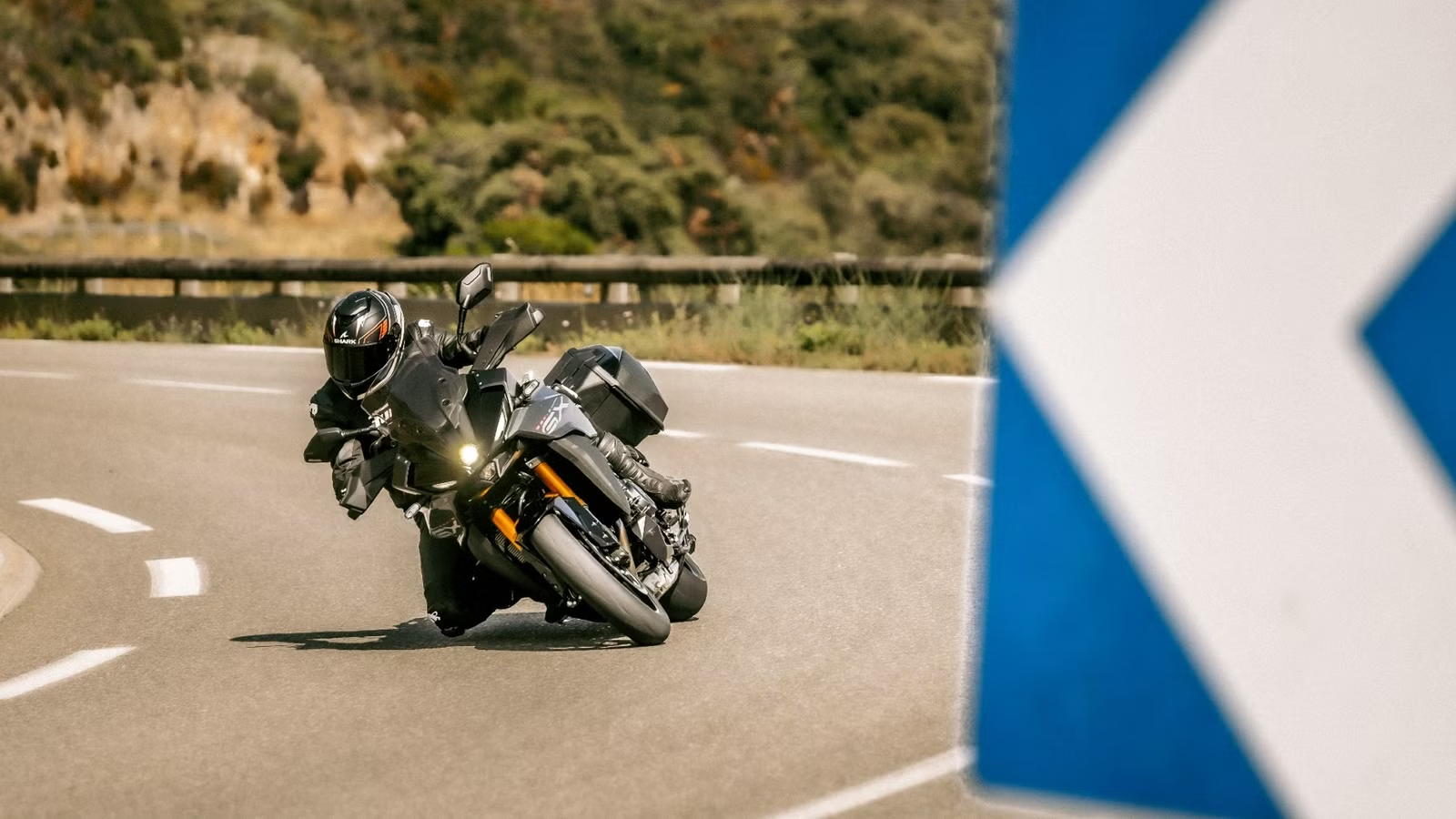
Beyond premium motorcycles, BMW has built something more valuable: brand loyalty. Riders who live on the open road know these machines deliver an experience beyond the engine and equipment. By combining German engineering, unmatched long-distance comfort, and rider-centric technology, BMW has set a benchmark in the motorcycling world that naturally attracts and retains lifelong riders.

However, this philosophy no longer dominates the landscape. The Japanese manufacturers have started bringing their strengths into the mix. They add reliability and everyday usability, challenging the standard BMW set. When a motorcycle captures most of what makes the European giants desirable, with an added distinctive character, there is a reason to stop and think.
Why BMW Owners Rarely Look Elsewhere For Tourers
BMW has built an ecosystem from the ground up to meet the needs of riders who want to conquer massive distances with zero fatigue. While the competition delivers almost everything, BMW offers a formula refined over decades, making it hard for those who lived with it to move away. The S 1000 XR is a great example of what years of experience deliver in a modern package.

It pairs superbike performance directly derived from the S1000 series with upright ergonomics, wind protection, and all the rider aids BMW has developed over the years. The tech features are so addictive that owners treat them as absolutely non-negotiable. By pairing German craftsmanship with cutting-edge comfort features and rider aids that predate industry standards, it undoubtedly earns brand loyalty.

Yet, it doesn’t make the brand untouchable. Japanese brands are never a bad bet. Entering this market, they have fused their strengths with the best elements of BMW’s blueprint. While the final product may not completely replicate the German rivals, it delivers a remarkably similar experience, backed by proven architecture and an unparalleled reputation for dependability. But they definitely win on price. So the question is: If a motorcycle delivers virtually everything a BMW does — minus the historical legacy — at a lower price tag, does the badge really matter?
Suzuki Delivers The GSX-S1000GX+ On A Proven Foundation

The GSX-S1000GX+ is apparently Suzuki’s entry into the crossover segment, and the stern response to the dominant BMW’s S 1000 XR. It may be a relatively new name in the lineup, but the fundamentals used are anything but experimental. Rather than building something entirely from the ground up, Suzuki relied on their proven platforms, the K5, S1000GT+ and the V-Strom, and used them to establish all strengths in one package.
The technological front is no slop either. Keeping up with the engineering marvel, the GSX-S1000GX+ packs a comprehensive electronic suite that completes the package. Running the manufacturer’s most sophisticated Suzuki Intelligent Ride System tech suite, the bike unifies advanced rider aids and comforts into a seamless ecosystem.

Riders get three ride modes and a smart TRL System that actively manages traction, roll torque, and wheelie. It also features the Motion Track Brake System, which continuously modulates braking pressure based on lean angle. The package is rounded out with a crisp bi-directional quickshifter, cruise control, and slope-dependent control. Most of these can be toggled via the 6.5-inch TFT display, which also integrates Suzuki’s mySPIN connectivity system.
Suzuki Puts GSX-R Performance Into A Touring-Friendly Package

Using the K5 engineering marvel, the GSX-S1000GX+ uses the engine that was made famous by the GSX-R1000. The 999cc liquid-cooled DOHC engine uses a long-stroke configuration that delivers the signature midrange torque punch. It has also been detuned for its crossover role, producing around 150 horsepower at 11,000rpm. The decent torque of 70 to 80 pound-feet peaks at 9,250rpm, making it manageable for urban commuting and still unleashing its racing heritage on longer rides.
The crossover features a premium, high-spec braking system shared with the GT+ series. Paired with dual Brembo four-piston Monobloc calipers, they bite onto the 310mm stainless steel discs up front. The rear wheel features a single-piston Nissin caliper paired with a 240mm disc, tuned specifically to be progressive and forgiving.
A Blend Of GT+ and V-Strom

The GX+ takes the core architecture from the GT+ platform and blends it with elements of the V-Strom 1050, delivering tourer comfort and ADV ergonomics. By preserving the inline-four power and the matching 36-liter hard side luggage in a tall chassis with 17-inch wheels, it keeps everything a traditional tourer craves. It takes inspiration from the ADV in commanding upright ergonomics, wider handlebars, and taller suspension, helping neutralize back pain and potholes the cruisers fumble over.
Electronic Suspension Straight From The Factory

The S1000GX+ also shares the same skeleton from its GT+ sibling, featuring a twin-spar aluminum frame and an aluminum-alloy swingarm. However, the setup is completely unique to the crossover. It has 5.9 inches of suspension travel and sits 6.1 inches above the ground. Given the stance, it also has a higher seat height than the GT+. However, Suzuki’s first-ever electronic suspension steals the show.
Branded Suzuki Advanced Electronic Suspension (SAES), the GSX-S1000GX+ marks a historic milestone as Suzuki’s first production motorcycle with semi-active, electronically controlled suspension. With Showa EERA 43mm inverted front forks, a link-type monoshock at the rear, and a Bosch six-axis IMU, the smart chassis adapts to the road.
The GSX-S1000GX+ Beats The S1000XR On Most Fronts

Things get juicy when you bring the price into the picture. The BMW is surprisingly aggressively priced at $18,825 compared to the GSX-S1000GX+’s $18,949. However, the base model lacks the premium experience. Equipment like electronic suspension, cruise control, and quick shifter comes bundled with the Dynamic Package, while hard luggage, hand protection, and grab rails are locked under the Touring Package. Because BMW restricts buyers from selecting these accessories individually, they are forced into purchasing complete premium packages.
This charges the infamous ‘BMW tech tax’, which elevates the price to around $24,000 for things Suzuki provides straight out of the showroom. So BMW undoubtedly has a distinctive advantage in loyalty, touring heritage, and ecosystem. While Suzuki engineered the S1000GX+ to challenge its legacy, it cannot completely dismantle years of legacy. But by delivering a crossover that matches BMW’s capabilities without the “tax,” the GSX-S1000GX+ raises a compelling question: How long can brand loyalty justify a steep premium?
Source: Suzuki Cycles, BMW Motorcycles

Related posts



Latest Post


No Comments