
Toyota’s Most Sophisticated Celica Still Got Outclassed By A Compact Sedan Mitsubishi Kept Rewriting
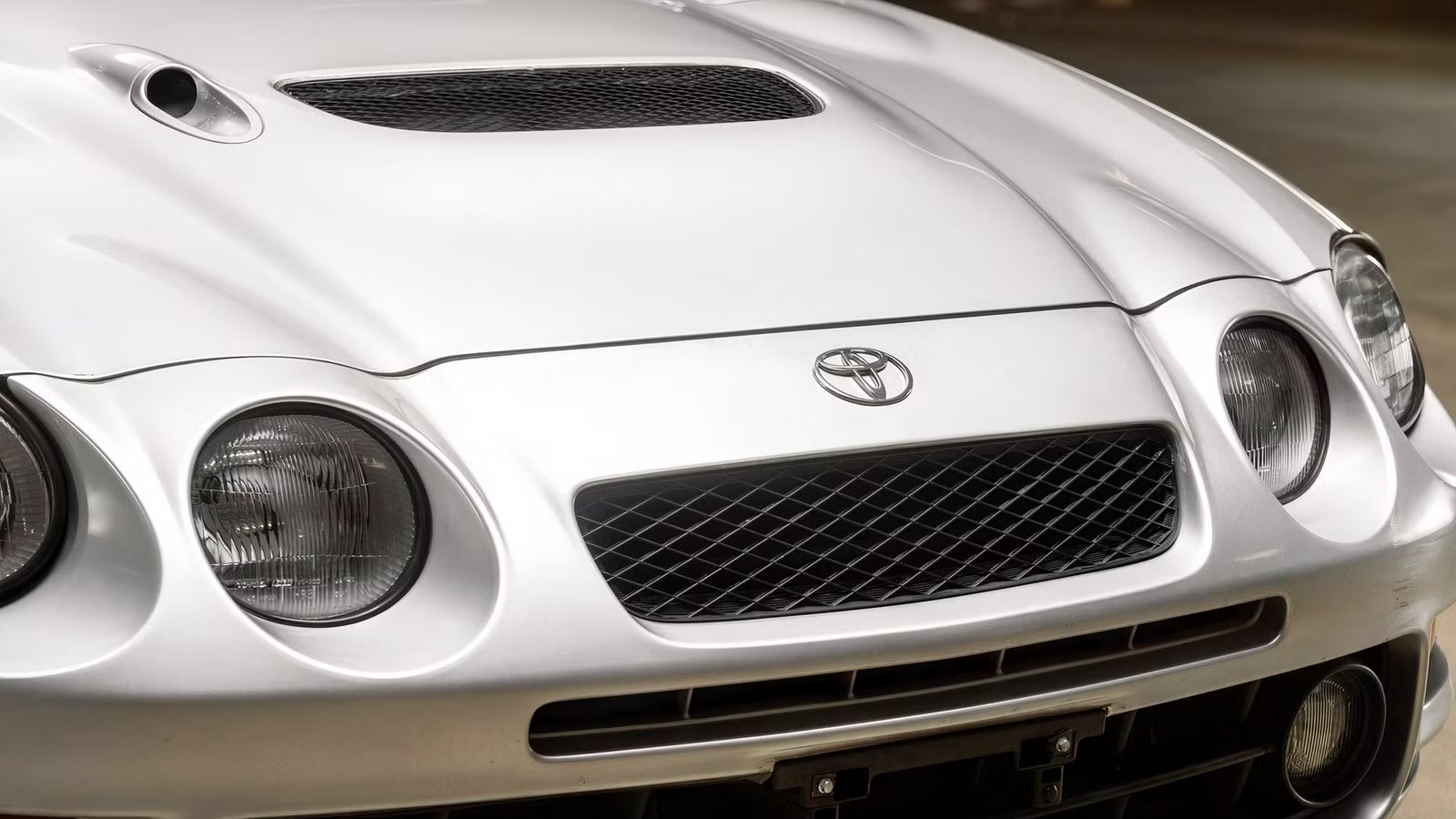
The cleverest engineering doesn’t always produce the better car. In 1995, Toyota’s World Rally Championship team was caught using a spring-loaded turbo restrictor that could give its engine a substantial power advantage while appearing legal during inspection. The discovery cost Toyota its championship points and led to a ban for the 1996 season. Meanwhile, Mitsubishi was developing a very different approach to rally success, repeatedly updating a compact sedan that would become one of the era’s defining performance cars.
One Hidden Mechanism Turned A Rally Car Into A Scandal

In the 1990s, Group A rally cars had to retain a close relationship with their road-going counterparts. Regulations also restricted the air entering turbocharged engines, limiting how much power teams could extract. Toyota Team Europe found a way to push that boundary well beyond what the rules allowed. Its turbocharger restrictor used a spring-loaded mechanism that could move under boost pressure, opening a path for more air to reach the engine. The assembly could return to its apparently compliant position when the car was inspected.
The movement was reportedly around 5 millimeters, and estimates put the resulting power advantage at roughly 50 hp. Even so, the device offered a substantial advantage in a sport where small differences could decide a stage. The scandal became known as “Turbogate.” After the mechanism was discovered, the FIA disqualified Toyota from the 1995 WRC and banned the team from competing for the 1996 season.
It was an embarrassing end to Toyota’s campaign, particularly because the mechanism was an impressive piece of engineering used to defeat the very regulations governing the competition. The episode also complicated the legacy of a manufacturer with a strong record in rallying. But the car involved had more going for it than a controversial turbocharger.

The Toyota Celica GT-Four ST205 Was The Most Sophisticated Yet
The car was the Toyota Celica GT-Four ST205, the final generation of Toyota’s turbocharged, all-wheel-drive Celica rally lineage. It followed the ST165 and ST185, the latter earning three consecutive drivers’ championships from 1992 through 1994. Those titles belong to the ST185 era, not the ST205.
Toyota gave its final GT-Four a 2.0-liter 3S-GTE turbocharged four-cylinder engine. Output figures vary by version and source, ranging from around 239 to 255 hp, with 255 hp commonly cited for the Japanese-market model. Power went to all four wheels, while a sophisticated front suspension setup aimed to improve control under demanding cornering loads. Toyota produced 2,500 WRC Edition cars for that purpose, although some sources estimate total ST205 production at more than 10,000.
Super Strut Suspension Was More Than A Marketing Name

Toyota’s Super Strut front suspension was designed to better manage wheel geometry under cornering loads, helping the tires maintain their intended contact with the road. The car’s permanent AWD system and unusual hollow-shaft arrangement were also part of its distinctive engineering package, commonly described as providing a 50:50 torque split.
On paper, this was an ambitious combination. Yet sophistication didn’t automatically translate into rally dominance. The ST205 never matched the championship achievements of its predecessor, and its WRC story became inseparable from the restrictor scandal. Toyota had built a technically interesting machine, but Mitsubishi was about to make a compelling case for a different development strategy.
Mitsubishi Kept Rewriting Its Compact Sedan Until It Won Four Straight Titles
Mitsubishi’s Lancer Evolution V approached the same problem from a different direction. Rather than rely on one final, highly developed version of an established model, Mitsubishi kept revising the Lancer Evolution through successive generations. The changes came quickly, giving the company opportunities to improve the car as competition and engineering demands evolved.
The Evo V used Mitsubishi’s familiar 2.0-liter 4G63T turbocharged engine, paired with a five-speed manual gearbox and all-wheel drive. Its often-quoted 276 hp rating was a paper figure associated with Japanese-market performance cars of the period, rather than a guarantee of identical output from every example.
Active Yaw Control Gave Mitsubishi Another Way To Manage A Corner

Its defining feature was Active Yaw Control. AYC helped the car respond to changing cornering demands, particularly when the driver needed the rear end to rotate without losing control. It was a different solution from the Celica’s emphasis on its Super Strut front suspension and AWD hardware. Mitsubishi’s approach became part of a package that proved highly competitive.
Tommi Mäkinen won four consecutive WRC drivers’ championships from 1996 through 1999, driving successive Evo generations: the III, IV, V and VI. That achievement shouldn’t be mistaken for four titles won by the Evo V alone. While Toyota’s ST205 was caught in controversy, Mitsubishi kept refining a car that was already winning.
The Evo V Was Quicker, But The Celica Had A Case Of Its Own

The published performance figures favor Mitsubishi. The Lancer Evolution V is commonly credited with a 0–60 mph time of 4.7 seconds, compared with 5.9 seconds for the Celica GT-Four ST205. Mitsubishi’s paper rating was 276 hp, while the Japanese-market Toyota Celica was rated at up to 255 hp. The Evo combined its output with a quick-shifting manual gearbox, AWD, and AYC. Toyota countered with the Celica’s sophisticated suspension and its unusual drivetrain design. As per the 2026 Classic.com record, the Evo V sells for around $43,558, while the GT-Four is around $20,108.
Clever Hardware Only Matters When The Whole Car Delivers

The Celica GT-Four ST205 was never officially sold in North America, making it a desirable import for buyers seeking a Japanese performance car. Its technical ambition deserves recognition, even if its competition record was overshadowed by the ST185 and the Turbogate affair. The Celica was clever, and its hardware remains fascinating. Mitsubishi simply built a package that delivered more of what mattered.
Sources: Classic.com

Related posts


Latest Post


No Comments