
Infiniti’s Forgotten Rear-Drive Coupe Got Lost Between The 370Z And BMW 335is
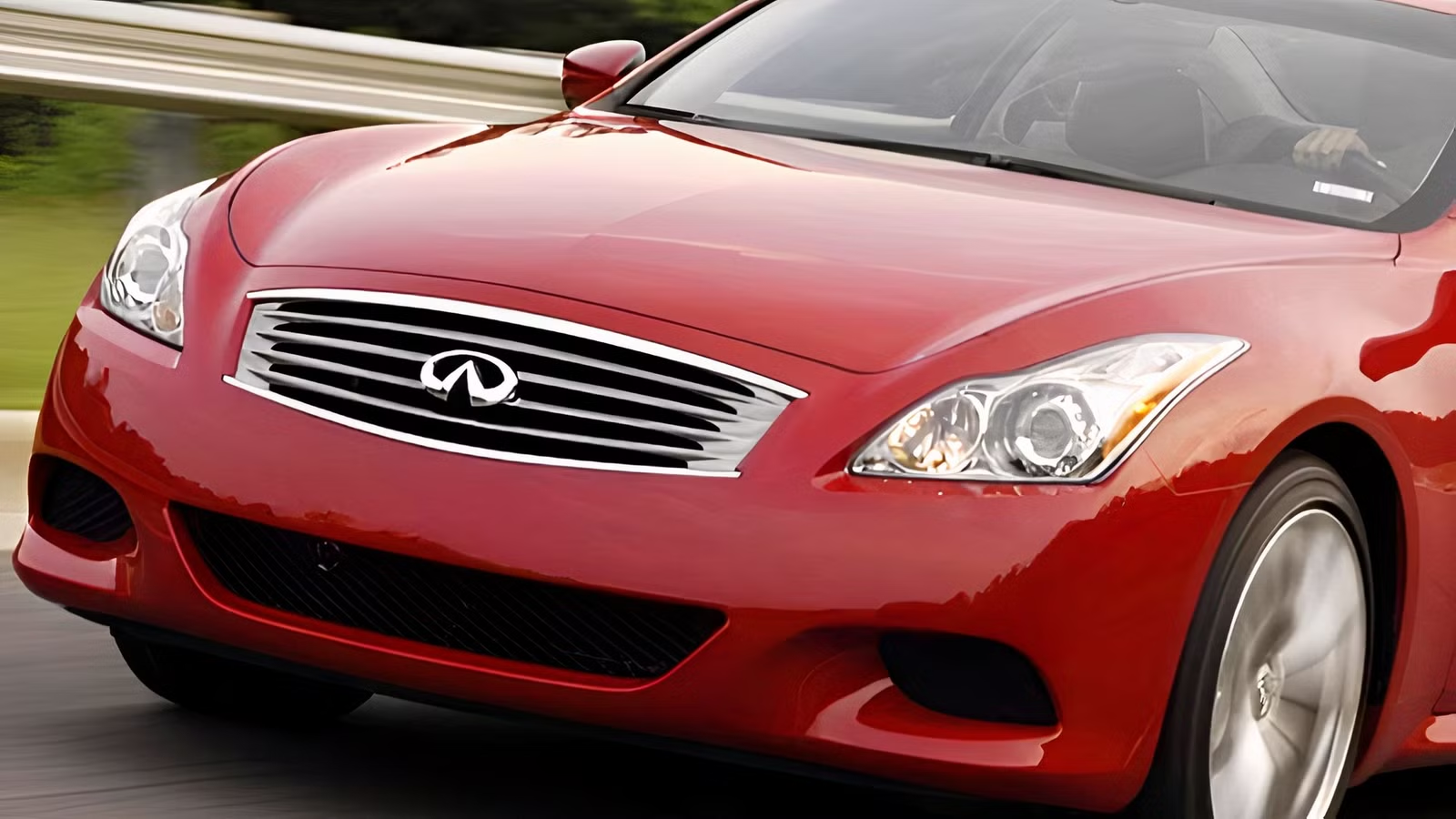
In 2026, Infiniti is in an unenviable spot. It currently sells three models, all of which are a crossover or a full-size SUV. Meanwhile, it is losing ground to its rivals at Lexus and Acura. It’s to the point that talking heads and online think pieces like to speculate that the brand might go out of business. Well, Infiniti’s lineup used to be vast, and contain gems like the one we’re about to share with you.
The G Line: Nissan’s Take On the Euro Luxury Sports Car

Even if it’s hard to remember nowadays, Infiniti was once Nissan’s weapon for taking the fight directly to the European sports car aristocracy before it was an SUV holding company in survival mode. It’s possible that the passage of time let it slip from memory, but the Infiniti G Line really did used to slay giants. When the original G20, an offshoot of the Japanese Nissan Primera, arrived, it was the start of the brand’s slow, gradual development into a legitimate BMW and Audi rival.
Moving into the 2000s, the G Line ditched the Primera foundation for the groundbreaking Front Midship (FM) architecture that underpinned the Japanese Nissan Skyline, transforming the G-Series from a modest, compact, front-wheel-drive car into a legitimate rear-drive performance car. By positioning a large V6 behind the front axle, Nissan unlocked a favorable weight balance that kept its sports cars composed in corners, just like its European counterparts.

At its core, Nissan had the right idea from the start. The improved handling of a rear-drive, front-midship sports car situated the new platform next toEuro stalwarts like the E46 BMW 3 Series, Mercedes-Benz C-Class, and Audi A4. Still, a good platform was just the start, and a potent powertrain was the next, and perhaps the most vital piece of the performance puzzle. On that front, Nissan was about to hit us with an absolute classic.

Enter the Hero: The VQ-Series

To match the promise of its rear-drive chassis, Nissan dropped the first engine in a lineage that’d go on to one day define the brand: the 3.5-liter VQ35DE V6. Lightweight, happy to rev, and stubbornly reliable, the VQ35 delivered smooth power delivery across the rev range alongside a distinct, mechanical exhaust rasp that’s as recognizable as a Coyote’s roar or an LS’s growl.
Paired with either a smooth 5-speed automatic or a crisp 6-speed close-ratio manual, this powertrain gave Infiniti the exact firepower required to go toe-to-toe with Europe’s best. That potent combination of engine and gearbox landed in showrooms for the 2003 model year with the official launch of the G35 coupe and sedan. All-aluminum from the block to the heads with four valves per cylinder, continuous variable valve timing and a high-flow intake manifold, the VQ V6 punched above its weight with ample torque down low and plenty of power all the way to 6,600 RPM. That snappy throttle response paired beautifully with a Japanese Skyline-based chassis and made for an all-time great Infiniti product.

With 280 hp in manual trim, the result was a car that didn’t just challenge European sports cars — it bested them, winning Car of the Year and appearing on ten-best lists for its engine and the car itself in a number of publications. Still, the VQ35 was a mere stepping stone, and the best was yet to come.
The G37 Coupe: A Landmark Moment for Infiniti

Let’s set the scene. It’s 2007, and you’re at the New York International Auto Show. Unlike modern shows, the Infiniti booth is rife with buzz, and the reason why is because the most important sports coupe in the brand’s history just made its global debut. Suffice it to say, the G37 wasn’t just an evolution of the G35; it was the moment Infiniti reached near parity with the Germans, not just a rough approximation.
Under the hood sat the enlarged 3.7-liter VQ37VHR V6 with Variable Valve Event and Lift (VVEL) that generated 330 horsepower with a 7,500-RPM redline. Better still, the chassis was a whole 36 percent stiffer than before, packing giant dinner plates for brake rotors and aluminum suspension links. Inside, the cabin was night and day away from the plasticky interiors of early-2000s Japanese sport compacts. The pinnacle of the V36 chassis arrived with the Infiniti Performance Line (IPL) G37 Coupe. Featuring a high-flow true dual-exhaust system, aggressive ECU mapping, stiffer spring rates, and a viscous limited-slip differential, the IPL squeezed 348 horsepower out of the VQ mill and hit 60 mph in the mid-fives.

Outside of the paper rear timing oil gallery gaskets that could blow out and lose pressure over time, the G37’s powertrain was even more desirable than the outgoing G35. With an MSRP of under $35,000 for a base model in 2008 and capping out around $50,000 for the flagship IPL, the G37 comfortably undercut the E92 BMW 335i. If anything, the G37’s biggest competition wasn’t the Bimmer at all, but rather a different Nissan.
A Great Sports Car, But Lost Behind a Legend

When Nissan launched the 370Z for 2009, it created a family rivalry right under its own corporate umbrella. Both cars were built on shortened variations of the exact same FM architecture and relied on identical mechanical hardware: the 3.7-liter VQ37VHR V6, available six-speed manual transmissions, viscous limited-slip differentials, and Akebono sports brakes.
While the 370Z was marketed as the compromised, purpose-built two-seater sports car, the G37 Coupe offered nearly identical performance metrics alongside actual back seats. Whether you prefer one or the other largely depends on two factors: whether you need that rear seat or not, and the used sale price. These days, a used 370Z is frequently listed with a heavy “Z-car” tax attached to its badge, driving up prices for clean, manual examples. In contrast, the G37 Coupe often flies under the radar on second-hand markets. The market dynamics, then, have been turned on their head.
Source: Infiniti

Related posts


Latest Post


No Comments