
Honda’s Superbike Officially Never Reached America But Was Among The Fastest Of Its Day
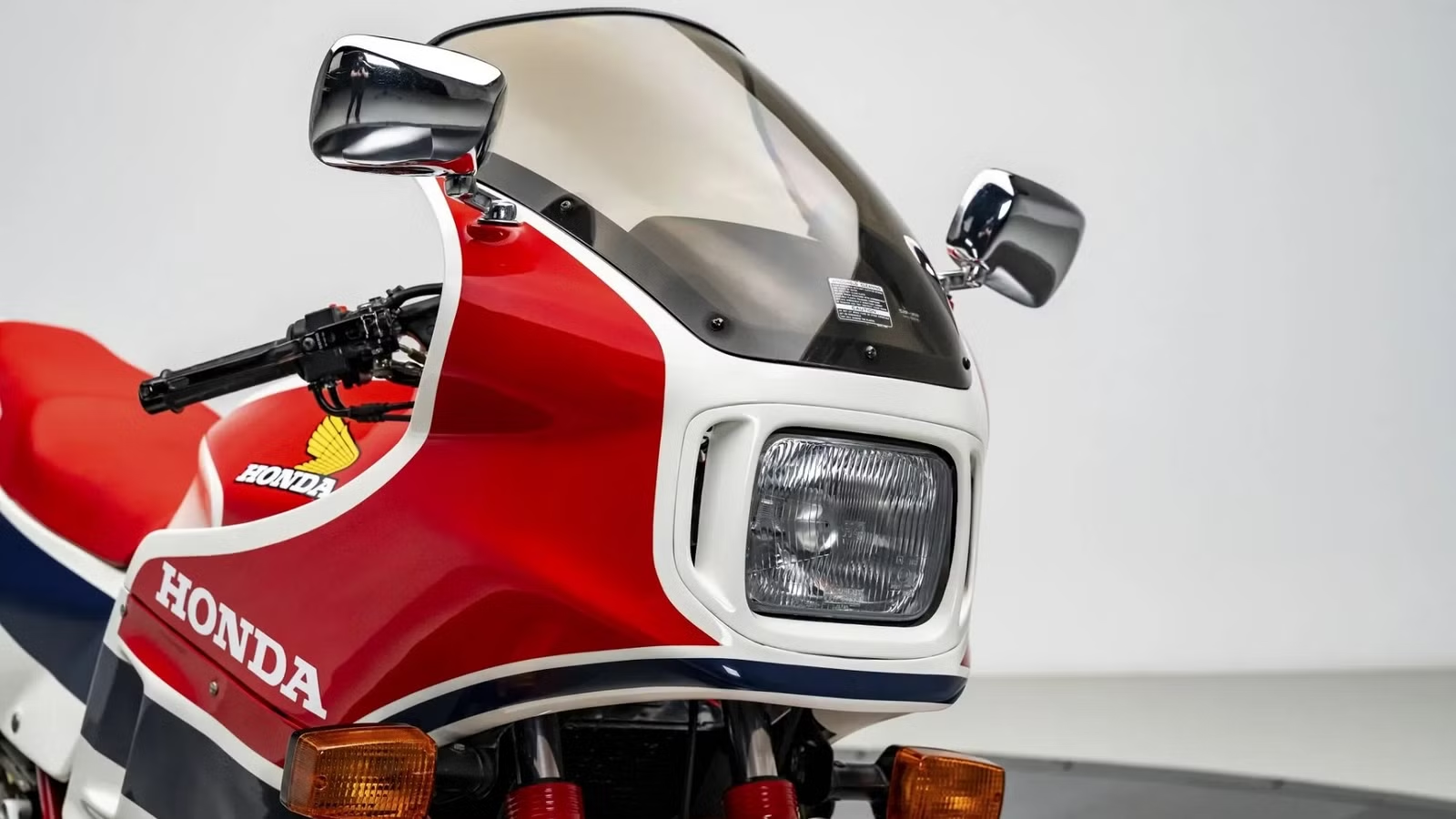
During the early 1980s, Japanese motorcycle makers were locked in a fierce battle to build the fastest machines on the road. Bigger engines, better handling, and racing victories gave manufacturers bragging rights, and Honda had no intention of falling behind. Its answer was a limited-production superbike that could approach 150 mph, packed serious racing hardware, and looked ready for the starting grid. But American buyers were never officially allowed to buy it.
Japanese Superbike Rivalries Were Heating Up In The Early 1980s

Japanese manufacturers spent the 1970s pushing motorcycle performance to new heights. Kawasaki helped ignite the horsepower war with its 903cc Z1, while the later KZ1000 brought even more muscle. Suzuki joined the fight with the GS1000 in 1978, combining a powerful four-cylinder engine with impressive handling. Its racing success made it particularly dangerous for Honda. Yoshimura-prepared GS1000s helped Suzuki win the 1979 and 1980 AMA Superbike championships with Wes Cooley.
Honda had already established its reputation with the groundbreaking CB750, but its rivals were gaining ground. The company introduced the CB900F in Europe in 1979, earning praise for its responsive 901cc engine and capable handling. However, winning production-based endurance races demanded more than a powerful street motorcycle. These events pushed engines, brakes, suspension, and riders to their limits for hours. Honda needed something built specifically to withstand that punishment.
Honda Built A Road-Legal Racer With One Goal: Winning


Honda already knew plenty about endurance racing. Its RCB1000 dominated European endurance competition during the 1970s, while the succeeding RS1000 continued that tradition. However, production-based racing presented a different challenge. Regulations required manufacturers to sell qualifying motorcycles to the public, limiting the freedom engineers enjoyed with dedicated race bikes. Converting a conventional street motorcycle also meant accepting compromises in weight, chassis rigidity, fuel capacity, and handling. Honda decided that designing a road-legal machine around racing requirements offered a better solution.
Engineers began development in January 1980, using the CB900F as their foundation. They increased engine displacement, reinforced the chassis, and introduced lighter components designed for sustained high-speed riding. Honda even borrowed chassis dimensions from a modified CB900F that its Blue Helmet MSC team had raced to third place at the 1979 Suzuka 8 Hours. Development moved quickly, with production beginning at Honda’s Hamamatsu factory in August 1980. The original target was a September endurance race in France, but homologation requirements proved difficult to meet in time. Instead, Honda focused on Australia’s Castrol Six Hour.
The Honda CB1100R Was A 150-Mph Superbike America Never Officially Got

The resulting Honda CB1100R became the company’s first true homologation special. Production started in 1980 ahead of the 1981 model year, and the finished motorcycle shared considerably more with Honda’s racing program than its CB900F roots suggested. Its air-cooled, 1,062cc inline-four featured dual overhead camshafts and 16 valves. Honda increased the bore to 70 mm while retaining the CB900F’s 69 mm stroke. Higher compression, revised camshafts, and improved breathing delivered roughly 100 to 115 horsepower, depending on the model year and source. A frequently quoted top speed of approximately 149 mph placed it among the fastest production motorcycles of its era. Its roughly 518-pound dry weight was hardly featherlight, but the performance spoke for itself.
The manufacturer backed that power with serious racing hardware. A reinforced steel frame improved rigidity, while a 26-liter aluminum fuel tank carried nearly 6.9 gallons, reducing the need for frequent fuel stops. Twin-piston brake calipers and nitrogen-charged piggyback rear shocks further separated the CB1100R from ordinary road bikes. Rear-set footpegs, adjustable handlebars, and a solo seat completed its racing-focused design. The engineering paid off immediately when Wayne Gardner and Andrew Johnson won the 1980 Australian Castrol Six Hour at Amaroo Park. Organizers subsequently changed eligibility rules, excluding the single-seat machine from the following year’s event.

Despite these achievements, American Honda dealerships never officially offered the CB1100R. Honda sold it in selected overseas markets, including Europe, Australia, New Zealand, and South Africa, where endurance racing gave the specialized motorcycle a clear purpose. Privately imported examples eventually reached American shores, but Honda never established an official U.S. sales program. That absence seems unusual given America’s appetite for powerful Japanese superbikes. While overseas riders experienced Honda’s early race-replica philosophy firsthand, most Americans could only admire the motorcycle through magazine photographs.
Three Limited-Production Versions Made The CB1100R Even More Exclusive

Honda produced three main versions of the CB1100R. The original 1981 CB1100RB featured a distinctive half-fairing and solo seat, although early Australian racing examples appeared without the fairing to meet local regulations. Honda built approximately 1,050 examples. The 1982 CB1100RC brought substantial upgrades, including a full fairing, revised Comstar wheels, and an 18-inch front wheel replacing the original 19-inch unit. Honda also improved engine performance and added passenger accommodation, complete with a removable rear-seat cover. Around 1,500 examples left the factory.
The final CB1100RD arrived in 1983 with a revised fairing, updated suspension components, and a square-section swingarm. Production reportedly reached another 1,500 units, bringing the total to approximately 4,050 motorcycles across all three versions. Those limited numbers made the CB1100R uncommon even where Honda officially sold it. Its price reinforced that exclusivity – in Britain, the original model cost around £3,995, considerably more than many Japanese superbikes. Today, surviving examples present another challenge: finding replacement bodywork and other model-specific components can make restoration expensive.
The CB1100R’s Legacy Lives On In Honda’s Most Celebrated Race Replicas

The CB1100R established a formula Honda would revisit with some of its most celebrated performance motorcycles. Limited production, advanced racing technology, and enough street equipment to satisfy road regulations created something enthusiasts could genuinely connect to competition. That philosophy eventually produced the V4-powered Honda VFR750R RC30. Introduced overseas in the late 1980s, the RC30 featured sophisticated chassis engineering, a liquid-cooled engine, and unmistakable racing intentions. Unlike the CB1100R, it officially reached American dealerships in 1990. Just 316 examples entered the U.S. market, making it another highly exclusive Honda superbike.

The CB1100R’s achievements deserve similar recognition. Beyond its 1980 Australian victory, it won the 1981 New Zealand Castrol Six Hour and returned to win Australia’s event in 1982. Riders including Ron Haslam and Wayne Gardner also demonstrated its abilities in British production-based racing. For American enthusiasts, the CB1100R remains a missing chapter in Honda’s superbike history – it demonstrated that a road-legal motorcycle could place racing performance ahead of everyday practicality, years before the RC30 became an icon.
Source: Honda

Related posts

Latest Post


No Comments