
The Only Harley-Davidson That Can Run a 9-Second Quarter-Mile
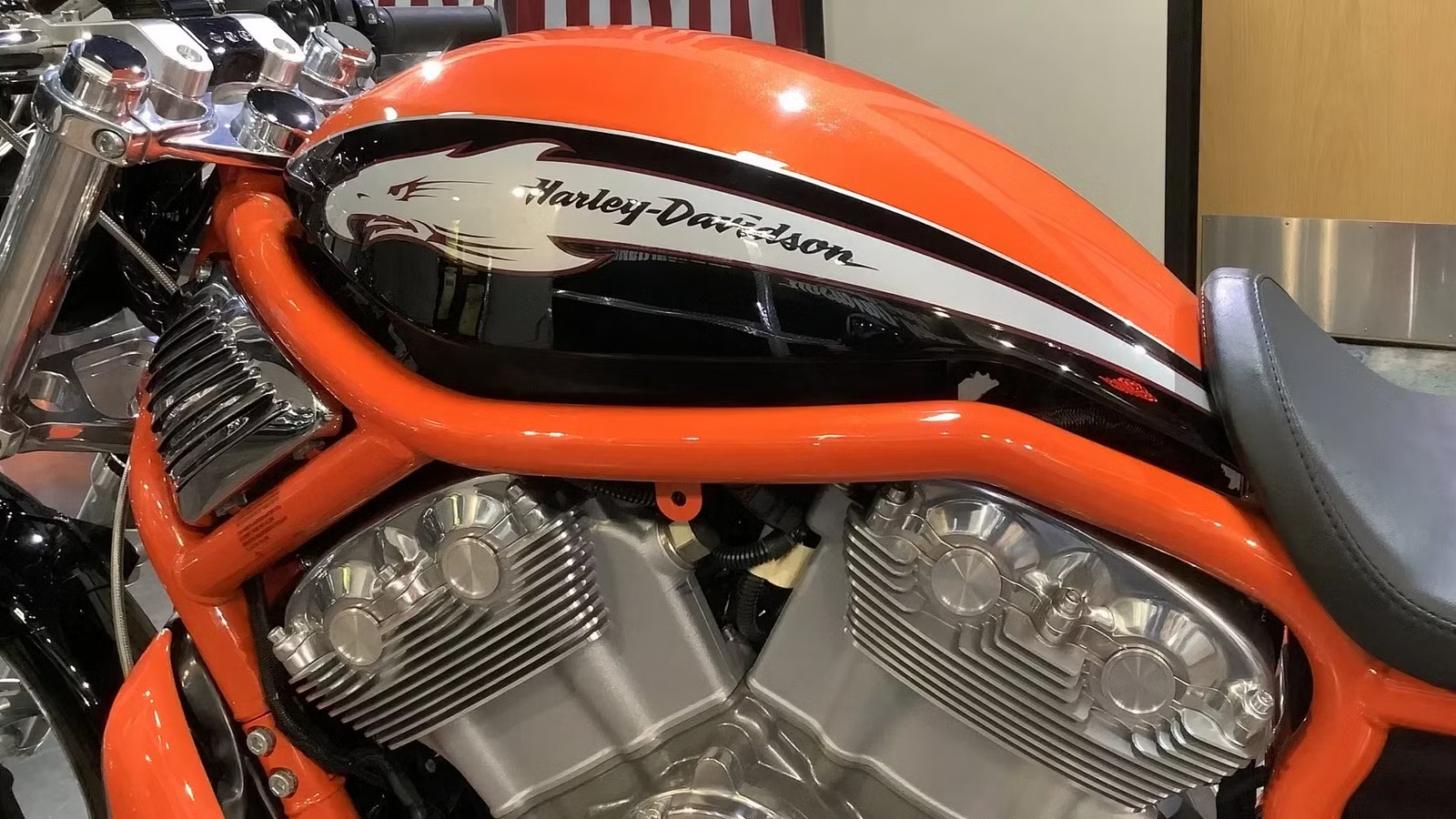
Harley-Davidson is known for thunderous engines, chrome, and highway cruising, not blistering quarter-mile times. But one factory-built machine broke that tradition. Designed specifically for drag racing, this rare Harley can cover the quarter-mile in under 10 seconds. It wasn’t built for open roads or relaxed cruising, but for outright speed on the drag strip.
The VRXSE Destroyer Is The Only Harley That Can Run A 9-Second Quarter-Mile
Harley-Davidson VRXSE Destroyer Key Specs
 72 autotech Engine |
Liquid-cooled 60-degree V-Twin |
|
Power |
 89 autotech 165 hp |
|
Torque |
97 lb/ft |
|
0-60 |
Under 3 seconds |
|
Top speed |
150+ mph |
|
Quarter-mile |
9.0-9.5 seconds |
Source: Harley-Davidson The Harley-Davidson VRXSE Destroyer is a purpose-built drag bike, designed to dominate the quarter-mile. Unlike any other Harley, the Destroyer wasn’t meant for street use. It was a factory-produced, turn-key race bike designed to compete in professional and amateur drag racing events straight from the dealership. Harley built the VRXSE Destroyer as part of its Screamin’ Eagle lineup, a high-performance division dedicated to pushing the boundaries of what the brand can achieve. The Destroyer wasn’t just another Harley with upgraded parts — it was an entirely different animal. Engineers stripped away every gram of unnecessary weight, tuned the engine for maximum output, and fitted it with race-specification components throughout. The result? A motorcycle capable of running a 9-second quarter-mile right out of the crate. Only 600 units were ever produced, making the VRXSE Destroyer one of the rarest Harley motorcycles in history. Harley originally planned to build far fewer — somewhere between 150 and 300 units — but overwhelming demand made a larger run impossible to pass up. That limited production run is precisely why the Destroyer remains so highly coveted among collectors and drag racing enthusiasts alike.
What Makes The VRXSE Destroyer So Fast?
At the heart of the VRXSE Destroyer is a 1,300cc (79-cubic-inch) liquid-cooled V-twin engine derived from Harley’s V-Rod platform. Unlike the standard V-Rod engine, this version was extensively modified for drag racing. It featured high-performance internals, including high-compression pistons, race-spec camshafts, and oversized valves. A larger throttle body and a dedicated fuel injection system ensured maximum power delivery at every point in the rev range. The result was a staggering 165 horsepower — significantly more than any street-legal Harley of the era. To handle this power, the Destroyer came equipped with a race-spec transmission featuring a multistage lock-up clutch and a launch control system. This allowed riders to leave the line with minimal wheelspin and maximum acceleration. The extended swingarm and wheelie bar helped keep the bike planted during hard launches, preventing it from flipping over — a very real concern with high-powered drag bikes.
Harley-Davidson VRXSE Destroyer Tech Highlights
- Transmission: 5-speed close-ratio
- Clutch: Multi-stage lock-up
- Final drive: Chain
- Frame: Lightweight aluminum chassis
- Front suspension: 43mm inverted forks
- Rear suspension: Twin adjustable shocks
- Brakes: Single-disc, front and back
- Seat height: 26 inches
- Dry weight: 430 lbs
The suspension was tuned specifically for drag racing. The front forks were lightweight and optimized for straight-line stability, while the rear shocks were built to absorb the intense forces generated by hard acceleration. Unlike conventional Harleys designed for comfort, the Destroyer’s suspension was stiff and unforgiving by design. Braking was handled by a single-disc setup up front and a lightweight rear brake. Since the bike was designed exclusively for drag racing, stopping power was secondary to acceleration. The primary goal was to get from start to finish as quickly as possible.
Alternatives From Other Manufacturers

The Harley-Davidson VRXSE Destroyer was unique in its class, but other manufacturers have also produced high-performance machines that thrive on the drag strip. One of the most famous is the Suzuki Hayabusa. While the Hayabusa is a production street bike, it has become a staple in drag racing circles thanks to its powerful engine and exceptional top-speed capability. With a few targeted modifications, a Hayabusa can easily dip into the 9-second quarter-mile range. Another formidable competitor is the Kawasaki Ninja H2R. Unlike the street-legal H2, the H2R is a track-only machine equipped with a supercharged 998cc inline-four engine producing over 300 horsepower. While not a dedicated drag bike, its sheer power output and aerodynamic design make it a serious contender on the strip. Ducati’s Panigale V4 R is another example of a blisteringly fast motorcycle. While it is primarily designed for road racing, its lightweight chassis and high-revving V4 engine give it tremendous straight-line speed, making it capable of quarter-mile times in the low 9s with proper tuning.
The Fastest Harley-Davidsons In History

The VRXSE Destroyer remains Harley-Davidson’s quickest factory-built quarter-mile machine, but NHRA Pro Stock V-Rod drag bikes take performance further. Producing over 300 horsepower, these purpose-built racers can complete the quarter-mile in the 6-second range.
Among street-legal Harleys, the V-Rod was another standout. Introduced in 2001 with a liquid-cooled Revolution engine co-developed with Porsche, later 1,250cc versions produced around 120 horsepower and could exceed 140 mph, making the V-Rod one of Harley’s fastest production motorcycles.
Fast Production Harley-Davidson Models
|
Spec/Model |
Harley-Davidson V-Rod |
Harley-Davidson FXDR 114 |
Harley-Davidson LiveWire |
|
Engine |
1,250cc liquid-cooled Revolution V-Twin |
1,868cc Milwaukee-Eight 114 V-Twin |
Electric motor |
|
Power |
120 hp |
90 hp |
115 hp |
|
Torque |
85 lb/ft |
119 lb/ft |
86 lb/ft |
|
0-60 |
3.5 seconds |
4.0 seconds |
3.0 seconds |
|
Top speed |
140+ mph |
110+ mph |
110 mph |
|
Quarter-mile |
11.5 seconds |
12.0 seconds |
10.5 seconds |
Another notable mention is the FXDR 114, which featured a Milwaukee-Eight 114 engine producing 90 horsepower and strong torque figures. While not as fast outright as the V-Rod, the FXDR 114 was among the quickest Harley cruisers available, with brisk acceleration and a sportier, more aggressive stance that made it considerably more agile than traditional Harleys. More recently, the Harley-Davidson LiveWire has established itself as the brand’s fastest-accelerating production motorcycle. As an all-electric bike, the LiveWire delivers instant torque, rocketing from 0 to 60 mph in just three seconds. While it can’t match the Destroyer’s quarter-mile credentials, it demonstrates that Harley-Davidson is fully capable of building a quick, modern motorcycle without a massive V-twin under the tank.
Source: Harley-Davidson.

Related posts


Latest Post


No Comments