
The Forgotten Bike That Deserves A Second Life
Some motorcycles disappear from showrooms before most riders ever get the chance to understand them. They arrive with plenty of attention, offer something genuinely different, and then quietly slip out of the conversation. Sometimes, the problem isn’t a bad motorcycle. It’s a good one that never quite finds its audience. One such machine paired the heart of a proven liter-class sport bike with styling inspired by an icon from the 1980s. It was bold, fast, and unapologetically unconventional. Yet its time in American showrooms was surprisingly brief.
Why Great Motorcycles Can Fade Out Of The Conversation

Attention isn’t the same as sales, and a showroom doesn’t care how good the launch coverage looked. Plenty of well-reviewed bikes have learned that the hard way. Retro revivals are key examples. They usually get a loud welcome. The photos get passed around, forums light up, and everyone agrees the thing looks fantastic. Then it lands on a showroom floor and has to fight for attention next to bikes with longer spec sheets and bigger marketing budgets. Looking good gets a bike noticed. Convincing someone to sign the paperwork is a different job. It doesn’t help when the original was a 1980s design statement. Expectations get sky-high, and a revival has to live up to the memory as well as the machine.
When The Price Tag Creates Doubt

Then there’s the money. When a bike costs more than the model it’s based on, it has to justify that premium every single day. Shoppers compare spec sheets, and styling alone doesn’t always close the gap, no matter how pretty it is. Sure, some buyers will happily pay extra for character. However, plenty of others will look at the numbers, shrug, and buy the cheaper sibling. This bike sat in exactly that spot.
The Suzuki Katana Brought A 1980s Icon Back To American Showrooms


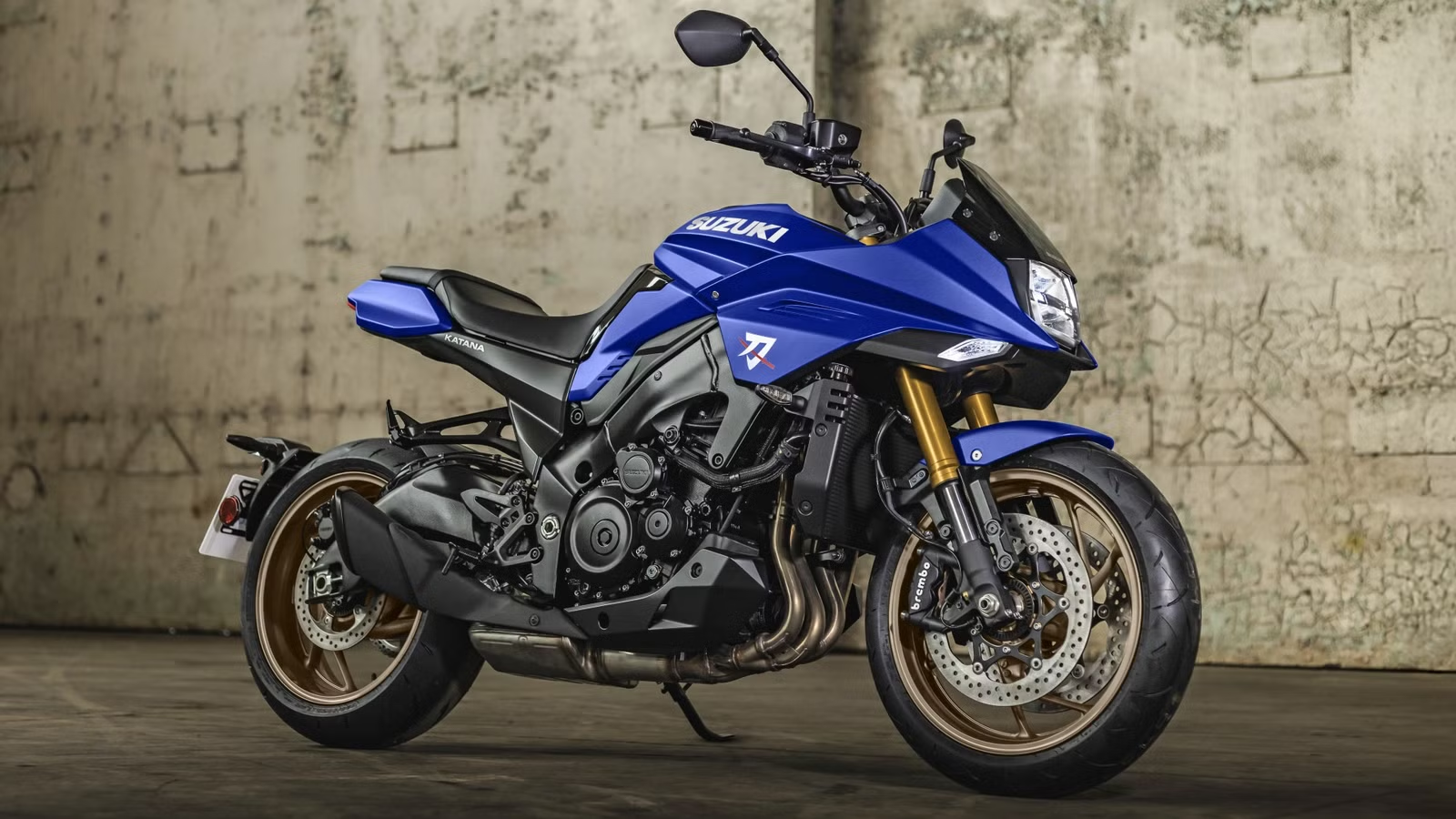
Case in point is the Suzuki Katana, revived for the modern era and introduced to American dealers in November 2019 as a 2020 model. Its original U.S. MSRP was $13,499, with Metallic Mystic Silver and Glass Sparkle Black offered at launch. Beneath the angular bodywork sat the GSX-S1000’s aluminum chassis and a road-focused version of Suzuki’s GSX-R-derived 999cc inline-four. It was a clever combination of familiar engineering and unusually bold styling.
The Katana returned for 2024 in a limited U.S. release, priced at $13,879. Buyers had to reserve one through a Suzuki dealer by October 20, 2023. The special edition introduced Metallic Matte Stellar Blue paint, gold-anodized fork tubes, and matching gold wheels. Suzuki also included two years of complimentary maintenance and a collectible 24-by-24-inch illustration by Japanese artist Makoto Endo.
From The 1981 GSX1100S To The Modern Revival

The story starts with the 1981 GSX1100S, penned by a three-man team led by Hans Muth, BMW’s former head of styling. Suzuki claimed it was the fastest mass-production motorcycle in the world. That design set a template Suzuki leaned on for years. The modern bike took its sweet time. A concept appeared in 2017, a public debut came at the 2018 Intermot show in Cologne with a design by Rodolfo Frascoli, and the name officially returned to Suzuki’s lineup in 2020. Suzuki says the result blends elements of Muth’s original with modern styling and performance.
Why The Katana Deserves A Second Life

Suzuki has recently shown that established platforms and famous names can still be valuable. The GSX-R1000 and GSX-R1000R are returning to international markets for 2026 with substantial engine and electronics updates, alongside 40th-anniversary recognition for the GSX-R family. Meanwhile, the new SV-7GX brings the familiar SV650 V-twin into a more versatile crossover package with modern rider aids. Suzuki confirmed its U.S. arrival in 2026, with pricing announced at $8,599 for most colors. A Katana revival would fit that broader strategy.
More importantly, the neo-retro 800-1000c segment has seen a second wind in recent times. Honda has brought the CB1000F, Kawasaki has updated the Z900RS, and Yamaha’s XSR900 is soldiering on stronger than ever. So there is clearly a market here that the Katana would be able to exploit. That wasn’t really the case upon its initial US launch. Pricing will be quite key, though.
What Made The Katana Worth Riding

Under all that angular bodywork sits a 999cc four-cylinder based on a 2005–2008 generation GSX-R1000 engine, making roughly 150 hp and nearly 80 lb-ft of torque. That 2005-era GSX-R is widely regarded as a classic, so the foundation is solid. Suzuki leaned on strong low- to mid-range torque rather than chasing peak numbers, which suits a bike like this just fine.
The 2024 version added ride-by-wire throttle bodies, an updated Clutch Assist System and a bidirectional quick-shifter, all part of the Suzuki Intelligent Ride System. A three-mode drive selector and five-mode traction control round out the package. Suzuki also kept Easy Start and Low RPM Assist, handy touches for everyday riding.
Chassis, Brakes And Ergonomics

Underneath, the Katana shared its basic chassis architecture with the GSX-S1000. Its aluminum twin-spar frame, fully-adjustable KYB suspension, and relatively upright handlebar position helped balance sporting intent with everyday rideability. Braking hardware was suitably serious, with twin Brembo monobloc front calipers gripping 310mm discs. Dunlop Roadsport 2 tires measured 120/70ZR17 at the front and 190/50ZR17 at the rear. The bike’s 474-pound curb weight and 32.5-inch seat height made it a substantial machine, though not an especially intimidating one for riders accustomed to liter-class nakeds. These provided a solid foundation for a fast, engaging road motorcycle.
A Design That Still Turns Heads

Arguably the most standout element is the design. Nothing else in the retro class looks like the Katana: boxy, angular, a little stubborn. Early reviewers praised the polished ride and attention to detail, though they noted it lacked some high-end hardware found on rivals. For 2024, Suzuki sweetened the deal with a complimentary service plan and a 24-by-24-inch Makoto Endo art print for owners. And because the cat con sits in the mid-chamber, fitting an EPA-compliant slip-on exhaust is easy for owners who want more noise.
Why Katana Disappeared From The Conversation

There were a few flaws that couldn’t be overlooked — price being the most evident. The Katana cost about $2,200 more than the GSX-S1000F it was based on at launch, and reviews flagged relatively few electronic features for the price, along with a hard-to-read LCD display. A 3.2-gallon tank didn’t help either. Then came the 2024 run: limited, special-order only. Merely 45 units were brought here.
Source: Suzuki Cycles

Related posts


Latest Post


No Comments