
America’s Only Street-Legal V12 Supercar Is Ridiculously Rare
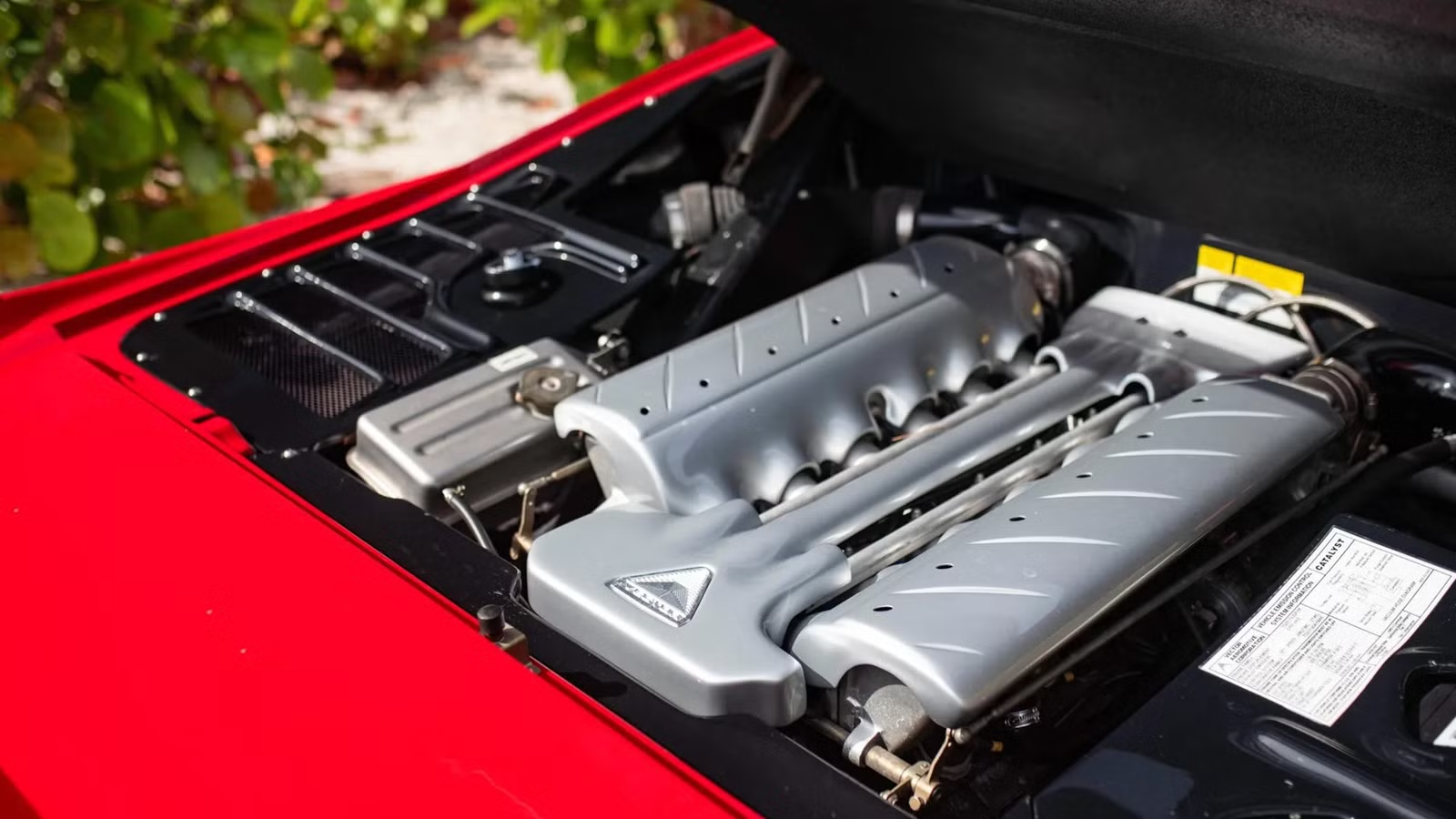
Every V12 supercar you’ve ever lusted after almost certainly carries a European passport. Italy, Germany, the UK — those are the usual suspects. America? The idea barely registers. For generations, U.S. automakers have planted their flag firmly in V8 territory, chasing torque and muscle over high-revving, twelve-cylinder complexity. But there was one moment — one audacious exception — when an American outfit decided to tear up that rulebook entirely. What came out the other side was a mid-engine machine with twelve cylinders, a shape unlike anything else on the road, and a legitimate window sticker.

It didn’t come from Detroit’s Big Three. It didn’t come from a legacy brand at all. And yet, it somehow made it past the prototype phase and into extremely limited production. What followed was a short run, a lot of controversy, and a very deserving spot in the automotive history books. This wasn’t just a supercar built in America. It was a V12 that defied the rules, sadly faded into obscurity, and yet remains one of the rarest machines ever sold on U.S. soil.
America’s Only Street-Legal V12 Supercar: Meet The Vector M12

This wasn’t supposed to happen. An American-built, street-legal V12 supercar? The birth of the Vector M12 is hands-down one of the strangest chapters in American automotive history. Built between 1996 and 1999, it remains the only street-legal production supercar powered by a V12 engine to hail from the United States.
Vector M12 Specs
|
Engine |
5.7L Lamborghini-sourced V12 |
|
Horsepower |
492 hp |
|
Torque |
425 lb-ft |
|
Transmission |
5-speed manual |
|
Driveline |
RWD |
|
0 to 60 mph |
~4.8 seconds |
|
Top Speed |
~189 mph |
The story of the M12 begins after the original Vector W8 project fell apart. Vector Aeromotive was taken over by the Indonesian company Megatech, which also owned Lamborghini at the time. With access to Lamborghini’s powertrains, the new leadership repurposed the Diablo’s 5.7-liter V12 for use in the M12. That engine, paired with a 5-speed manual transmission, delivered 492 horsepower and 425 lb-ft of torque. Official performance figures included a 0–60 mph time of around 4.8 seconds and a top speed nearing 190 mph.
Stack it against European rivals from the same era — the Ferrari 550 Maranello or the Lamborghini Diablo — and the M12 held its own on paper. It shared the same core powertrain as the Diablo but wrapped it in an angular composite body that drew polarizing reviews. The interior leaned heavily into aerospace themes, though journalists of the day frequently criticized the M12’s build quality and refinement.
While the M12 carried serious performance potential thanks to its Lamborghini heart, it never achieved widespread acclaim. Much of that came down to its limited production run, unusual styling, and Vector’s uncertain financial footing throughout the 1990s. Still, the Vector M12 holds a very specific title in the world of performance cars: it’s the only American-built, street-legal supercar with a factory-installed V12. That distinction alone makes it a standout in U.S. automotive history. While the concept of the Vector M12 was an ambitious attempt to create an American rival to Europe’s finest, the execution ultimately fell short of its lofty promise.
You’ll Probably Never See One Outside A Museum Or Millionaire’s Garage
Rarity isn’t just part of the Vector M12’s story. It’s the foundation of the M12’s story. Between 1995 and 1999, just 17 examples were ever built. Vector Aeromotive Corporation produced only 14 customer cars and three additional prototypes across the entire production run — fewer vehicles than many manufacturers roll off the line in a single day. With numbers that low, it’s no surprise most people will never encounter one outside of an auction catalog, a private showroom, or the occasional museum exhibit.
The reasons behind that tiny production run trace back to Vector’s unstable footing in the 1990s. After Megatech took over and attempted to revive the brand with the M12, delays, funding issues, and limited demand kept the car from ever scaling beyond ultra-low-volume status. The launch price didn’t help either, especially when buyers could get a Lamborghini Diablo with the same engine and far more name recognition.
Today, that scarcity has made the M12 something of a myth. It’s a car that lives in whispered conversations and archived magazine spreads, more often talked about than spotted in the wild. Whether you see it as an oddball footnote or a bold swing and a miss at supercar greatness, there’s no denying that the Vector M12 is one of the rarest production cars ever to come out of the United States. That fact alone is why we’re still talking about it.
Can You Even Buy One? The Insane Prices (And Scarcity) Of The Vector M12
If you’re thinking about tracking down a Vector M12 for your collection, be prepared to search hard and pay big money. With just 17 examples ever built, public sales are few and far between. When one does surface, it tends to attract serious attention — not just because of its rarity, but because of how singular it is in the context of American car manufacturing.
Auction appearances are rare, but a few examples have changed hands publicly over the years. Per Classic.com, two Vector M12s changed hands in 2024. An eye-catching purple 1996 Vector M12 with just 6,000 miles on the odometer sold in August 2024 for $246,400. In April 2024, a stunning red 1996 Vector M12 with only 4,000 miles on the clock sold for $295,000 on Bring a Trailer.
The only other Classic.com sales data for the Vector M12 includes a gorgeous black 1999 Vector M12 that sold in March 2021 for $176,000 with just 2,000 miles on the odometer. Asking prices on private listings have reportedly ranged from $250,000 to over $400,000, depending on the car’s condition, mileage, and provenance. There is, however, no consistent market value — the sales are simply too infrequent to establish one.
2025 Market Prices: How Much Does A Vector M12 Cost?
|
Average Sale Price |
$239,133 |
|
Top Sale |
$295,000 |
|
Lowest Sale |
$176,000 |
|
Sales Count |
3 |
(Source: Classic.com)
What complicates pricing further is the M12’s controversial reputation. Despite its Lamborghini-sourced V12 and mid-engine layout, it isn’t held in the same regard as more polished European supercars from the same era. A combination of factors — build quality, polarizing design, and Vector’s rocky corporate history — has given some collectors pause. But for others, that exact mix of flaws is precisely what makes the M12 so compelling.
Today, the Vector M12 occupies a strange but fascinating corner of the collector car market. It’s not a car you stumble across. It’s a car you hunt. And even if you find one, there’s no guarantee it’s for sale, given that the owner probably worked long and hard to get their hands on it. For buyers with deep pockets and a taste for automotive oddities, though, the Vector M12 represents a rare opportunity to own a supercar that almost no one else has — and probably never will.
Other Street-Legal V12 Beasts You Might Actually Be Able To Find
If the Vector M12 is too rare or too risky for your garage, there are a few other street-legal V12 machines from the same era that offer serious power, a more established track record, and far greater availability. These supercars won’t fly under the radar, but they also won’t leave you chasing ghost listings and dead-end auction trails.
Meet The Lamborghini Diablo (1990–2001)
Since the M12 borrowed its engine from the Diablo, it only makes sense to start here. Built in far greater numbers and backed by Lamborghini’s brand recognition, the Diablo delivers many of the same mechanical thrills in a considerably more refined package.
Vector M12 Specs Vs. Lamborghini Diablo Specs
|
Vector M12 (1996–1999) |
Lamborghini Diablo – Base Model Specs (1990–2001) |
|
|
Engine |
5.7L Lamborghini-sourced V12 |
5.7L naturally aspirated V12 |
|
Horsepower |
492 hp |
492 hp |
|
Torque |
425 lb-ft |
428 lb-ft |
|
Transmission |
5-speed manual |
5-speed manual |
|
Driveline |
RWD |
RWD |
|
0 to 60 mph |
~4.8 seconds |
~4.5 seconds |
|
Top Speed |
~189 mph |
~202 mph |
Early models came with a 5.7L V12 producing 485 horsepower, paired with a 5-speed manual transmission. Later iterations like the Diablo VT and Diablo 6.0 bumped output to 530-plus horsepower and added features such as all-wheel drive and upgraded interiors. The Diablo can sprint from 0 to 60 in around 4 seconds flat, depending on the variant, with top speeds pushing past 200 mph.
2025 Market Prices: How Much Does A Lamborghini Diablo Cost?
Lamborghini produced just under 3,000 Diablos in total, making it rare but not unobtainable. Depending on the model year and condition, pricing generally falls between $200,000 and $350,000. Per Classic.com, the average auction price for a Lamborghini Diablo sits at $317,156.
|
Vector M12 (1996–1999) |
Lamborghini Diablo (1990–2001) |
|
|
Average Sale Price |
$239,133 |
$317,156 |
|
Top Sale |
$295,000 |
$747,500 |
|
Lowest Sale |
$176,000 |
$122,058 |
|
Sales Count |
3 |
97 |
(Source: Classic.com)
There are a number of Lamborghini Diablos listed on auction sites as well. Take this flashy yellow 1998 Lamborghini Diablo SV, for example. With only 49,000 miles on the odometer, this 1998 model is currently being offered at $433,199 on August Luxury Motorcars.
Another current offering is this stunning red 1994 Lamborghini Diablo VT. With the odometer reading at just 7,000 miles, this 1994 model is currently being offered at $399,800 by Chicago Motor Cars.
Meet The Ferrari 550 Maranello (1997–2001)
For something equally powerful but a bit more understated, the Ferrari 550 Maranello deserves a mention. It’s a front-engine grand tourer with old-school V12 charm and a six-speed gated manual that purists still crave.
Vector M12 Specs Vs. Ferrari 550 Maranello Specs
|
Vector M12 (1996–1999) |
Ferrari Maranello 550 (1997–2001) |
|
|
Engine |
5.7L Lamborghini-sourced V12 |
5.5L naturally aspirated V12 |
|
Horsepower |
492 hp |
478 hp |
|
Torque |
425 lb-ft |
419 lb-ft |
|
Transmission |
5-speed manual |
6-speed gated manual |
|
Driveline |
RWD |
RWD |
|
0 to 60 mph |
~4.8 seconds |
~4.2 seconds |
|
Top Speed |
~189 mph |
~199 mph |
Under the hood sits a 5.5L naturally aspirated V12 good for 478 horsepower and 419 lb-ft of torque. The 550 sprints from 0 to 60 mph in about 4.2 seconds and reaches a top speed of 199 mph. Designed to return Ferrari to a front-engine layout for its GT cars, the 550 Maranello delivered both performance and genuine everyday usability.
2025 Market Prices: How Much Does A Ferrari 550 Maranello Cost?
Ferrari built just over 3,000 units of the 550 Maranello, and prices have steadily climbed. Well-kept examples now trade between $150,000 and $250,000, depending on history and mileage. Per Classic.com, the average auction price for a Ferrari 550 Maranello is $159,001.
|
Vector M12 (1996–1999) |
Ferrari 550 Maranello (1997–2001) |
|
|
Average Sale Price |
$239,133 |
$159,001 |
|
Top Sale |
$295,000 |
$417,500 |
|
Lowest Sale |
$176,000 |
$43,723 |
|
Sales Count |
3 |
190 |
While the average going rate for a Ferrari 550 Maranello is still quite pricey, it remains considerably more affordable than both the Vector M12 and the Lamborghini Diablo — and sales volume is meaningfully higher, too. Just take a look at some of the current listings available, like this gorgeous red 1997 Ferrari 550 Maranello. With just 34,000 miles on the clock, this supercar is currently listed at $214,500 by Ferrari South Bay.
Another intriguing listing is the stunning black 2001 Ferrari 550 Maranello. With only 32,000 miles on the odometer, this example is currently listed at $229,000 at Ferrari Beverly Hills.
The Vector M12 was never going to outrun Ferrari or outshine Lamborghini, but that was never the point. It stands alone as a bold, unconventional attempt to bring an American-made V12-powered supercar to the road. Built in tiny numbers and backed by a strange mix of ambition and instability, the M12 wasn’t polished — but it was undeniably daring. Whether you see it as a flawed experiment or a collector’s dream, the M12’s rarity and story give it lasting significance.
Sources: Classic.com, Hagerty.

Related posts



Latest Post


No Comments