
Why The Yamaha RW700 Is A Bigger Deal Than It Looks
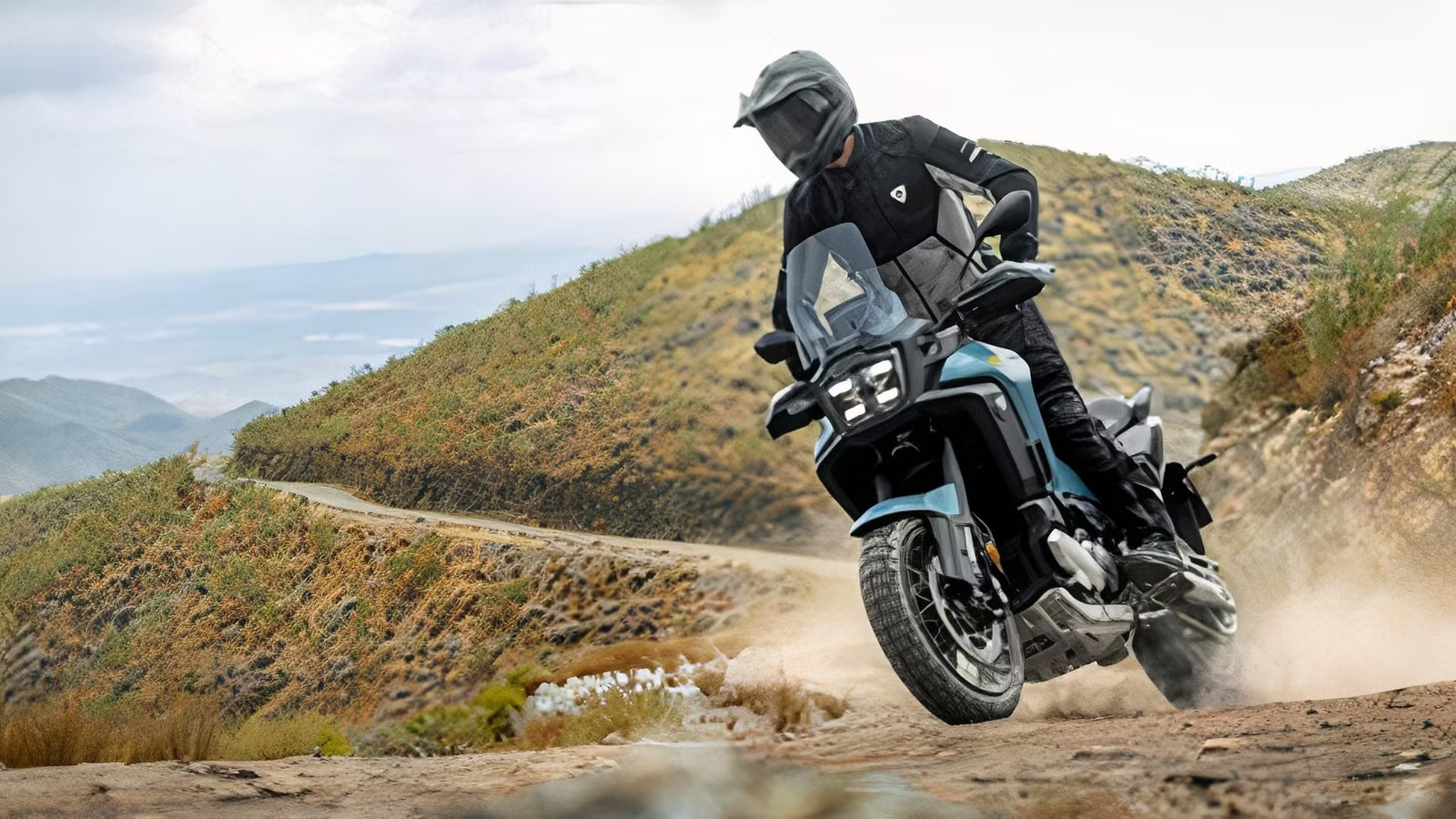
If Wayne Szalinski was working at the Yamaha factory, then I’d imagine him eventually screaming, “Honey, I shrunk the Ténéré.” A 90s reference from the movie “Honey, I Shrunk the Kids” with the lead played by Rick Moranis aka Wayne in the movie, the now iconic line seems appropriate with Yamaha’s latest unveiling at this year’s EICMA. And rightly so, as its latest attempt to blur the line between adventure bike and scooter is a pretty bold undertaking. It has the stance, suspension, wheels, and ergonomics to suggest that gravel is very much part of the ride plan, yet it also promises the storage and everyday convenience expected from a premium scooter.
Yamaha Is Entering A Market That Honda Already Dominates

There’s ample data to suggest that adventure scooters have the ability to sell in serious numbers, thus also proving that they’re popular. Honda’s X-ADV has been around for nearly a decade, proving that riders will pay premium money for maxi-scooter convenience mixed with adventure-bike hardware. More than 76,000 units had been sold in Europe by 2024, and over 16,000 European buyers chose one in 2025. That is mainstream volume by motorcycle standards.

America is a different story. Around 592,000 scooters were still registered in the U.S. at the start of 2026, while the dual-purpose (motorcycle) population has climbed from roughly 594,000 in 2020 to more than 847,000 now. Honda has also sold its smaller ADV scooter here since the ADV150 arrived in 2021, with the ADV160 continuing the idea today. In other words, America has not embraced the X-ADV formula on anything approaching the European scale. Then again, Yamaha would be combining two things that American riders already understand rather well — the convenience of an automatic scooter and an increasingly popular taste for adventure on two wheels.

The Yamaha TMAX has spent 25 years making the maxi-scooter genuinely sporty, while the Ténéré 700 gives the CP2 engine a conventional adventure-bike home. Missing between them is a machine with automatic convenience and built-in storage that could also cope with an unpaved shortcut to work. So the timing is sensible. Yamaha does not have to invent the customer base; Honda has already done the expensive market education work. And Yamaha just has the engines, transmission technology, and product range now to attack the idea from the ground up. The RW700 only has to offer those buyers a compelling Yamaha-shaped alternative.

The RW700 Borrows From The Ténéré Without Attempting To Replace It

The shared CP2 engine makes the Ténéré comparison unavoidable, but the chassis quickly draws a line between them. The RW700 uses 17-inch front and 15-inch rear cross-spoke wheels with tubeless Pirelli Scorpion Rally STR tires. Its 41mm inverted fork provides 6.3 inches of travel, with a monoshock offering 6.1 inches at the rear, while ground clearance is 6.7 inches.
These definitely do not spell serious Ténéré-style off-roading, but they sure favor broken pavement, gravel, and relatively friendly trails. The result is accessibility. The RW700 weighs 487 pounds wet, but its 31.9-inch seat is low for a middleweight adventure machine. Four-position footpegs let the rider stand, folding forward footboards provide a relaxed road position, and the seat narrows toward the front to make getting a foot down easier.
It Still Does The Regular Scooter Stuff

Yamaha resisted the temptation to turn the RW700 into an adventure bike wearing a Halloween costume. Underseat storage can hold a full-face helmet depending on its shape, while a five-inch TFT, navigation support, cruise control, and smart-key operation handle everyday conveniences. The Explore version adds heated grips, a heated rider’s seat, a center stand, backlit switchgear, and front suspension adjustment. So it may not have the hardcore off-road chops of the Ténéré’s, but it has all the chops for trips involving traffic, errands, or a long paved run before the dirt begins.
Y-AMT Is The Part That Makes The Whole Idea Work

Yamaha’s centerpiece here is its Automated Manual Transmission. It uses a proper six-speed gearbox, so none of that rubber-band CVT stuff here, and a chain final drive, but the beauty of it is riders can either let it shift automatically or select gears from a handlebar switch. There is no foot shifter, and the rear brake moves to the left handlebar.
You’d scream blasphemy here, but this layout suits standing riding particularly well. Both boots can stay planted on the pegs for weight transfers and balance while the rider controls braking and gear selection by hand. Yamaha has also developed RW-specific shift programming rather than simply transplanting its road-going Y-AMT calibration.
Gravel Mode Is More Than An Electronics Badge

In automatic operation, the Gravel shift logic can delay upshifts after the throttle opens and, while the rear tire is sliding, it also preserves drive on loose ground. Under hard braking or rear-wheel lock, automated clutch control can also help prevent the engine from stalling. Then there’s a six-axis IMU that supports traction control, slide control, cornering ABS, and road and gravel riding modes, with the rear ABS being switchable in Gravel mode.
The RW700 Has A Real Chance To Become Yamaha’s Second Adventure Pillar

Had the RW700 appeared alone, it could have been dismissed as Yamaha’s super late answer to the Honda X-ADV. The simultaneous showcasing of the RW350 at EICMA 2026 gives fresh perspective to the company’s intent. The 350 is powered by a 327cc single-cylinder, and paired with a CVT, which obviously is a completely different powertrain from the RW700, but the basic formula carries over. Both combine scooter conveniences with adventure-bike cues.
This means that Yamaha is treating RW as a new global series that’s aimed at building the foundations of a second adventure family rather than a one-off experimental model. Japan is scheduled to receive the range from the fall of 2027, while Europe is likely to be its most important early market. A U.S. launch remains unconfirmed now.
Source: Yamaha, Honda, IIHS

Related posts


Latest Post


No Comments