
This Honda SUV Might Last Forever, But It Won’t Get There Fast
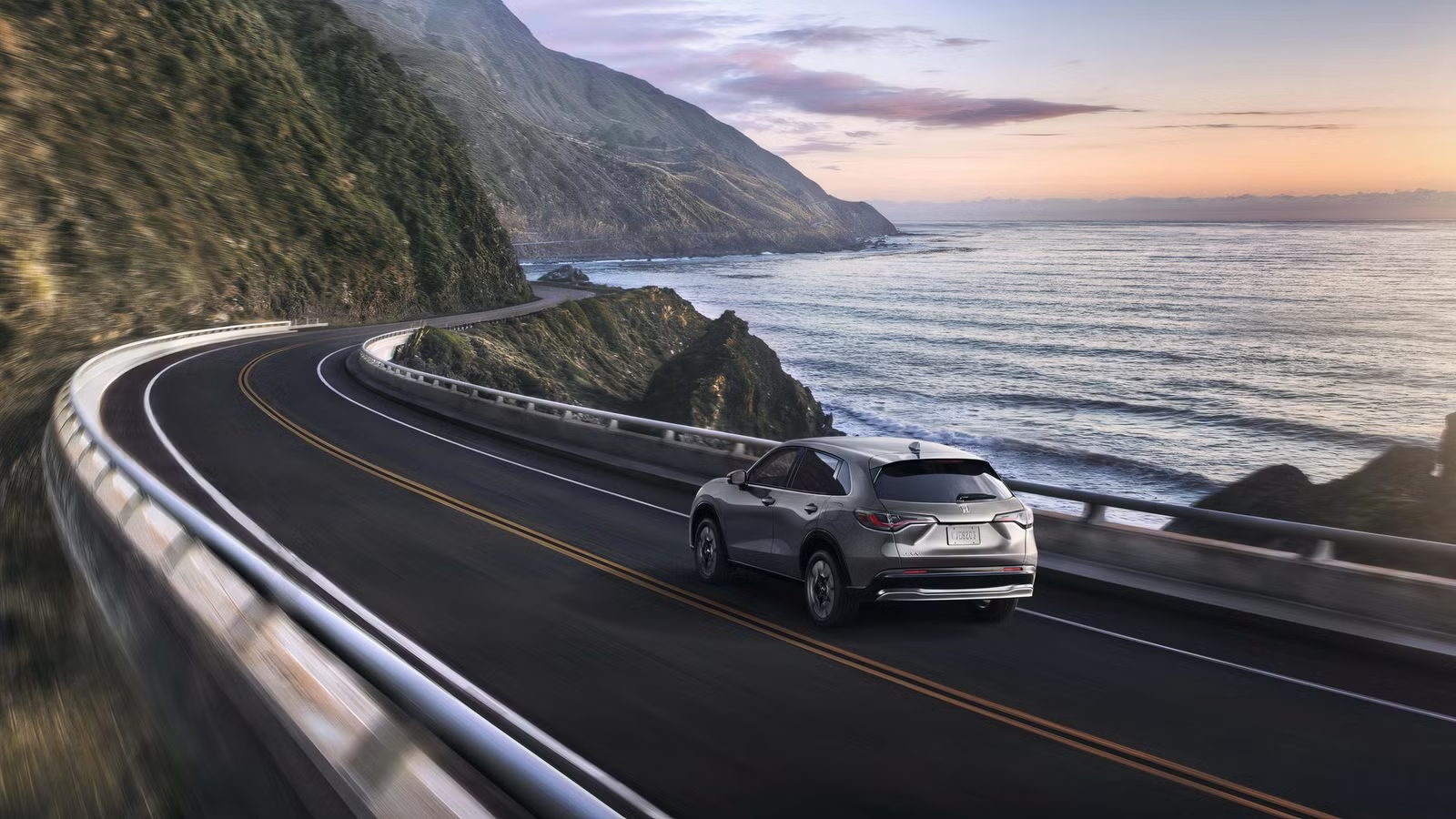
Small SUVs have taken over what sedans used to do. Today, models like the Kia Sportage, Hyundai Tucson, Mazda CX-5, and Nissan Rogue balance a city-friendly size with relatively low costs and space to carry things around. The Honda HR-V also makes a very strong case for going smaller, and it offers most of what you could ask for.

With an owner rating of 4 out of 5 on Kelley Blue Book, a lot of people think the HR-V gets most things right, but there is one drawback you should know about.
Small SUVs Have To Balance Space And Performance
Because SUVs are now the dominant segment in the U.S. for everyday driving, we have a wide choice of models ranging from those exceeding 200 inches to models like the Hyundai Venue, which measures just 159.1 inches long. The point of the compact and subcompact SUV market is to make tight-road driving easy while still providing enough space inside. However, if a model is slow and unpleasant to drive, its usefulness can easily be overlooked.

Take the 2026 Mazda CX-30: it offers a reasonable amount of cargo space at 45.2 cubic feet (though smaller than some of its rivals) and is built with driving engagement in mind. It gets i-Activ AWD, a brake-based LSD, G-Vectoring Plus, a quick steering ratio of 15.9:1, and an optional 2.5-liter turbo-four good for 250 horsepower and 320 pound-feet of torque.
Everyday Practicality Matters More Than Straight-Line Speed

It can be argued that if you are spending mid-$20,000 to mid-$30,000 on a new SUV, outright performance is the least of your concerns, and actual usability is the main reason to buy. Models like the Hyundai Tucson have a maximum cargo capacity of 74.8 cubic feet; the new Forester has up to 74.4 cubic feet; the Sportage, 74.1 cubic feet; and the Kia Seltos, which is smaller than all of these models, still has 62.8 cubic feet of storage space.
The 2027 Honda HR-V’s Biggest Trade-Off Isn’t Usability

That said, having a bit of everything in one package is ideal. The 2027 Honda HR-V is available as the LX ($26,600), the Sport ($28,400), and the EX-L ($30,450). There is just one engine option for the U.S.-market HR-V. Unlike other markets, which get a hybrid powertrain option, we only have the option for a 2.0-liter naturally aspirated inline-four good for 158 horsepower and 138 pound-feet of torque. And therein lies the drawback.
The Engine Makes Getting To Speed A Chore

The new HR-V is available with both FWD and AWD, but neither option could be called anywhere near quick. FWD models have been clocked at reaching 60 mph in 8.5 to 9.4 seconds, while AWD models are even slower at 9.6 to 9.8 seconds.
While we wouldn’t expect an HR-V to reach 60 mph in under five seconds, similarly priced models like the Corolla Cross can hit 60 mph in 7.3 seconds, the base-trim, non-turbo CX-30 can reach 60 mph in 7.5 to 7.8 seconds, the Crosstrek can do it in 7.9 seconds, and the turbocharged Hyundai Kona can do it in 7.5 to eight seconds.
Owner Ratings Say It Best

While the HR-V gets generally favorable reviews on Kelley Blue Book, performance is only rated 3.5 out of 5. Similarly, on J.D. Power, the HR-V gets an 81 out of 100 overall rating, but only a 76 out of 100 driving experience rating.
Much of the market has started using turbocharged four-cylinder engines in models around the HR-V’s size, but because Honda hasn’t followed suit, and the engine output is modest at best, the driving experience feels a little mundane when you press the accelerator. Peak torque isn’t reached until 4,200 rpm either, so you are rarely going to be anywhere near the powerband when driving sensibly.
Owners have also commented on the CVT, which features G-Design Shift logic designed to mimic gear shifts when accelerating. It is a clever concept, but owners have complained that under light loads (such as carrying luggage or merging onto a highway), the transmission keeps the engine at high rpm, leaving little sense of real acceleration.
On paper, the HR-V should also have a handling advantage, given that it shares some of the Civic’s underpinnings and features a fully independent multi-link rear suspension. However, owners have said that the soft shock damping and the raised ride height result in a lot of body roll in the corners.
The HR-V Gets A Lot Right

Then there is the other side of the HR-V; the side that more people will be interested in for its price. On top of its low starting prices, the new HR-V is well-equipped and looks sharp, thanks to a tidy front end and sloping rear roofline. The cabin gets a nine-inch touchscreen, wireless Apple CarPlay and Android Auto, automatic climate control, available leather-wrapped seats, an available moonroof, and wireless charging.
Spacious Cabin And Flexible Cargo Are Practical

Measuring in at 179.8 inches by 72.4 inches, the HR-V is perfectly compact for city driving, and you get well-designed packaging that makes the most of the room inside. There is 98.7 cubic feet of interior volume, which translates to up to 39.4 inches of front headroom, 41.9 inches of front legroom, 38 inches of rear headroom, and 37.7 inches of rear legroom.
Behind the rear seats, the new HR-V has 24.4 cubic feet of storage space; if you fold down the rear 60/40 folding seat, you get a maximum of 55.1 cubic feet of storage space. Unfortunately, the U.S.-market HR-V doesn’t get Honda’s Magic Seat, which lets you configure the seating to suit what you are carrying, but the cargo floor folds completely flat and has a low load height to make loading easy.
Good Fuel Economy Makes Up For Small Power
Despite not getting a hybrid rig or small turbo-four, fuel economy could be a lot worse. FuelEconomy.gov estimates that the AWD model can achieve 27 combined mpg (25 mpg city/30 mpg highway), and the FWD model does slightly better at 28 combined mpg (26 mpg city/32 mpg highway).
This is estimated to cost between $2,300 and $2,400 a year in gas (which is a little more expensive than average), but it does provide a full-tank range of between 378 and 392 miles.
Honda-Grade Reliability

Then there is one of the main reasons to buy a Honda: dependability. Thanks to the HR-V not being fitted with a turbo-four, there is a lot less to go wrong with the K-Series DOHC i-VTEC inline-four. It may not be powerful, and it may not be rated for towing, but it is built to last.
iSeeCars rates the HR-V 8.4 out of 10 for reliability, making it the most reliable subcompact SUV they monitor, and says that it has an average lifespan of 205,162 miles, or around 18.8 years. They also say the HR-V has a 55.8 percent chance of reaching 200,000 miles.
Sources: Honda, J.D. Power, Kelley Blue Book, FuelEconomy.gov, and iSeeCars.

Related posts





Latest Post



No Comments