
The Most Powerful Naturally Aspirated Six-Cylinder Ever Produced
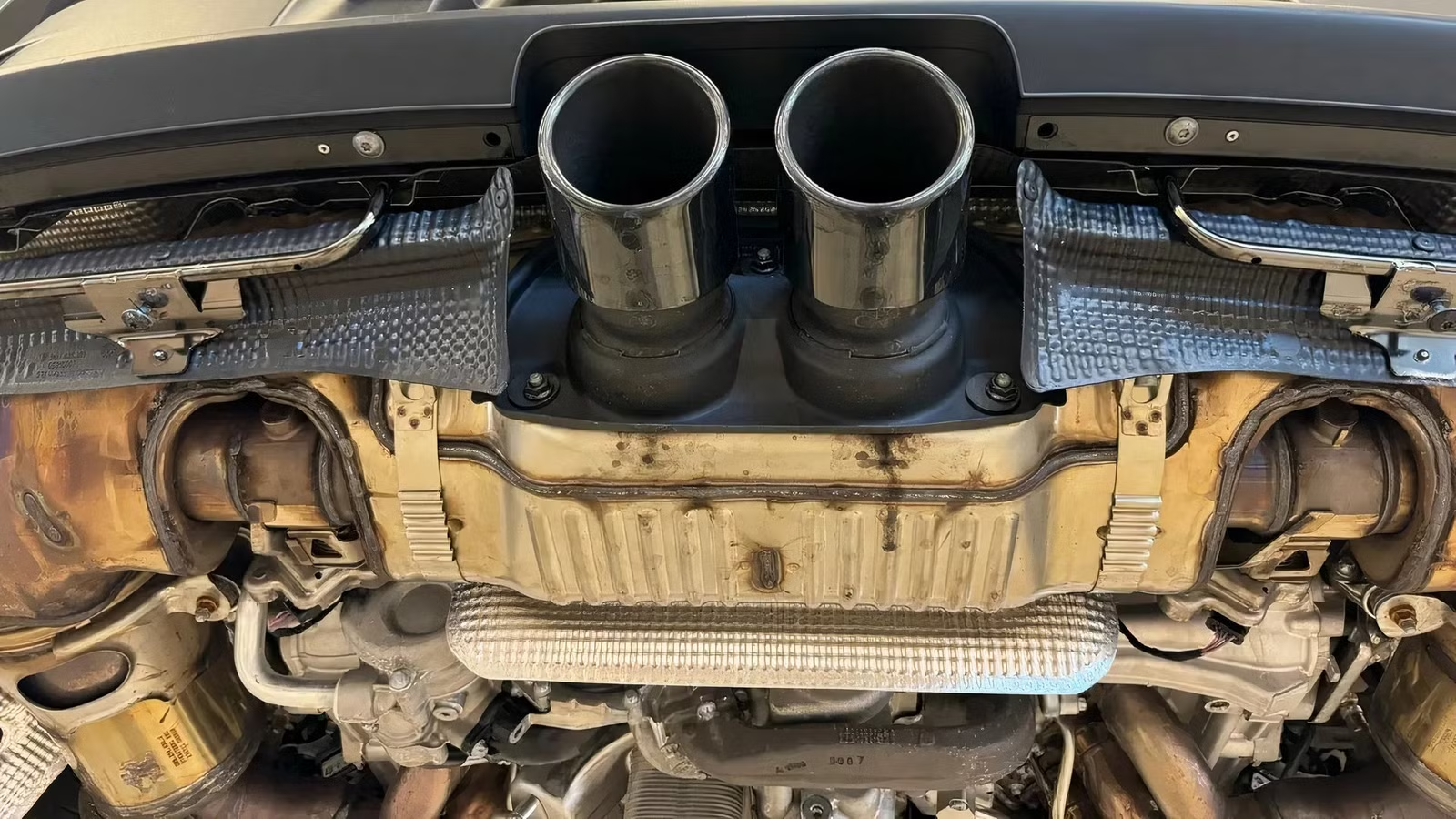
Forced induction has never been more dominant. Turbos and superchargers are everywhere — stuffed under the hoods of family crossovers, economy hatchbacks, and even entry-level sports cars. The pressure to extract more power from smaller, cleaner engines has made the boosted setup the default choice for almost every manufacturer on the planet. Against that backdrop, a naturally aspirated engine that genuinely competes with the best-boosted powerplants isn’t just impressive — it’s a statement. And yet there is one manufacturer still building an ultra-high-performance road car that makes do with just six cylinders and nothing but atmospheric pressure. Its horsepower rating surpasses that of many turbocharged production sixes, and it makes almost 8 hp more per liter of displacement than the extraordinary LT6 V8 in the Corvette C8 Z06, which is the most powerful naturally aspirated V8 engine ever made a benchmark in its own right. This is a sports car that has evolved over many years into this current state of automotive genius.
The Porsche 911 GT3 RS Has The Most Powerful Naturally Aspirated Six-Cylinder Engine
Porsche 911 GT3 RS Highlights
- Its 4.0-liter naturally-aspirated flat-six produces 518 horsepower and 342 lb-ft of torque
- The Porsche 911 GT3 RS will hit 60 mph in 3.0 seconds and a top speed of 184 mph
- It revs up to a stratospheric 9,000 rpm

Let’s get one thing straight: the Porsche 911 GT3 RS is not the kind of car you choose when keeping a low profile is the priority. The GT3 RS may be road-legal, but it looks like it has just returned from a hot lap at the Circuit de La Sarthe. The giant wing, the vents, the purposeful aero protrusions — all of it makes the GT3 RS look like a legitimate race car wearing number plates. No wonder, then, that the clever lightweight construction and the cooling and aerodynamic systems of the 911 GT3 RS have their roots in the road car’s motorsport sibling, the 911 GT3 R.
The 911 GT3 RS’s Engine Has Racing DNA
Another component with genuine racing DNA is the engine. The high-revving 4.0-liter naturally aspirated unit produces 518 horsepower and 342 lb-ft of torque — making it the most powerful of its kind in the world. This flat-six spins all the way to 9,000 rpm and is mated to a seven-speed Porsche Doppelkupplung (PDK) gearbox that runs a shorter overall gear ratio than the one found in the standard 911 GT3.
This gearbox also benefits from some trick aero, with air intakes on the underbody that help it perform under extreme loads during a particularly committed track day. The flat-six takes the car to 60 mph in 3.0 seconds — 0.2 seconds quicker than the standard GT3 — and the top speed is 184 mph in seventh gear.

A Closer Look At The Porsche 911 GT3 RS’s Spectacular Engine
2025 Porsche 911 GT3 RS Specs
|
Engine |
4.0-liter naturally aspirated flat-six |
|
Power |
518 hp |
|
Torque |
342 lb-ft |
|
0-60 mph |
3.0 seconds |
Source: Porsche
The 4.0-liter naturally aspirated six-cylinder engine is an evolution of the 911 GT3’s powerplant, but it has been seriously reworked. Extracting an additional 16 horsepower from an already highly optimized unit demands an enormous engineering effort. Porsche’s engineers fitted new camshafts with modified cam profiles, along with a single-throttle intake system and a rigid valvetrain — both developed directly from the company’s motorsport program. As in the 911 GT3, the engine uses six individual throttle bodies, one per cylinder. This DOHC 24-valve flat-six also features an aluminum block and heads, and direct fuel injection.
The Radiator Set-Up Comes Straight From The Race Track
The Le Mans class-winning 911 RSR and the 911 GT3 R share a very special detail: a central radiator. It might sound unremarkable, but the large, angled central radiator in the GT3 RS’s nose — occupying the space where the front storage compartment would normally sit — is a genuine game-changer. Earlier cars used three radiators, which made it difficult to integrate active aerodynamic elements on the sides.
The 911 GT3 RS features continuously adjustable wing elements at the front and on the two-part rear wing, helping to generate more than 900 lbs of downforce at approximately 124 mph — three times as much as a current 911 GT3. At 177 mph, total downforce rises to 1,895 lbs, roughly equivalent to the curb weight of a Mk1 Volkswagen Golf.
There Was A British Manufacturer That Wasn’t Far Off The Porsche…20 Years Ago

2005 TVR Sagaris Specs
|
Engine |
4.0-liter naturally aspirated straight-six |
|
Power |
400 hp |
|
Torque |
349 lb-ft |
|
0-60 mph |
3.8 seconds |
Source: TVR
While the GT3 RS’s naturally aspirated flat-six is impressive, it’s worth looking back a couple of decades to a company that was also chasing big power without turbochargers. TVR was a British manufacturer that essentially hand-built ferocious sports cars out of a few sheds near a seaside resort. But don’t let that fool you — TVRs were some of the meanest cars in the business. While TVRs were historically associated with V8s, it is arguably the company’s Speed Six engine that really put it on the map.
The Speed Six is a torquey, naturally aspirated powerhouse with an incredible 400 horsepower and 349 lb-ft of torque in models such as the Sagaris. This aluminum straight-six is extremely light and mounted so far back in the chassis that it earned a front/mid-engined designation. The rear-drive Sagaris can hit 60 mph in 3.8 seconds and reach a frankly terrifying top speed of 195 mph.
Getting The Keys To A GT3 RS

Porsche 911 GT3 RS Prices
- New price: From $241,300
- 2023 Used Price: $400,959
- 2024 Used Price: $407,804
Source: Classic.com / Porsche
A Porsche 911 GT3 RS isn’t cheap — but you probably already knew that. Buying one new starts at $241,300, and that’s before options such as the Weissach package, which adds a visible carbon fiber hood, roof, and sections of the rear wing, along with motorsport-derived magnetic PDK shift paddles. The used market offers little relief, either.
According to Classic.com, the average transaction price of a 2023 Porsche 911 GT3 RS is an astonishing $400,959, while the 2024 model year averages $407,804. It’s no surprise that even used examples command such figures, with many Weissach-equipped cars approaching $400,000 on the secondary market. We found this wild-looking 2024 Porsche 911 GT3 RS Weissach that sold for $378,000 in 2025. If that’s a little out of your price range, try shopping for one of Porsche’s most underrated models instead.
Sources: Classic.com; Porsche.com

Related posts




Latest Post



No Comments