
How A Decade-Old Engine Helped Audi Outscore Lexus And Genesis In 2026
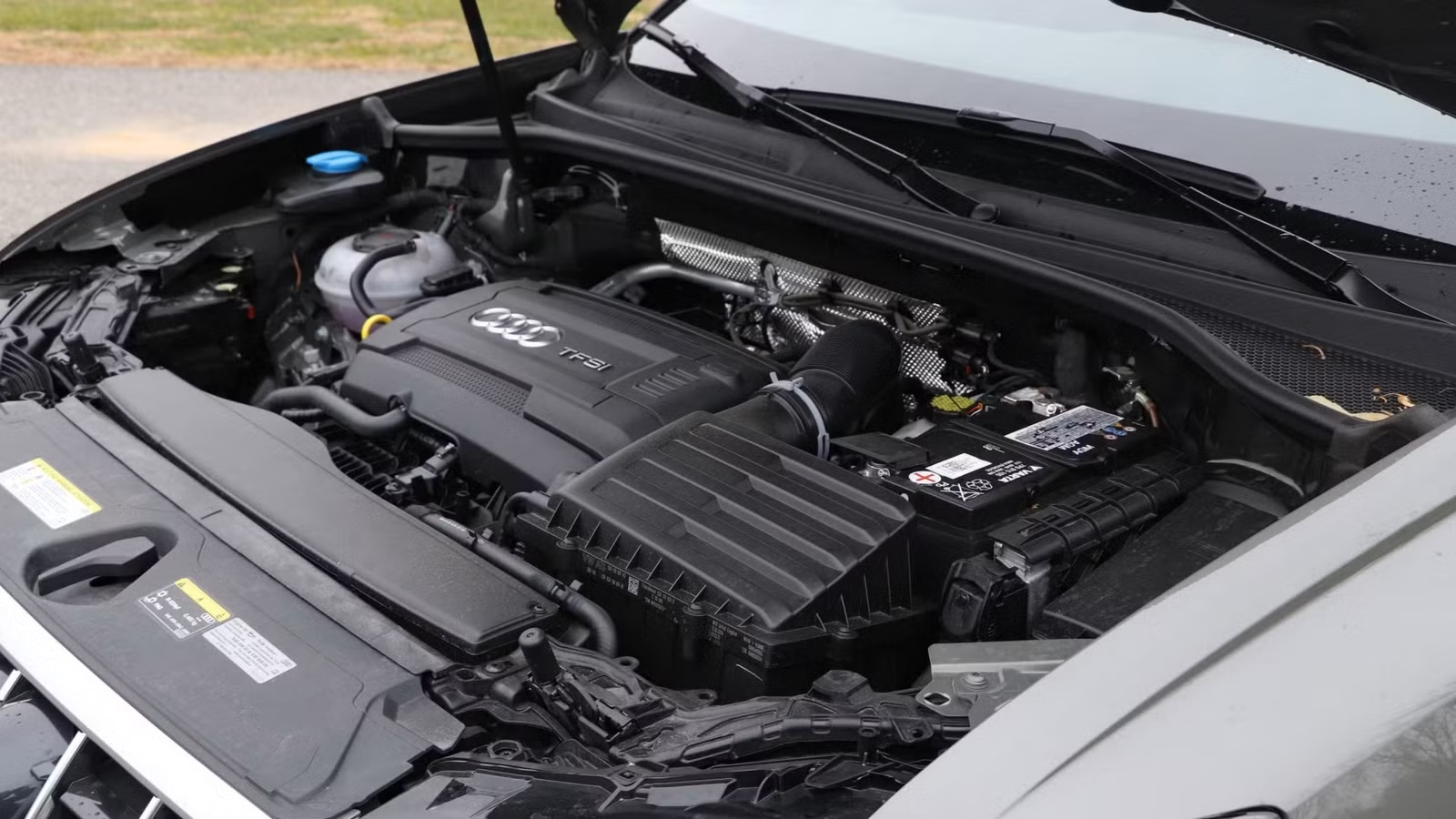
Luxury buyers in 2026 are being told to want the newest thing, which often includes bigger batteries, cleverer hybrids, and more software. Yet a 2025 compact luxury SUV just posted 86 out of 100 in J.D. Power’s Quality and Reliability ranking by doing the opposite. It finished ahead of the Lexus RX at 82 and the Genesis GV80 at 83, and it did so with an engine that has been refined for roughly a decade. The car is fully redesigned, which makes the result stranger still. So how does a German model out-score established reliability names? The answer has less to do with luck than with restraint.
The Reliability Tax Is Growing As Luxury SUVs Add More Complexity

Every new technology has to be paid for twice. Once at the dealership, and again when the first owners discover what the engineers missed. Call it the reliability tax. It is the price a brand pays in survey scores, warranty claims, and owner goodwill when it launches a first-generation system into the real world.
Right now, that tax bill is rising across the luxury segment. Manufacturers are racing to electrify, and every new hybrid architecture brings fresh software, fresh control units and fresh interactions between systems that have never run together at scale.

A shop foreman will tell you that a mature mechanical powertrain ages like cast iron; predictable, understood, and cheap to fix when it does complain. First-year hybrid software, by contrast, tends to age like milk. Updates, recalibrations and warranty visits are all part of the early ownership experience.

This 2025 Audi SUV is the cast-iron case. It is the final year of a generation that reached the U.S. in 2019, so every rough edge has had years to be found and sanded off. In an industry racing to launch the future, that is a quietly strong position.
A Decade Of EA888 Refinement Gives Audi A Proven Mechanical Foundation

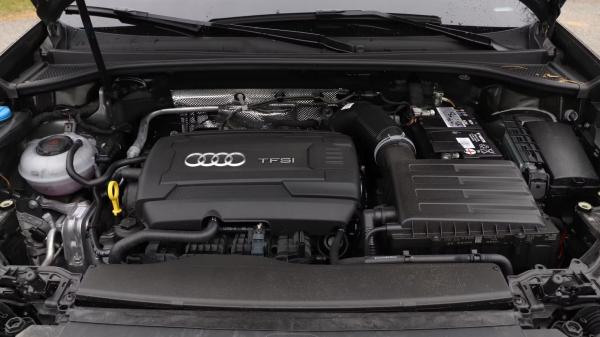
Under the hood sits the EA888 2.0-liter turbocharged four-cylinder, an engine family that has been used in an enormous range of Volkswagen Group vehicles since 2008. In the 2025 Q3, it makes 228 horsepower and 251 pound-feet of torque, sent through an eight-speed automatic to standard quattro all-wheel drive.
That history is not spotless, and it is worth naming the flaws. Early EA888 engines earned a reputation for excessive oil consumption, thanks to piston ring design, and for timing chain tensioner failures that could turn a cheap repair into an engine-out job. Both problems generated years of owner complaints. Subsequent revisions reworked the rings, the tensioner, and the chain, and the engine in the 2025 Q3 is a far later evolution of that design than the one that earned the bad press. Engineers do not get that kind of feedback from a test track. They get it from millions of real-world miles.

The transmission matters too. The 2025 Q3 uses a conventional torque-converter automatic, not a dual-clutch unit, which is the sort of drivetrain choice that tends to avoid the low-speed quirks that dual-clutch gearboxes generally exhibit. Pair it with a platform that has been in U.S. production for seven model years, and you get a car with very few unknowns.
The platform underneath tells a similar story. The Q3 rides on the MQB Evo architecture. It is an evolution of a modular platform that has underpinned a huge range of Volkswagen Group vehicles over the past decade, so the basic structure, suspension geometry, and mechanical packaging have been proven many times over across a variety of VW Group vehicles.

None of this makes the Q3 a performance bargain, and it would be dishonest to pretend otherwise. Edmunds recorded 7.8 seconds to 60 mph, slower than average for the class, and the EPA rates the 228-horsepower version at 20 mpg city, 28 highway, and 23 combined, which is thirsty next to most rivals. Reliability here is bought with a certain old-school thirst and modest pace, not with magic. But for buyers who value a car that simply works, a well-understood engine is the right place to start.
The 2025 Audi Q3 Puts Its Mature Hardware Against Lexus And Genesis

RepairPal puts the Audi Q3’s average annual repair and maintenance bill at $625, against $599 for the luxury compact SUV average. That is close to the pack, but not a bargain. Audi’s reputation for expensive ownership is not overturned by this data; the Q3 simply costs a little more than its class average.
The headline, however, is the owner-reported score. The 2025 Q3’s 86/100 beats the 2026 Lexus RX at 82 and the 2026 Genesis GV80 at 83. The GV80 also scored 83 for the 2025 model year, so the gap holds if you compare like for like on that rival.
One Minor Recall And A Handful Of Complaints Strengthen The Q3’s Early Case
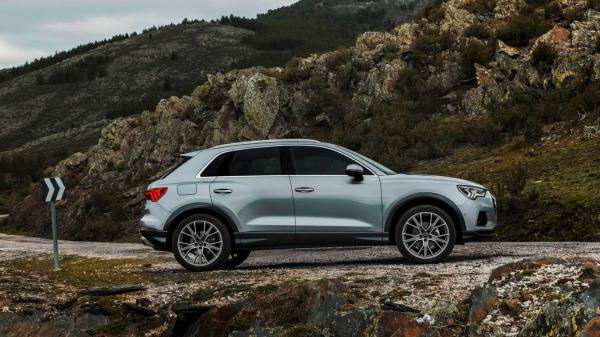
Survey scores are one thing; federal data is another. NHTSA lists a single recall for the 2025 Q3 that includes a software update to its back-over prevention function, issued in February 2025. That is a regulatory software fix, not a mechanical or structural fault. Complaint counts are also low. Depending on the database and the date it was last refreshed, the 2025 Q3 shows somewhere between three and six owner complaints with NHTSA. One tracker puts the average 2025 SUV at 32, so the Q3 sits comfortably below the norm. The most commonly reported areas are small in number and spread across electrical, engine and seat categories, with no pattern pointing at a single weak spot.
It helps to understand what these two data sources measure. J.D. Power gathers feedback from owners about problems they experience, while NHTSA’s records skew toward safety and regulatory issues. When both point the same way, as they do here, the signal is stronger than either alone. A car that scores 86 with owners and draws almost no federal attention is unlikely to be hiding a serious flaw.
Audi’s 86/100 Score Still Faces A First-Year Redesign Reality Check

J.D. Power’s Quality and Reliability figure reflects owner-reported problems early in ownership. It is not a long-term durability study, and the long-term picture for Audi as a brand is less flattering. In J.D. Power’s 2026 Vehicle Dependability Study, which tracks three-year-old vehicles, Audi averaged 244 problems per 100 vehicles. That is better than the 273 of the 2025 study, but well behind Genesis at 208 and Lexus at 151. To its credit, the Q3 placed third in the small premium SUV segment in that study, which supports the case for this model specifically.
So what should a buyer take from this? Treat the 86 as a strong early signal for a 2025 car, not a guarantee. The engine is about as proven as any in the segment, the recall and complaint records are clean, and the model-level score beats two respected rivals. Running costs, however, are merely average, and brand-level dependability still trails the leaders. If you are shopping now, a 2025 Q3 looks like a smart, low-drama choice, particularly if you can find one at a discount as dealers clear their final-year stock.
Sources: Audi U.S., J.D. Power, Consumer Reports & NHTSA

Related posts






Latest Post


No Comments