
The Honda K24 Engine Proves Repairs Aren’t Always The Most Affordable Option
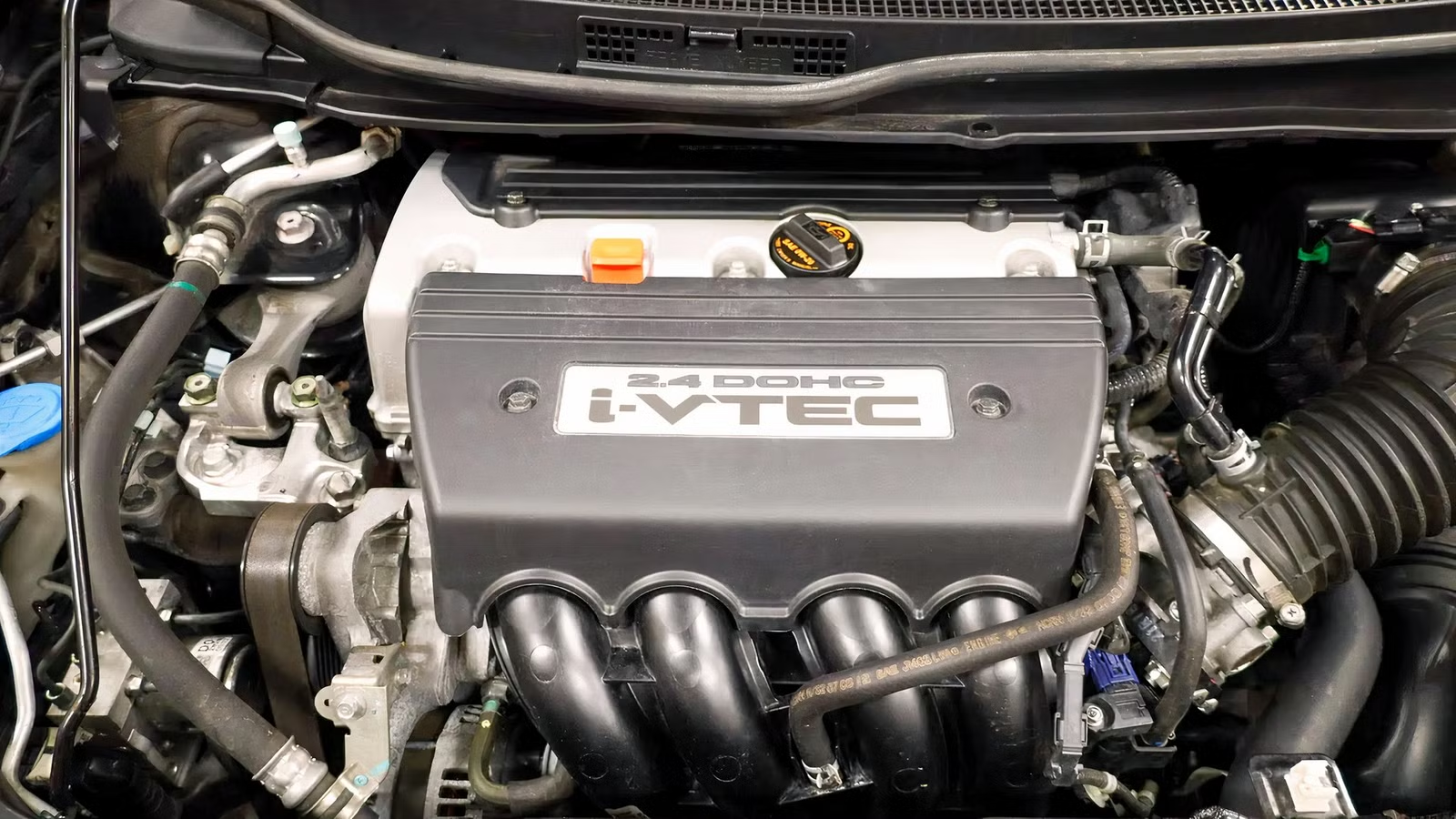
Modern engines can be finicky to maintain; turbocharging means we get what we want from them, but there is more to go wrong. Even some of the clever features of certain engines, like wet belts, which do have their upsides, can make maintenance expensive. This Honda engine removes that complication. It is cheap to buy separately, it can last the miles, and maintenance isn’t that involved.
We Are Paying For Engine Complexity

Buying a used car has always involved some guesswork, but in 2026, a used car with the wrong engine can be expensive. A tidy family hatchback might look like a bargain until a known weakness turns it into an expensive repair.
The issue isn’t that modern engineering is bad. It is that certain designs leave less room for lazy maintenance, and the consequences can be harsh.
Newer Engines Can Turn Cheap Cars Into Expensive Repairs
Thanks to the increasingly useful turbo engines we have today, we can get impressive performance without guzzling fuel. However, the complicated hardware they use can make used turbocharged car ownership different. Direct injection, emissions equipment, and specialist lubrication all deserve consideration when buying, especially in high-mileage engines. Service history helps, but it’s not a guarantee.

An engine’s reputation and replacement cost matter. An older naturally aspirated gasoline engine might lack some of the efficiency of a modern turbo, but its familiar build and large parts supply can make it a sensible choice.
Wet-Belt Failures Can Cost Thousands

Certain small Ford EcoBoost engines and Stellantis/PSA 1.2-liter PureTech engines, as found in European-market models of the Jeep Avenger, use timing belts that run in oil. This helps reduce belt friction and can mean a small improvement in fuel economy.
As the belt deteriorates, though, rubber particles contaminate the system. This can reduce oil pressure, damage components, and in extreme cases, kill the engine. This relatively small component can mean a repair bill that makes no sense for a cheap car.
According to Alderley Autos, it can cost between $3,900 and $6,500 for parts and labor when things go wrong. The 2014–2017 U.S.-market Ford Fiesta is available with an EcoBoost inline-three that uses a wet belt; Edmunds says the average price of the 2014 model is just under $8,400, so spending nearly that on engine repairs doesn’t make sense.
Honda K24 Is The Used-Engine Sweet Spot

Honda has long been known as a brand that builds reliable engines, and this is why the 2.4-liter K24 engine family has become interesting. It is found under the hood of a lot of models in the U.S., like the 2003–2017 Accord, the 2002–2016 CR-V, and the 2012–2015 Civic Si.
It isn’t exotic, nor is it an exceptionally powerful inline-four, but it has built a reputation for covering serious mileage without tons of maintenance. Its timing chain and well-proven mechanical design make it the kind of engine a lot of people choose for dependable daily driving.
Port-Injected K24s Can Reach 300,000 Miles

It isn’t indestructible, and a neglected engine is just that, but the K24 does have a good combination of proven longevity, available parts, affordable replacement options, and a lot of shared knowledge about it. A well-maintained port-injected K24 inline-four can serve you well for hundreds of thousands of miles. The Accord has an iSeeCars-estimated 29.2 percent chance of reaching 200,000 miles, and the Honda Element has a 23.3 percent chance, so alongside plenty of owners attesting to it, there should be a good amount of confidence in the K24.
The K24A4, found in the Accord and Element, offers the same basic appeal. If you want a bit more power, the K24A2 found under the hood of the 2004–2008 Acura TSX produces up to 205 horsepower, and has a more aggressive camshaft and higher-flow exhaust setup, but retains the same basic architecture that prioritizes dependability.
Used K24 Long Blocks Cost Less Than Wet Belt Repairs
If swapping an engine is more your style, a long-block K24—a fully assembled unit with the complete top and bottom end—is surprisingly affordable. On the used market, a complete K24 engine ranges from $800 to $2,500, depending on state of tuning.
If you want to get one with an ECU and a harness, you are looking at between $1,500 and $3,500; specialty examples can be $4,000 upwards. Either way, without labor costs, it is still cheaper than replacing a wet belt on a newer engine.
Finding The Right K24 Matters

If you’re looking for a torquey workhorse K24, the units used in the CR-V and Element put out around 162 pound-feet; if you want something newer and impressively stout, the i-VTEC K24Z7 from the 2015 Civic Si delivers 205 horsepower and 174 pound-feet. The most reliable and easiest to own K24 engines are port injected, but over the many years it has been around, Honda changed how some things work.
K24W Earth Dreams Engines Brought Direct Injection And Carbon Buildup
The later K24W Earth Dreams family introduced direct injection in the 2013–2017 Accord, 2015–2020 TLX, and 2015–2019 CR-V. Instead of spraying fuel into intake ports, the injectors deliver it straight into the combustion chambers. That means better combustion control, but it also means gas doesn’t wash over the intake valves. Oil vapor can build up and affect airflow.
Cleaning may be needed to prevent carbon baking, and though it doesn’t make Earth Dreams engines unreliable, if you want simpler maintenance, the port-injected engines are a better choice. Always check the VIN and engine code; the K24W has a different fuel system and hardware, so it’s not a straightforward drop-in for earlier engines.
Cold-Start VTC Rattle Is The Flaw To Check

For all the good things about the K24, a known fault is a metallic rattle on cold startup, often associated with the VTC actuator. It may only last a couple of seconds as oil pressure builds, but ask the seller to leave the engine cold before you look at it, then listen carefully. The rattle is easier to hear when the engine is cold.
If you hear the noise persisting, you shouldn’t automatically assume the actuator, though. Timing-chain tensioner wear and oil-related problems can do the same. Check for leaks and warning lights, and ask how much oil is used between changes.
A $4,000 Honda Can Still Have A Million-Mile Engine

According to Kelley Blue Book, the 2002 CR-V, and its 160-horsepower/162-pound-foot K24A1, has a fair purchase price of between $3,750 and $4,350. It is low-stress, well-built, and it is cheaper than buying a vehicle with other “million-mile” engines.
Not all K24s are indestructible, and all will need some maintenance. Given the low cost of maintaining something like a CR-V (RepairPal says $407 annually), whether buying a complete vehicle to pull the engine or just buying the engine outright, the K24 hits the sweet spot for long-term reliability. Just make sure you get all the service history, and check specific engine codes and condition before trying to drop it into something.
Sources: RepairPal, iSeeCars, Kelley Blue Book, Edmunds, Auto Hints, and Alderley Autos.

Related posts




Latest Post


No Comments