
This Classic Camaro Is Still A Bargain Because It’s Ugly
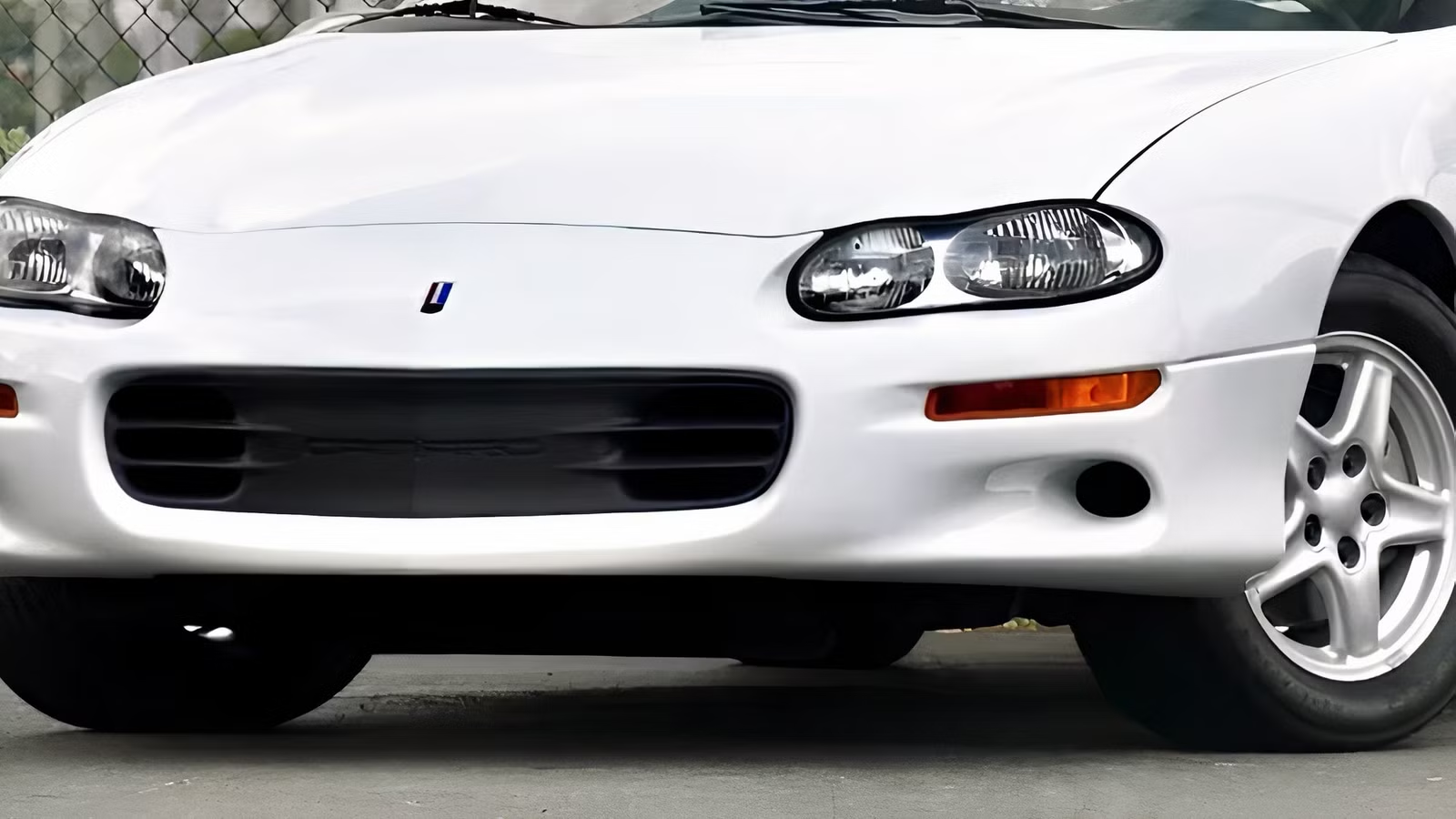
Muscle cars are striking, that’s sort of the whole point of the way they look, but a pony car? There’s an argument to be made that they’re just flat-out pretty. The Chevy Camaro is probably the best example of that. Especially in its first generation, the Camaro had a look about it that was a bit more subdued than an Impala or a Chevelle. Heck even modern Camaros from the 2010s and 2020s sure are lookers, but that doesn’t mean every Camaro was dashing. In fact, one of them was so ugly, their resale values have never up-ticked from the moment their standard depreciation cycles ended.
The Camaro: A Pony Car That Succumbed to Adipose

As we’ve established, the Gen-I Camaro was that perfect combination of suave and just a little bit brutish. At a time when the Mustang was growing more muscly and larger with every passing model year, the Camaro of 1967 to ‘69 managed to stay relatively consistent in its proportions. Of course, three model years in total over one generation isn’t exactly a lot of time to pack on the pounds. Meanwhile, the first-generation Mustang had the better part of a decade for its front grille to get wider, its hood to lengthen, and its fender flares to bulge out like a juiced-up body builder right before competition day.
With that said, every subsequent Camaro generation thereafter for the rest of the 20th century managed to swell a little bit with each design refresh. A second-generation Camaro was considerably heavier than the first, with Gen-IIs gaining a solid three inches in length compared to the inaugural 1967 model year, as well as two inches wider. Newly-instated federal safety and emissions regulations made this something of an inevitability, and it was just as true of the Camaro’s F-Body compatriot, the Pontiac Firebird.

By the time the 1980s rolled around, the third generation attempted to shed some of that weight, mostly by axing any pre-existing engine in the lineup bigger than 350 cubic inches. Still, the overall footprint remained imposing as the styling morphed into a sharp, angular brick. Truly, those blocky Gen-III were a product of the time, trading classic curves for the geometric styling cues native to the MTV generation. Then again, you could at least still call the styling “Camaro-coded,” something you couldn’t exactly say moving into the ’90s.

Re-Imagining the Camaro From Scratch

If you’re on the younger side, it’s hard to fathom just how quickly the styling cues of the 1980s became tacky and gauche by the turn of the 1990s. Nowhere was that more obvious in the GM lineup than with the F-body. Underneath, the fourth-generation F-body was already quite different from those of old. Debuting in 1993, GM went to great lengths to rid the form factor of its “only good in a straight line” reputation by ditching the antiquated steering box for a modern rack and pinion setup and completely redesigning the front suspension with short and long control arms.
This undoubtedly made Gen-IV F-bodies more competent performance cars, but the biggest change came in the form of ditching the positively ancient iron-block small-block V8 in favor of the aluminum-headed 5.7-liter LT1 engine. Naturally, annoying corporate politics immediately got in the way of the F-platform reaching its true potential. To avoid insulting buyers who had just spent top dollar on a Corvette, performance was sandbagged to between 275 and 285 horsepower depending on the model and trim.

Though, independent testing revealed the engine was capable of considerably more. In its entirety, the F-platform was supremely capable compared to its predecessors. It handled better, accelerated faster, and contained far superior technology. All of that should’ve been something to celebrate, had the body over the top been nicer to look at.
The Catfish Camaro: Powerful, Capable, But Not Nice to Look at

Time skip to 1998, and we find that Chevy and Pontiac took two different roads when it came to styling their respective F-body sports cars. Pontiac opted to give the Firebird Trans Am exactly what muscle car buyers actually wanted. Especially if you opted for the provocative WS6 package, you received an aggressively menacing coupe complete with sharp pop-up headlights and twin ram air nostrils flared out on the hood. In every way, it was a spiritual successor to the Firebirds of old.
Yet, on the Chevy side of things, the design team smoothed over the front fascia even further, leaving a gaping oval-shaped grille that looked completely devoid of pony car aggression. It took about five seconds for enthusiasts to realize it looked exactly like a bottom-feeding aquatic creature, and the mockingly affectionate “Catfish Camaro” moniker was permanently cemented into automotive history. Compared to the equivalent Mustang, the Catfish Camaro almost looked like an economy car maxed out on growth hormone.
On looks alone, you’d be forgiven for forgetting the Catfish years were the first to feature an LS-based V8 in a Camaro, specifically the same LS1 you’d find in a C5 Corvette. The 1998 to 2002 Catfish Camaro might have had a face only a mother could love, but it packed enough raw, naturally aspirated horsepower to hold its own against most things on the road. Then again, that ugly face had another effect. Specifically, on the resale price.
An Affordable Classic Camaro

Because the Chevy faithful usually detest how it looks, used market prices on late Gen-IV Camaros haven’t risen exponentially in quite some time. Depending on the mileage and the trim, you can find 1998 to 2002 Camaros on websites like Bring a Trailer for as little as $5,000, and a really nice one seldom sells for more than $25,000.
You really can’t say the same about the equivalent Trans Am, let alone a WS6. Then again, if all you care about is cheap LS power, a Catfish Camaro is basically an IRL cheat code. Just not one you’ll want to look at for more than five seconds at a time.
Source: Bring a Trailer

Related posts






Latest Post




No Comments