
The 25-Year-Old Engine Suzuki Just Put In A Brand-New Motorcycle
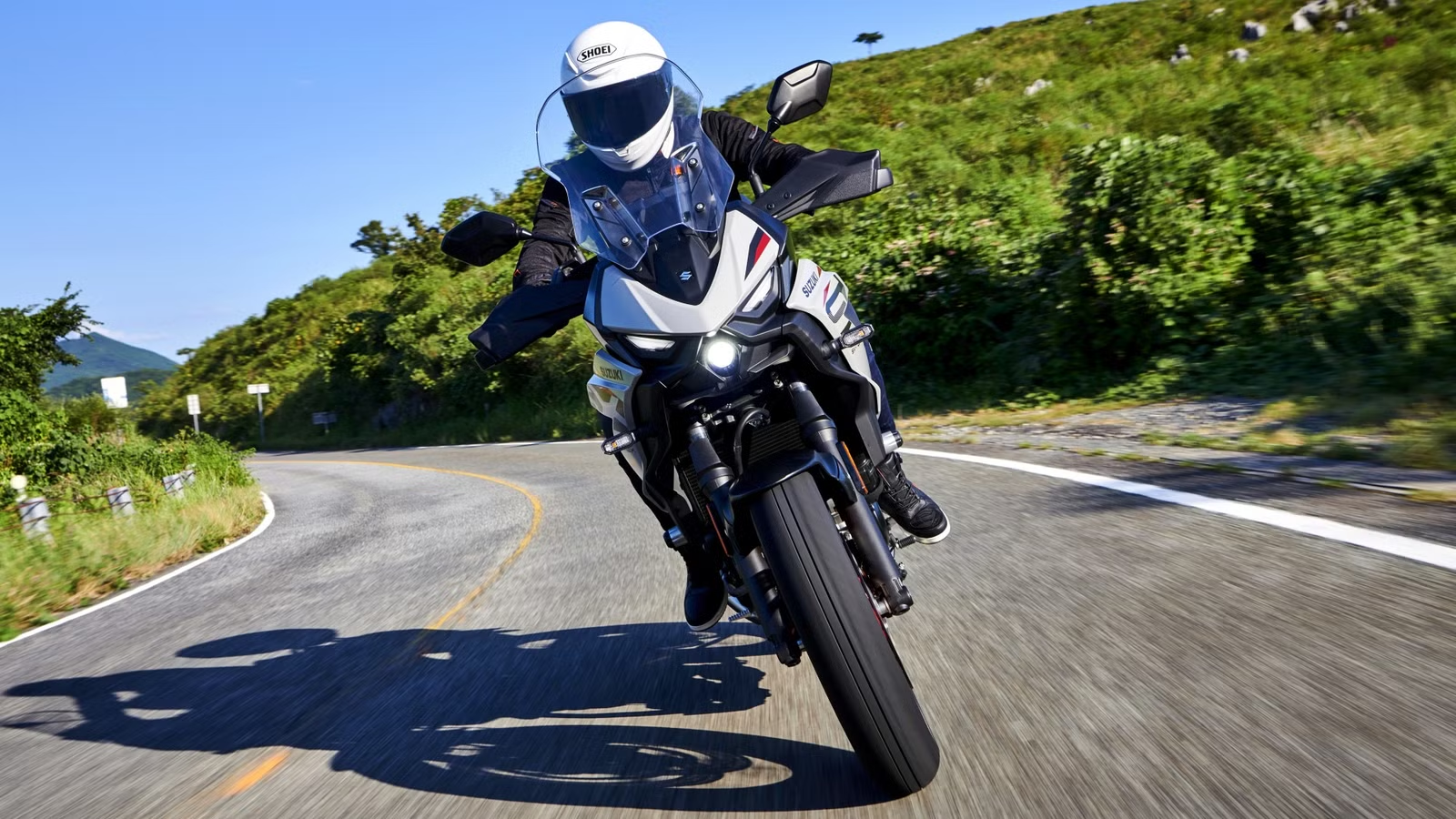
Buying the first year of a new motorcycle usually means signing up as an unpaid test rider. The engine is fresh, the service data is thin, and nobody knows yet which parts will wear out first. Suzuki’s newest middleweight skips that problem entirely. Its engine first went on sale in 1999, in the original SV650. On paper, that looks like a company cutting corners. On the road, it might be the most rider-friendly decision Suzuki has made in years.
Suzuki Has Always Tried To Recycle Popular Engines

Suzuki has never been shy about giving a good engine a second life. The clearest example is the 999cc inline-four from the 2005 GSX-R1000, known to enthusiasts as the K5. A decade after it first powered a superbike, Suzuki retuned it for the street and built the GSX-S1000 naked bike around it. Then it wrapped that same package in retro bodywork and called it the Katana. Suzuki’s argument was that the engine was proven, reliable, and still made plenty of power, and riders bought into it.
And The Brand’s 25-Year-Old V-Twin Continues To Make Sense

The 645cc V-twin has followed the same path. After launching in the SV650, it went on to power the V-Strom 650 adventure tourer from 2004 and the SFV650 Gladius from the 2009 model year, before returning in the third-generation SV650 for 2017. Each time, Suzuki refined the engine instead of replacing it, and each time, the bike built around it had a head start on reliability.
Suzuki does have a newer engine on the shelf. Its 776cc parallel-twin powers the GSX-8 family, and it is the type of engine most rivals now build their middleweights around. Yet for its newest crossover, Suzuki went back to the V-twin. The 90-degree layout is naturally smooth without extra balancing hardware; it delivers the kind of off-beat character a parallel-twin has to imitate with a 270-degree crank, and it still meets Euro 5+ emissions rules in Europe. More importantly, it has nothing left to prove.

The 2027 SV-7GX Puts The SV650’s V-Twin In A Sport Crossover

The 2027 Suzuki SV-7GX costs $8,599 in the US, while the SV-7GXV costs $8,399. The two share the same equipment, and the $200 difference comes down to the GXV’s single Pearl Brilliant White paint option. For reference, the GSX-S1000GX+ that lends the SV-7GX its styling lists at $18,749, roughly $10,000 more. Suzuki calls this bike a crossover, pitching it as a blend of a standard motorcycle’s everyday usability with an adventure bike’s comfort and versatility.
What Makes The SV’s Engine Still Relevant Today

The SV-7GX uses the same basic SV650 engine, right down to its 81mm bore and 62.6mm stroke. It makes 72.4 horsepower at 8,500 rpm and 47.2 pound-feet of torque at 6,800 rpm, sent through a six-speed gearbox. Those numbers carry plenty of real-world punch for a middleweight, and the delivery is what sells it. Suzuki describes the torque curve as broad and linear, so the bike pulls cleanly from low revs without needing to be wrung out. New ride-by-wire throttle bodies sharpen the response further and open the door to modern electronics.
25 Years Of Owner Data Beats A Clean-Sheet Spec Sheet

A clean-sheet engine arrives with promises. This one arrives with a record. In the years after its 1999 debut, the SV650 became the bike to beat in twin-cylinder club racing, with one-make SV series springing up in both the US and Europe. Racing is a brutal durability test, and the engine passed it. Two and a half decades in production also mean a deep aftermarket, wide parts availability, and independent mechanics who already know the engine inside out. Suzuki itself has long marketed the platform on its long-term reliability, and for a buyer, that track record is worth more than any spec-sheet win.
The Underpinnings Are Simple, But There’s More Tech Than Ever

The chassis keeps things straightforward. A tubular steel trellis frame from the SV650 carries a 41mm KYB fork and a KYB link-type rear shock with adjustable spring preload. Tokico brakes handle stopping duties, and the 17-inch cast aluminum wheels wear Pirelli Angel GT II tires. A 4.6-gallon tank sets it up for longer rides, and curb weight is listed at 465 pounds.
The electronics are where the SV-7GX moves well past any SV650 before it. Ride-by-wire enables three power modes, multi-level traction control that can also be adjusted independently, and a bidirectional quickshifter that works on upshifts above 2,000 rpm and downshifts above 1,700 rpm. Suzuki’s Low RPM Assist raises engine speed slightly when pulling away to help prevent stalls. A 4.2-inch color TFT with Suzuki Ride Connect+ smartphone connectivity, an adjustable windscreen, and integrated hand guards complete the package.
The SV-7GX Isn’t The Newest Middleweight, And That’s The Point

The SV-7GX has honest weaknesses. At 465 pounds, it is about 24 pounds heavier than the naked SV650, and riders will feel that extra mass in tight parking lots. Its engine also won’t win any spec-sheet battles, since some parallel-twin rivals match its power and offer a little more torque.
But spec sheets don’t tell you which engine will still be running sweetly at 50,000 miles, and this one has already answered that question for a quarter-century of owners. The SV-7GX pairs a motor with nothing left to prove with the electronics and comfort riders expect from a modern crossover, and it does it for $8,599. For anyone who wants one middleweight for commuting, back roads, and weekend trips without beta-testing a brand-new engine, the oldest motor in the class might be the smartest buy in it.
Sources: Suzuki Motor USA

Related posts





Latest Post




No Comments