
The Tourer That Doesn’t Feel Like A Boat Around Town
A long-distance motorcycle can feel perfectly at home swallowing miles of interstate, then suddenly seem twice its size when you are trying to manage it backwards in a mildly sloping parking space. The generous proportions are part of what makes them so effective once the journey gets serious, but also what makes them a bit clumsy in slow-speed scenarios.
Plenty of riders spend far more time dealing with traffic, tight turns, and short urban trips than crossing state lines. For them, touring ability is only half the job. The motorcycle also needs to feel easy and natural when the speedometer barely leaves double digits, without giving up on the comfort, range, and carrying ability that make their weekend riding worthwhile. Triumph has the experience of making both kinds of motorcycles and seems to have realized the need for middleweight tourers.
Touring Ability Does Not Have To Come With Touring Bulk
Large touring motorcycles make the most sense when distance, load, and passenger comfort take priority. Their size buys space for people and luggage, broader weather protection, and the planted feel riders appreciate after hours on the interstate. Those strengths are difficult for a compact middleweight to reproduce, and there is no reason to pretend otherwise.

The drawback of these bulky touring motorcycles, however, appears when that capability is carried through town every day. More mass takes more effort to control at walking pace, longer wheelbases need more room to turn, and wide bodywork or hard luggage can make tight gaps feel tighter, let alone fitting into tight gaps and parking spaces. Experienced riders adapt, but a daily motorcycle can still benefit from simply being less in those routine moments.

Going smaller only works if the touring side survives the crash diet. A naked bike with a taller screen may be easy in traffic, yet still leave its rider wanting better wind protection, passenger space, fuel range, or luggage provision once a trip stretches beyond a few hours and miles. The middle ground is not simply low weight, but it is touring hardware packaged around road-bike proportions to excel at both without much compromise.
Keep the wheels, steering geometry, and overall mass close to a conventional street bike, then add the comfort, range, electronics, and carrying options needed for travel. The result should feel normal around town first and ready to leave it second. That is exactly the balance Triumph has pursued with its middleweight sport-tourer, having found its roots in a roadster.
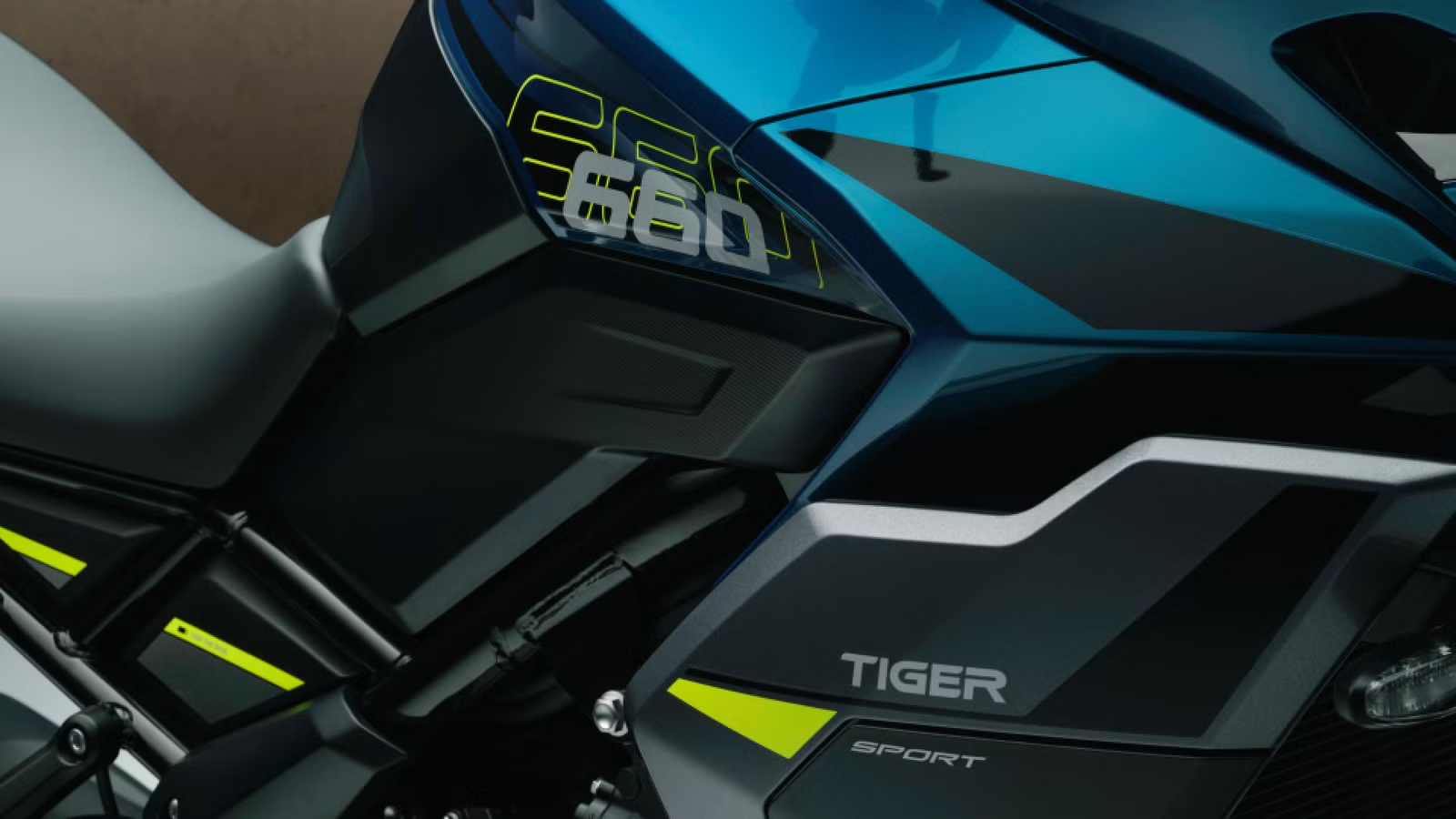
The 2027 Triumph Tiger Sport 660 Keeps Its Size In Check

The 2027 Triumph Tiger Sport 660 starts at $10,295 in Pure White and weighs a claimed 465.2 pounds wet. Its 55.8-inch wheelbase, 23.1-degree rake, 3.8 inches of trail, and 17-inch wheels put it closer to a sporty road bike than a heavyweight tourer. More importantly, those dimensions matter most when speeds drop, and quick steering inputs become essential. The standard seat is 32.9 inches high, with an optional low seat reducing that to 31.9 inches. It is not unusually low, but the combination of manageable mass and leverage makes awkward parking maneuvers less intimidating.
Its Chassis Makes Slow-Speed Riding Less Of A Chore

Showa suspension provides 5.9 inches of travel at both ends, enough movement to deal with broken pavement and speed bumps without giving the Tiger the tall, loose feel of an off-road-focused ADV. The rear shock also gets remote hydraulic preload adjustment for easy adjustment to altered load with a passenger or luggage. The compact wheelbase, upright riding posture, and road-biased 17-inch wheels encourage quick direction changes, making the Tiger Sport 660 light to steer and easy to transition from side-to-side. It behaves like a manageable road bike where a larger tourer’s extra mass is most noticeable.
The Revised 660 Triple Works With Traffic Rather Than Against It

Triumph substantially revised the 660cc inline-triple in 2026. It now produces 94 horsepower at 11,250 rpm and 50.2 pound-feet of torque at 8,250 rpm. Triumph claims that at least 80 percent of maximum torque is present from 3,000 rpm to almost 12,000 rpm. That broad spread of torque helps most around town, where trundling about without having to constantly shift mitigates fatigue, while passing on the highway is just as easy. Helping things further here, the revised fueling was calibrated for smoother low-rpm throttle openings.
The Tiger Sport 660’s Touring Ability Remains Uncompromised

Urban manners would mean little if the Tiger became tiring once a trip stretched into hundreds of miles. A larger 4.9-gallon fuel tank was put in place for the 2026 update, while revised bodywork improved wind protection. The windscreen adjusts with one hand, cruise control is standard, and the relaxed rider triangle gives enough room to settle in comfortably on the highway.

Road, Rain, and Sport modes broaden the bike’s usefulness in various conditions, while cornering ABS and traction control add to the layer of electronic safety. The Tiger isn’t a luxury tourer by any means, but it simply adds the long-distance conveniences that a compact motorcycle needs if it is going to be anything more than an easy commuter.
Touring Equipment Can Be Added Without Living With It Every Day

Optional hard luggage strengthens the Tiger Sport 660’s touring prowess because carrying capacity can be added when a road trip plan comes to fruition rather than permanently widening the motorcycle. Heated grips and comfort accessories are also offered. Set up lightly, it stays easy to thread through daily traffic. Equipped for a weekend, it gains the practicality that a trip demands.
There are, however, limits to the Tiger Sport’s abilities. The non-adjustable fork favors accessible road use over elaborate fine-tuning, and frequent two-up travelers may want more room, weather protection, and luggage capacity. The Tiger Sport clearly isn’t chasing larger tourers at their own game, but it works because it covers enough of the same ground while remaining easier to manage when the journey returns to town.
Source: Triumph

Related posts



Latest Post


No Comments