
London’s new self-driving taxis spark safety and traffic concerns
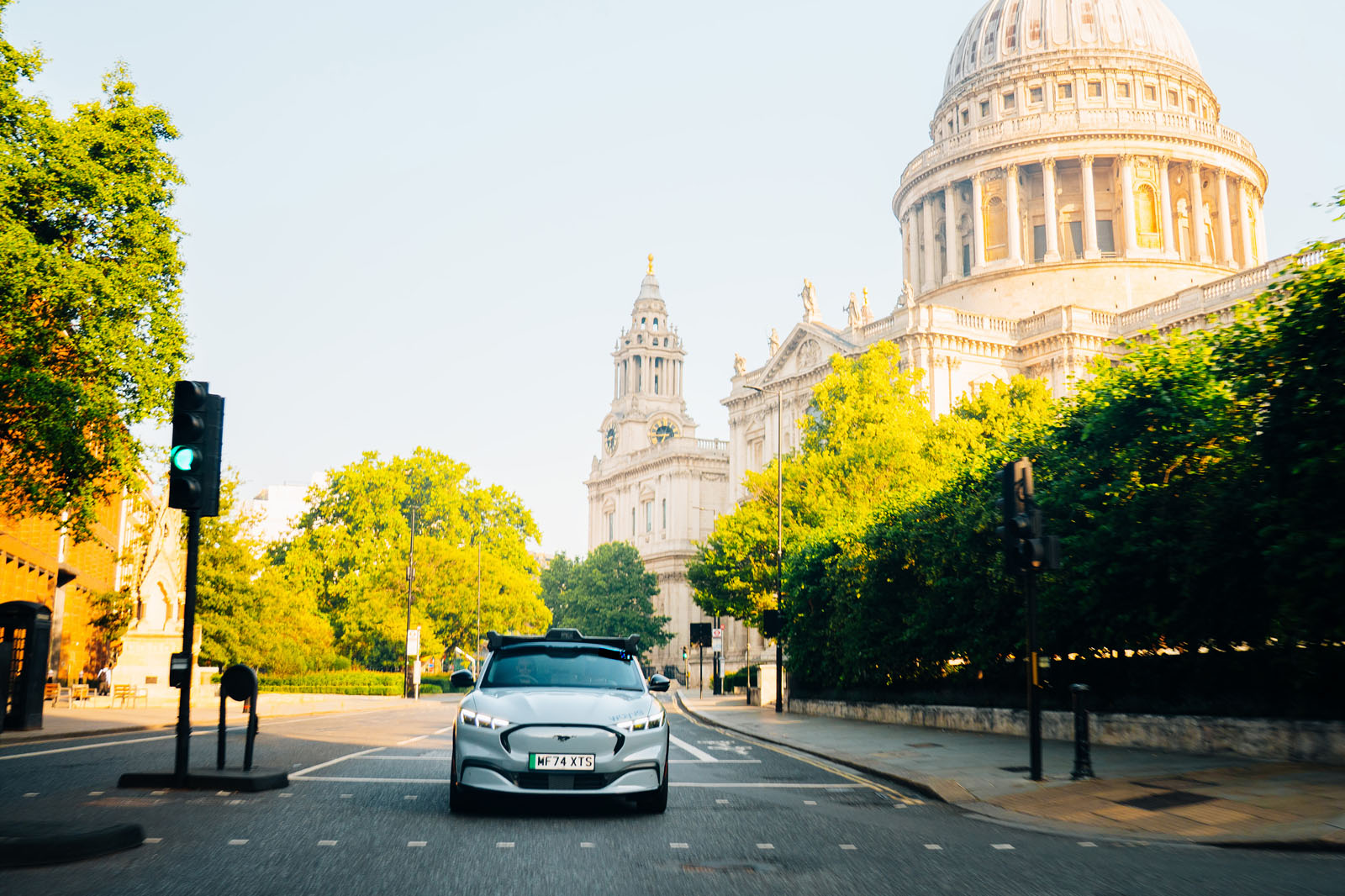
Are robotaxis ready to operate safely or a service cities should avoid?

Following the launch of Uber’s autonomous ride-hailing cars in London, experts have told Autocar the technology is ready for a wider rollout – but some claim it is not the right solution for the capital’s congested streets.
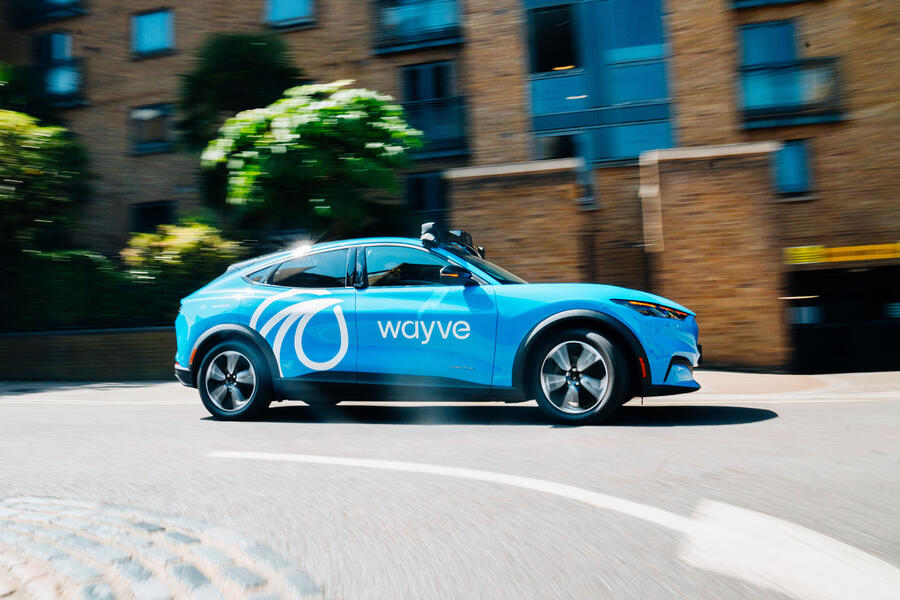
Uber launched the UK’s first autonomous taxi service in September, after being granted permission to operate the cars by Transport for London (TfL). The 15 electric Ford Mustang Mach-Es deployed by the firm in the capital are guided by artificial intelligence developed by Wayve, a UK company. Supported by GPS maps and sensors, the system, dubbed ‘AV 2.0’, learns from experience to navigate streets and avoid road users without using conventional high-definition mapping of the environment and hard-coded rules to control its responses.
Passengers can hail an autonomous Uber via the company’s app. TfL requires that a supervising driver is present in each car, to intervene if necessary, until regulatory approval by the government and the DVLA permits the cars to travel without one.

Kevin Vincent, director of Coventry University’s Centre for Connected and Autonomous Automotive Research, welcomed the launch of Uber’s autonomous vehicles.
“The UK is one of the safest countries in the world for road transport but there are still some 1600 deaths on the roads each year, while up to 90% of accidents are attributable to human error,” he said. “Self-driving vehicles will not only be safer but eventually they’ll also be more accessible and more time and energy efficient, so they’ll reduce congestion and emissions.”
Vincent said technology exists that enables self-driving cars to operate in all environments and scenarios so the only obstacle to their introduction is regulatory approval.
“We’re just waiting for the final pieces of legislation authorising the vehicles to drop,” he said. “Service providers will then have to demonstrate their vehicles are safe and gain permission to use them from the secretary of state and the various agencies.
“Regarding who is liable in the event of an accident involving a self-driving car, the Automated and Electric Vehicles Act 2018 is clear that it rests with the vehicle operator or manufacturer and not the human occupant.”
In the US, where self-driving taxis are permitted to operate in certain states, statistics suggest the vehicles are involved in fewer accidents than cars driven by humans. However, researchers at the University of Central Florida found that in low-light conditions such as at dawn or dusk they were five times more likely to be involved in an accident, and when turning twice as likely.
Although Vincent believes autonomous cars are safer than conventional vehicles, he says much of the data emerging from the US emanates from the makers and developers of self-driving vehicles.
“There’s a lot of self-reported data about how safe they are,” he said. “How accurate it is is up for debate. Given the number of passenger-ride miles that are claimed in the US, then (robotaxis) would seem to be a very successful service. However, the approximate total size of the Waymo fleet in the US is less than one-tenth of the number of yellow cabs in New York, so there’s still a way to go until we get parity with accident figures relating to cars driven by humans.”
In London, some users of Uber’s self-driving service have reported occasions where the cars misjudged what was happening in front of them. For example, one occupant said their car mistook a vehicle parked in the middle of the road in Whitehall as being at the back of a queue, so it also stopped. After a pause, the supervising driver had to take over and drive around the parked vehicle.
So-called ‘edge cases’ like this are often cited as evidence that self-driving cars are not up to the task of correctly judging the infinite variety of scenarios they will encounter. Vincent disagrees: “It’s resolvable and the cars have the technology to learn from every edge case they meet.”
However, Adam Tranter, formerly West Midlands cycling and walking commissioner under mayor Andy Street, believes one way that operators of robotaxis and regulatory agencies may in future solve the most stubborn edge cases is by changing laws to make life easier for self-driving cars.
“I have heard politicians bemoan London’s culture of what they call ‘jaywalking’,” said Tranter. “They say it makes London a difficult place for robotaxis to operate and so I wouldn’t be surprised if banning pedestrians’ freedom to cross roads where they like is on their agenda. Already we’ve seen barriers erected around crossings intended to corral pedestrians.”
Tranter added that robotaxis are not the answer to London’s transport needs. He said: “London does not need more cars. Occupancy averages just 1.2 people per car, while because for up to half the time they are empty, robotaxis average less than one occupant.”
Responding to Tranter’s comments, Wayve said the company expects greater shared use of its self-driving fleet and more efficient routing.
On the question of controlling pedestrians and banning practices such as jaywalking, Wayve said such measures would not be necessary: “Jaywalking is very common in London, and through experience and simulation, our AI Drive technology is prepared for such interactions and is proven to reduce accidents.”

Related posts





Latest Post


No Comments