
Peugeot Hypersquare: The Square Steering Wheel Explained
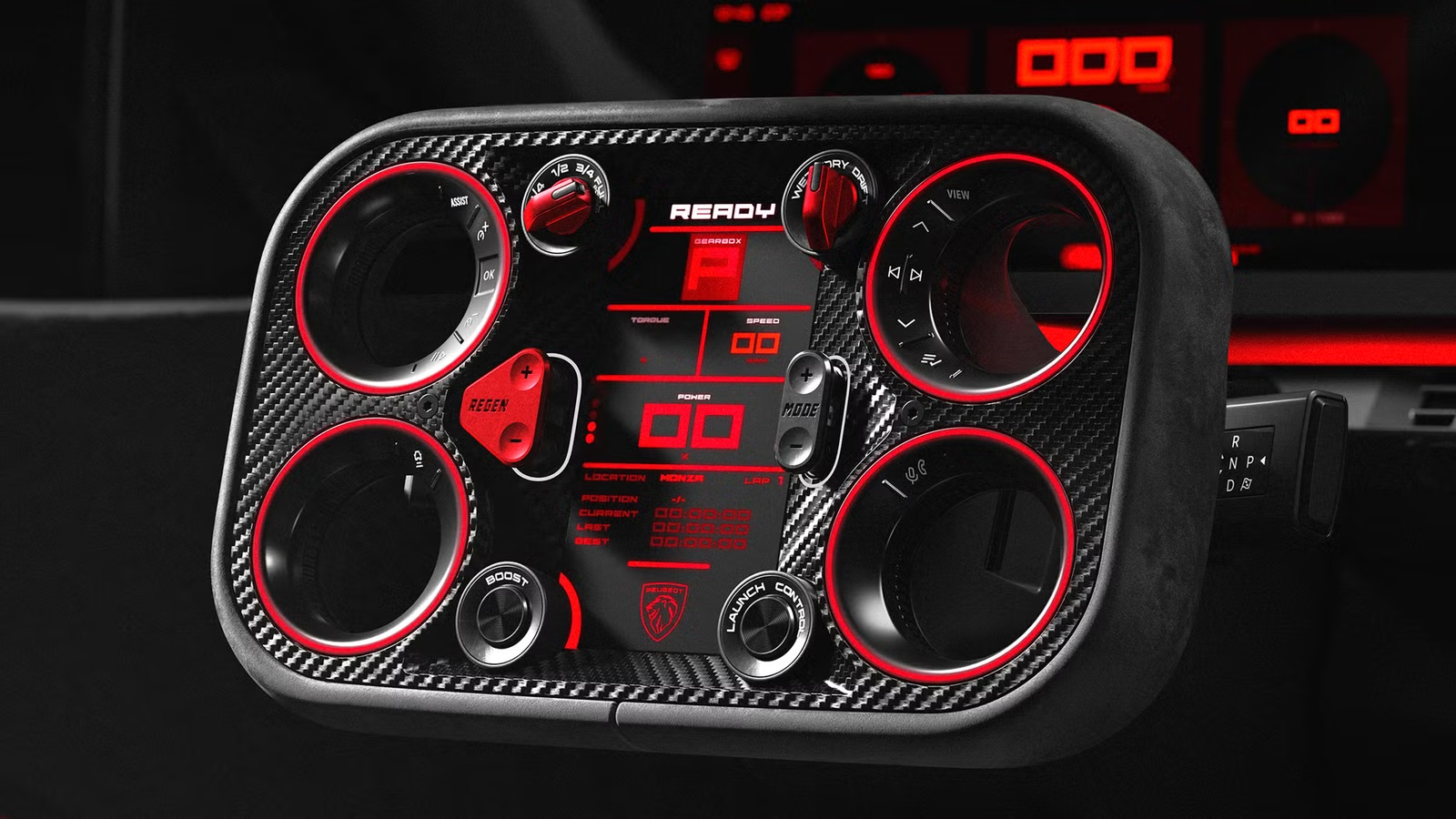
Peugeot unveiled the E-T16 Concept at the 2026 Paris Motor Show on October 12, and the headline isn’t the 816-hp tri-motor powertrain or the 2.5-second sprint to 62 mph. It’s the steering wheel, or rather, the thing that used to be a wheel. Peugeot calls it the Hypersquare, and it ditches the circle entirely for a squared-off control surface studded with buttons and a central display, all wired into a steer-by-wire system with no mechanical link to the front axle.

That’s a more radical move than it sounds. Tesla caught years of grief for the Cybertruck‘s yoke because the yoke was still, underneath it all, a regular wheel with the top chopped off. The steering column underneath was conventional, which meant drivers still had to shuffle their hands around a rim that no longer had a full rim to grab. The Hypersquare isn’t trying to be a wheel at all, and that distinction is the whole story.
Why Steer-By-Wire Finally Makes A Square Wheel Make Sense
On a normal car, the steering wheel is physically tied to the front wheels through a column and a rack, which is why you need a couple of full rotations to go lock to lock and why parallel parking turns into a hand-over-hand shuffle. Steer-by-wire cuts that link. Driver input goes to a computer, and electric motors handle the actual turning at the wheels. Once software is calibrating the ratio instead of a fixed mechanical rack, the car can respond differently depending on speed.

Peugeot’s version leans all the way into that. At parking-lot speeds, a small twist of the Hypersquare means full lock. At highway speeds, that same hand movement gets dialed way down so the car stays calm and predictable. Because the input never needs to rotate very far in either direction, there’s no functional reason for it to be round anymore. That’s what opens the door to a square full of buttons and a fixed display that stays right where the driver’s hands already are.
Peugeot Says It Delivers Precision, But Feel Is Still Simulated

The Hypersquare traces its inspiration to the steering control on Peugeot’s 9X8 Le Mans prototype, and the E-T16 version is tuned for performance. It integrates a configurable central display showing speed and lap-timing data, something Peugeot says is a first for the Hypersquare, and the automaker claims the layout gives drivers access to key functions with a simple finger movement during sporty driving. Combined with the specially calibrated steer-by-wire tune, Peugeot says the Hypersquare delivers “exceptional precision and agility.”
That claim comes with an asterisk every steer-by-wire system shares: without a mechanical connection between the wheel and the front axle, every bit of resistance and feedback a driver feels is simulated by software. Whether that can feel as natural as a well-tuned mechanical rack, especially when a driver is trying to catch a slide with the Hypersquare’s hydraulic handbrake engaged, is still an open question. Steer-by-wire itself isn’t new — the Cybertruck and Lexus RZ both run it — but the Hypersquare is one of the first designs built around what the technology makes possible instead of just trimming parts off a conventional wheel.
Peugeot Isn’t Treating This As A One-Off Show Stunt

Peugeot has already put the Hypersquare on multiple concepts, including a toned-down variant called Polygon built for a non-performance everyday car, and the automaker says the Hypersquare in some form will carry over to the next-generation E-208. There’s a demo unit on the floor at the Paris show for anyone who wants to put hands on it rather than take the press release’s word for it. Peugeot hasn’t said whether the E-T16 itself is headed to production, and the current unit lacks an airbag, which limits how close to road-legal it actually is.
What the E-T16 does settle is the design question underneath the Tesla yoke debate. A wheel with the top cut off was always going to disappoint, because it was still asking drivers to treat it like a wheel. The Hypersquare skips that argument by not pretending to be one.

Related posts

Latest Post


No Comments