
Pontiac’s Three-Carb V8 Outclassed Costlier Fuel Injection Before The GTO Existed
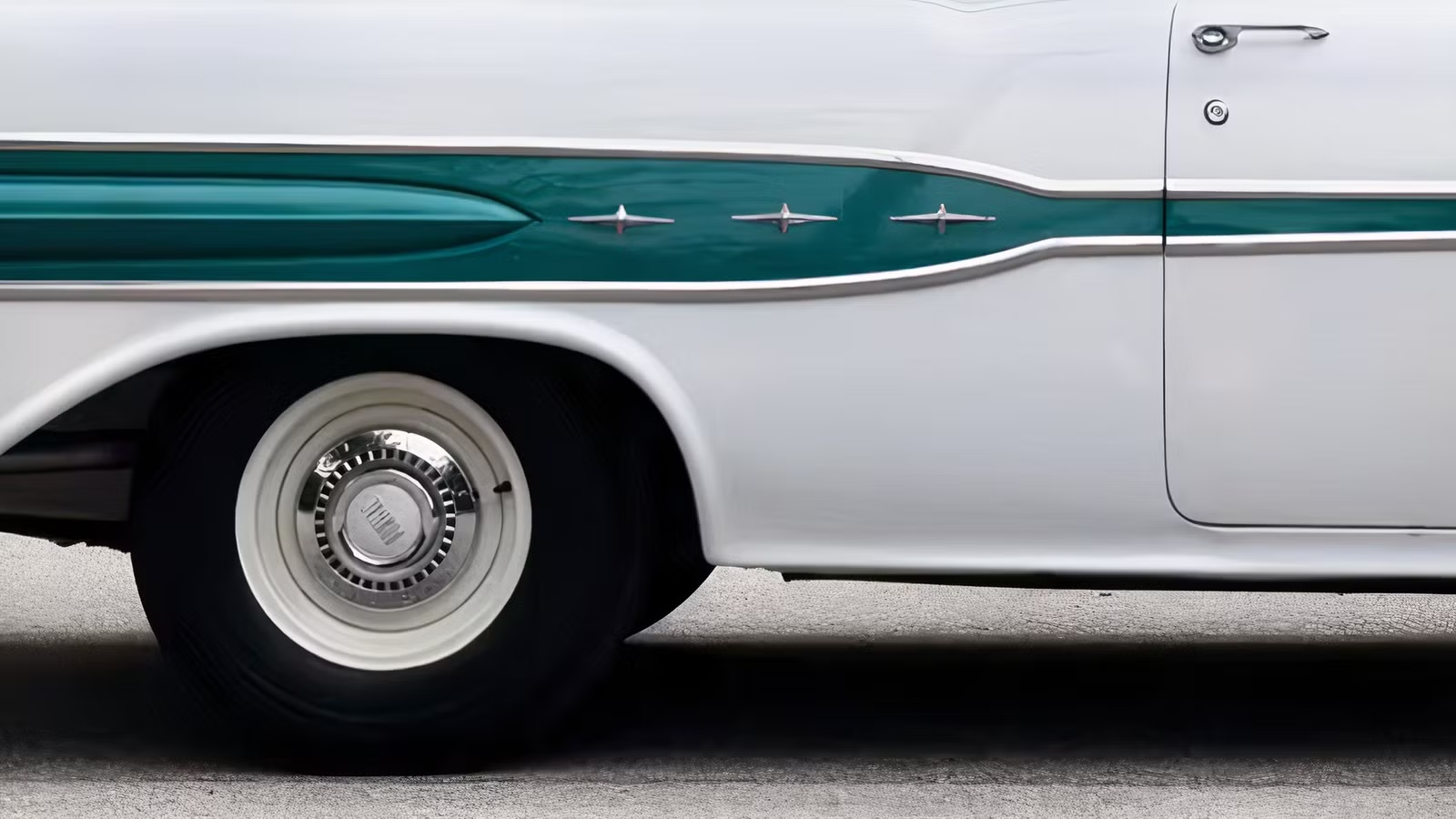
Pontiac had a glamorous fuel-injected halo car in 1957. The more surprising performance story was hiding in a Pontiac sedan that looked ready for family errands. Under its hood, three Rochester two-barrel carburetors fed a 347-cubic-inch V8, seven model years before the 1964 Pontiac GTO arrived. Period accounts suggest this lighter, cheaper Tri-Power Pontiac could outrun the glamorous Bonneville. So what was it?

Weight helped, so the comparison didn’t prove carburetors superior. Factory Tri-Power made 290 hp; the NASCAR-certified 317-hp version required dealer-installed racing camshafts. Whatever this plain sedan lacked in prestige, it wasn’t short on serious performance. The GTO would later make that idea famous.
Why Pontiac’s Three Carbs Could Beat Fuel Injection
The 1957 Bonneville put Rochester mechanical fuel injection in a richly equipped convertible listed at $5,782. Meanwhile, a plain, entry-level Pontiac sedan occupied a much cheaper corner of the same showroom. The flagship also carried more body and equipment for its V8 to move. Pontiac’s most glamorous performance hardware came with a bigger bill and more weight. At least the invoice could get your pulse racing.

Accounts of contemporary testing reported the cheaper Tri-Power setup delivering better performance, while fuel injection held an economy advantage. In a later interview with Mark McKellar, Pontiac’s engine engineer recalled that the three-carb engines “performed as well as or better than the fuel injection units, and with a lot less money.” That made three carburetors more than a budget alternative. For buyers chasing acceleration, they could reportedly match or beat Pontiac’s showcase technology.

There was an important catch. The period comparison put a Tri-Power sedan against a heavier fuel-injected Bonneville, so this wasn’t an equal-weight engine shootout. Less mass helped the cheaper car accelerate, and the result can’t prove Tri-Power alone caused the win. What it did show was harder to ignore: paying extra for fuel injection wasn’t necessary to get competitive Pontiac performance.
Then Three Rochester Carbs Made The 347 Work Harder

Pontiac didn’t add a third carburetor just for show. Its first Tri-Power system arrived on the new 347-cubic-inch V8 in 1957, replacing 1956’s dual-four-barrel setup. With a 3.9375-inch bore and 3.5625-inch stroke, the 347 now had three Rochester two-barrel carburetors ready to feed it more air when the driver asked for more power.
Most of the time, it didn’t need all of them. The center Rochester handled idle and light-throttle cruising, while opening the throttle far enough brought the mechanically linked outer pair into play through vacuum-operated controls. At wide-open throttle, all six barrels were working. So a gentle drive used one carburetor, while a hard run woke up the other two. The original 1957 system didn’t simply open all three in direct proportion to the accelerator pedal.
Pontiac’s 1957 factory specifications show just how much that mattered. The basic two-barrel 347 with a manual transmission made 227 hp, while regular factory Tri-Power jumped to 290 hp. The NASCAR-certified version reached 317 hp, but only with dealer-installed racing camshafts. That’s an important distinction: three carburetors on a restored Pontiac don’t automatically make it a 317-hp NASCAR-spec engine.
The Unexpected Sleeper Behind Pontiac’s Racing Power

And there it is: the sleeper was Pontiac’s plain 1957 Chieftain two-door sedan. Not the glamorous Bonneville. Not some special-bodied halo car. Pontiac’s lightest model could carry the NASCAR-certified 317-hp hardware, provided it had the required dealer-installed racing camshafts. That put serious optional power into an ordinary-looking family car while avoiding the Bonneville’s extra equipment, price, and weight. The cheapest Pontiac in the lineup suddenly had a very good reason to be taken seriously.

Pontiac’s racing push soon produced something nobody could dismiss as showroom bravado. Cotton Owens won the 1957 Daytona Beach race, giving Pontiac its first victory in NASCAR’s premier series. That car was competition-prepared, so the result doesn’t tell us what an untouched Chieftain could do straight from the showroom. But it showed just how far Pontiac was willing to push the same basic performance idea hiding inside its most ordinary model.

Then look at the numbers. Pontiac built 162,575 Chieftains in 1957 against just 630 fuel-injected Bonnevilles — roughly 258 Chieftains for every injected convertible. The Chieftain total included 21,343 two-door sedans, though those are model and body-style totals, not Tri-Power or NASCAR-engine production figures. We still don’t know how many actually received the racing hardware. The Bonneville got the attention, while Pontiac’s humble family sedan had the potential to hide the racing hardware.
Beyond The Chieftain, Pontiac’s Muscle Story Takes Shape

Semon “Bunkie” Knudsen took charge of Pontiac in 1956 with a division better known for dependable family transportation than outright performance. He started changing that quickly, bringing Pete Estes and John DeLorean into engine development and putting serious engineering behind the shift. By 1957, even buyers shopping Pontiac’s least expensive Chieftain series could order regular factory Tri-Power. The transformation had started long before anybody put a GTO badge on it.
Seven model years later, the 1964 GTO turned that same basic idea into an icon: take ordinary transportation, add serious optional power, and let the hardware do the talking. Its midsize Tempest LeMans platform and 389-cubic-inch V8 were very different from a full-size 1957 Chieftain, but the philosophy wasn’t new anymore. The Catalina 2+2 pushed Pontiac’s performance formula into another full-size package, while the Firebird Trans Am later carried that identity into the pony-car world.
That makes the humble Chieftain much harder to dismiss as a footnote. In 1957, Pontiac had already put three carburetors and serious optional V8 power into its plainest, lightest family car, reportedly enough to challenge its glamorous fuel-injected flagship. The GTO didn’t invent that attitude. It inherited it.
Sources: Pontiac, Auto Restorer,

Related posts





Latest Post


No Comments