
The Legendary Buick Engine That Made Cadillacs Look Mundane
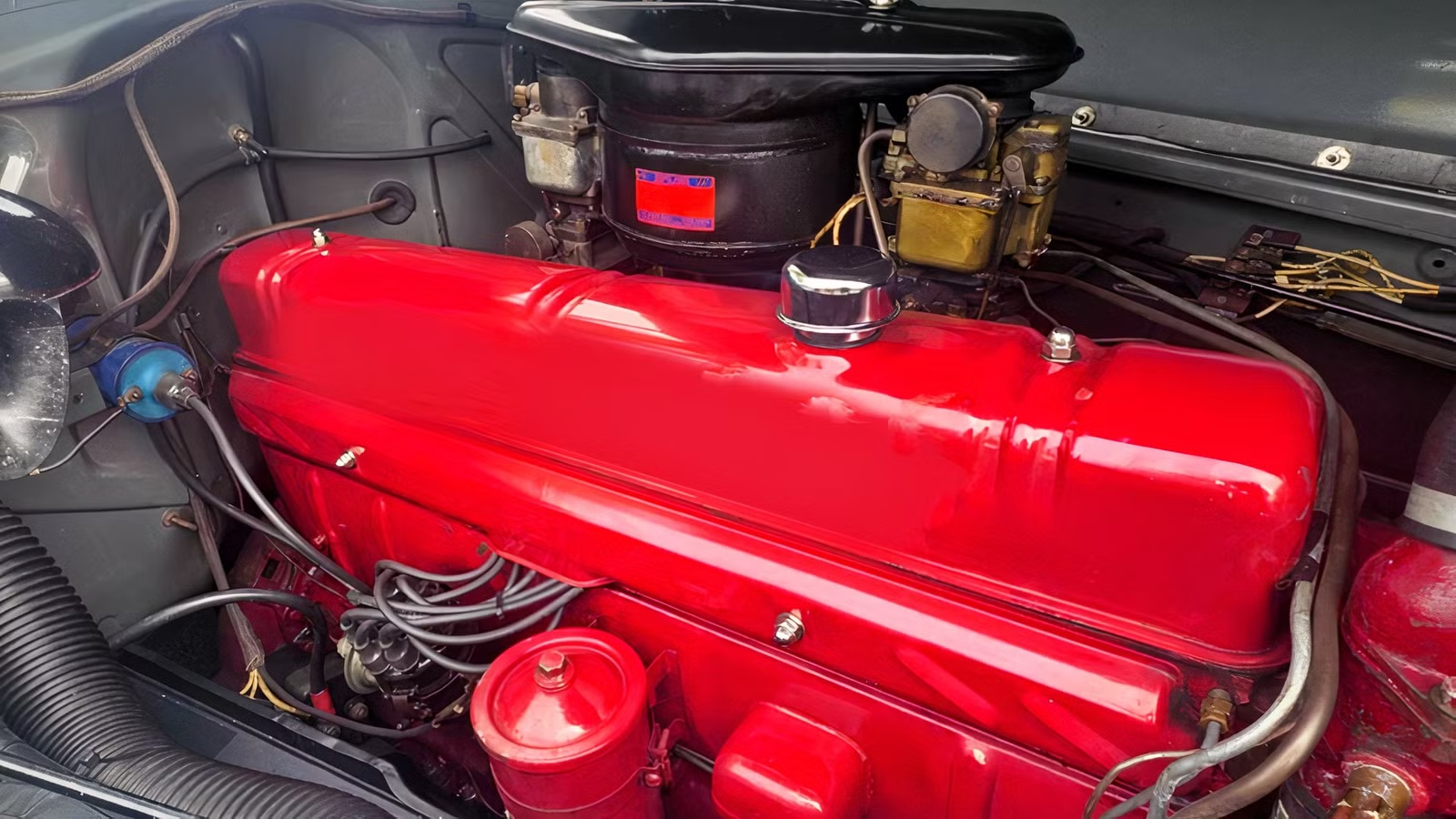
Imagine a universe where, in any context, a Buick is better than a Cadillac in any capacity. After years of peddling soft-handed crossover SUVs and badge-engineered Opels, it really does seem laughable. Still, for a period before and after World War II, Buick produced an engine so powerful and desirable that it made the equivalent Cadillac engine seem mundane by comparison. It sounds like pure comedy now, but back then, Buick really did have a leg up over Caddy. Suffice it to say, the same conditions will probably never happen again.
The GM Hierarchy, Set in Stone, Apart From Once

The pecking order at General Motors is straightforward these days. You have Chevy at the bottom, Buick as the slightly more refined middle ground, and Cadillac sitting at the very top as an aspirational luxury vehicle. Historically, the order of this metaphorical totem pole didn’t change, but what was dramatically different were the number of rungs. Thanks to Oldsmobile and Pontiac filling in the slots between Chevy and Buick, the hierarchy among GM’s brands was just a little bit more complicated.
So too was the level of freedom each brand had to innovate, far different from today. Back then, each GM brand was free to develop body styles, options packages, and powertrains unique to itself, with a comparatively small amount of parts commonality between them, especially compared to today. Knowing this, it’s easy to think that any GM south of Cadillac wouldn’t be allowed to outshine it in a meaningful way. After all, Cadillac was supposed to be the “Standard of the World.” At least, that’s what the advertising and marketing material of the period touted.

And yet, perhaps this reputation allowed Cadillac to rest on its laurels in the years immediately before and after the Second World War. Yes, its interiors were lavish and the ride so sublime that nothing short of a Bentley or Rolls-Royce even came close. Even so, one area where Cadillac began to fall behind, starting in the 1930s, was under the hood. As it turned out, it was the one area where Buick was able to subvert expectations and overtake Cadillac in terms of refinement.

Cadillac’s Engine Woes: Subtle, But Noticeable

Throughout the 1930s and into the 1940s, Cadillac relied on its L-head V8 to propel its flagship luxury sedans, coupes, and drop-tops. With a similar operating method to a Ford flathead V8, these L-heads used valves that physically sat inside the engine block, rather than on top in a separate set of heads like more modern motors. As a result, the area inside the block that could have been used to help the combustion chamber breathe was taken up by the valves, effectively forcing the air inside to navigate a 90-degree path through the block to get in and out.
In effect, a flathead engine was inherently restricted from the factory, and it was something Cadillac was not eager to remedy—frankly, because the rest of the car was so impressive. This was reflected in the Cadillac 346-cubic-inch Monobloc V8 from 1936, all the way until 1948. The Monobloc was used in a range of Cadillacs during this time, including the Series 60, 61, 63, and 67, and the 75 Fleetwood. In dual-engine formations, the 346 Cadillac was even used in US Army tanks like the M5 Stuart and M24 Chaffee during World War II.

Cadillac wouldn’t introduce an overhead-valve V8 engine design until the 1949 model year. Well, apart from the ultra-exclusive Gen-I V16 engines the company built for a time in the 1930s—but those hardly applied on a day-to-day basis. Even then, GM’s proprietary OHV design was championed not by Cadillac at all. Instead, it was Buick leading the charge, and that allowed GM’s second-to-last brand to overtake Cadillac’s eight-cylinder engine in refinement in a way it never would again.
The Buick Fireball Straight-Eight: Cadillac-Beating Quality

In truth, Buick beat Cadillac, and the vast majority of the global auto industry, to overhead-valve engines by more than 40 years. Its first “valve-in-head” motor traces its origins back to 1904, when its very first automobile, the Model B, featured a two-cylinder boxer engine. For context, Buick was not yet part of the General Motors group at this stage—an astonishing fact.
In fact, Buick never designed a flathead engine, and by the early 1930s, the company had scaled and upgraded that core philosophy into an inline eight-cylinder configuration that defined the brand for the better part of two decades. Starting at roughly 221 cubic inches for 1931, the Buick straight-eight would grow in displacement until it reached an impressive 320 cubic inches by the time it powered the Roadmaster line in 1936. By virtue of its layout of eight cylinders in an inline formation, the Fireball motor, as it was known, was an exceptionally smooth and well-balanced powerplant. Complete with Dynaflash domed pistons that increased engine compression by 1938, Fireball motors of this period produced over 140 hp when other motors barely managed 100.

By 1941, Buick’s engineers were advancing the design with dual twin-barrel carburetors, pushing output to 165 hp while Cadillac’s 346 L-head only managed 150. By then, the company had already fitted a Fireball motor into the smaller, more agile Buick Special, creating the proto-muscle car, the Buick Century. These exceptional Buicks could cruise comfortably at 100 mph, a milestone heavier Cadillacs would surely struggle to achieve. Paired with a Dynaflow single-speed torque converter automatic gearbox, operation was about as smooth as it came back then. By the end of production in early 1953, the Fireball straight-eight was producing 170 hp and had cemented its place as one of the most beloved American engines of the early postwar era. Still, the good times couldn’t last forever, and the straight-eight architecture was already pretty long in the tooth by then.
The End of the Straight Eight: The Start of a Legacy

By the early to mid-1950s, the Buick Fireball was a cherished piece of Americana. Yet, the entire straight-eight form factor had practically hit its technological limit by this phase. Its long layout, coupled with a heavy cast-iron block, was wholly incompatible with the sleek, aerodynamic styling cues coming out of GM’s design houses at the time. In short, to keep pace with trends, the engine bay had to get smaller, and quickly.
No sooner did the last Fireball straight-eight leave the Buick City production plant in Flint, Michigan, than a more compact and sophisticated V8 was ready to take its place. Dubbed the Nailhead, these first-generation V8s spawned a lineage that would one day evolve to power Buick’s entries in the first muscle car wars. From that perspective, without the Fireball straight-eight, there’d be no Skylark Gran Sport, no GS 455, and on a long enough timeline, no GNX either. At the end of the day, it’s all connected, and it all started with the Fireball.

Today, the Buicks that once housed Fireball straight-eights are routinely overshadowed by Chevys, Oldsmobiles, and the very same Cadillacs they were superior to during that era. Perhaps Buick’s modern reputation for being far more popular in China these days than here in the US explains a good portion of that. What a shame that is.At one point, Buick really did rule the roost, and it’ll probably never happen again.
Source: Mac’s Motor City Garage

Related posts




Latest Post


No Comments